








By Daniel Trotta and Dave Sherwood
HAVANA, March 13 (Reuters) – Cuba has opened talks with the U.S. government, President Miguel Diaz-Canel said on Friday, amid a severe economic crisis and as the Communist government has come under increasing pressure from U.S. President Donald Trump.
“These talks have been aimed at finding solutions through dialogue to the bilateral differences we have between the two nations,” Diaz-Canel said in a video aired on state television.
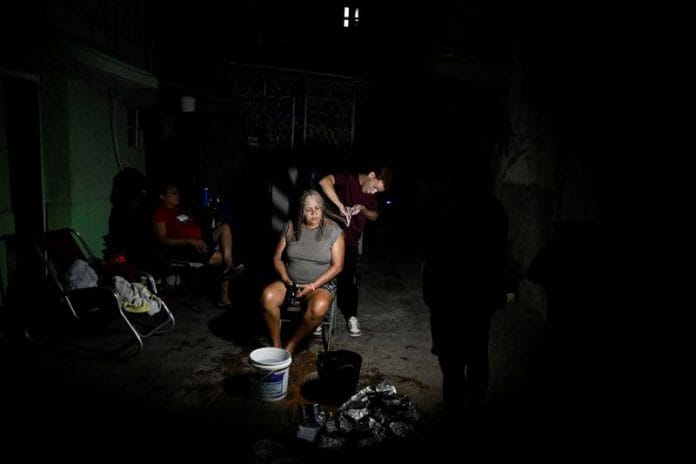
Cuba is suffering from hours-long power blackouts and fuel shortages exacerbated by Trump’s imposition of an oil blockade on the Caribbean island.
Since the U.S. captured Venezuelan President Nicolas Maduro and removed from power Cuba’s most important foreign benefactor in January, Trump has cut off Venezuelan oil shipments to Cuba and threatened to slap tariffs on any country that sells oil to Cuba.
Trump in recent weeks had made a series of statements, saying Cuba was on the verge of collapse or eager to make a deal with the United States. On Monday he said Cuba may be subject to a “friendly takeover,” then added, “it may not be a friendly takeover.”
NO FUEL ENTERED CUBA FOR THREE MONTHS, SAYS DIAZ-CANEL
Cuba, however, said it was interested in conducting the talks “on the basis of equality and respect for the political systems of both states, and for the sovereignty and self-determination of our governments,” Diaz-Canel said.
No fuel has entered Cuba in three months, Diaz-Canel said in a subsequent press conference with the Cuban media on Friday, resulting in a decline in diesel and fuel oil reserves that have made Cuba’s electrical grid increasingly “unstable,” he said.
Diaz-Canel described Cuba’s efforts to increase the island’s energy independence amid ongoing talks with the United States, saying Cuba had increased production of domestic crude and gas, as well as solar generation.
In a statement recorded Thursday night among high-level officials of the Communist Party, Diaz-Canel said he was directing the talks for the Cuban side, together with former Cuban President Raul Castro and other officials. He did not say who had participated for the United States, nor did he say when or where they had taken place.
Trump has said U.S. Secretary of State Marco Rubio was involved.
The talks were in their initial stages and Cuba was willing to continue them, Diaz-Canel said. One goal was to determine if there was will on both sides to reach an agreement, he said.
CUBA RELEASED PRISONERS AFTER VATICAN DEAL
Trump has said repeatedly that the United States was already in high-level talks with Cuban representatives. Until now, the Cuban government had denied that any official encounters are underway but had not explicitly denied media reports of back-channel discussions with Raul Guillermo Rodriguez Castro, the grandson of Raul Castro, who is 94 and still wields great influence.
Rodriguez Castro was seated behind Diaz-Canel and among the Communist Party officials pictured in the video, even though he does not officially hold a high-level position within the party. The Castro grandson, 41, widely known as “El Cangrejo,” or “The Crab,” also attended the press conference.
“Cuban officials recently held talks with representatives of the United States government to seek, through dialogue, a possible solution to the bilateral differences between our nations. These exchanges have been facilitated by international actors,” Diaz-Canel told reporters, without mentioning any specific third parties.
In the past, the Vatican has served as mediator, as in the case of 2014 talks that led to rapprochement between Cuba and the United States during the presidency of Barack Obama.
On the eve of Friday’s announcement, Cuba said it will release 51 prisoners in the coming days under an agreement with the Vatican. The prisoner release comes two weeks after Foreign Minister Bruno Rodriguez met with Pope Leo in the Vatican.
(Reporting by Daniel Trotta and Dave Sherwood in Havana; Editing by Lincoln Feast, Chizu Nomiyama and Toby Chopra)
Disclaimer: This report is auto generated from the Reuters news service. ThePrint holds no responsibility for its content.