





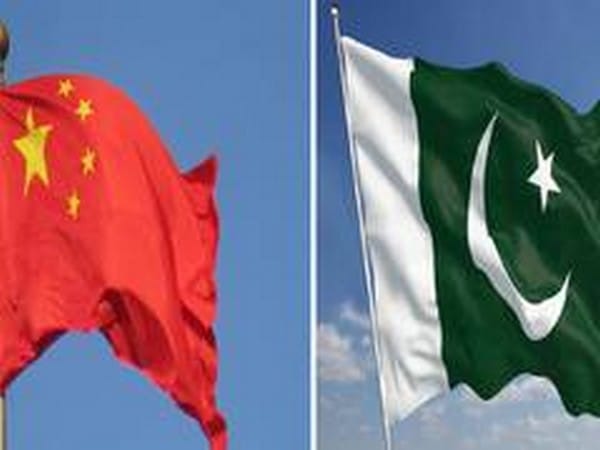



Karachi [Pakistan], July 10 (ANI): Chinese industries are planning to relocate their labour-intensive industries like textiles to Pakistan to take advantage of reduced production costs.
However, Pakistan may yet welcome some Chinese industries – and foreign investment from other global destinations – as Beijing is shifting its industrial units beyond borders to remove the “Made in China” label from many products to win back US markets, reported The Express Tribune.
The study highlights hurdles in Pakistan like law and order, labour productivity as it has failed to woo Chinese industries and many Chinese industries have gone to Cambodia, Laos and even Ethiopia, though their cost of labour is higher than the cost in Pakistan and their markets are far smaller in terms of population.
Pakistan Business Council (PBC) – a business policy advocacy platform – has published a detailed study titled “Catalysing Private Investment in Pakistan: Leveraging Chinese Investment in CPEC” in May 2022 to highlight the hurdles to foreign investment in Pakistan, reported The Express Tribune.
The PBC study says it is aimed at providing guidance to policymakers on addressing the fundamental issues, which have resulted in low investment in Pakistan.
It makes the comparison of key indicators with Pakistan’s peer economies and highlights the obstacles faced by Chinese investment under the China-Pakistan Economic Corridor (CPEC) framework.
The report highlights a number of broad issues hindering investment decisions in Pakistan. These include the political risk impeding long-term investment, an unfriendly tax and regulatory regime for businesses, low labour productivity, weak intellectual property rights, uncompetitive energy prices, high logistic costs, limited comparative advantage in accessing external markets through bilateral or regional trade agreements, etc.
The study says Chinese manufacturers appear to have moved part of their capacity offshore to avoid the “Made in China” label, most notably to the countries in Southeast Asia such as Vietnam, Thailand, Indonesia and Malaysia, reported The Express Tribune.
“Smaller countries in the region, such as Cambodia and Laos, also appear to have received significant amounts of Chinese FDI (foreign direct investment).”
The flow of FDI into Pakistan has remained low as a percentage of gross domestic product (GDP) and in relation to its market size compared to the surge in investment in peer countries.
Pakistan attracted FDI worth USD 1.8 billion in 2020 compared to USD 5.1 billion by Laos, USD 3.6 billion by Cambodia and USD 5.5 billion by Vietnam. Bangladesh, however, received lower FDI at USD 1.5 billion, according to the study.
Pakistan’s labour productivity has continued to deteriorate for quite a long time. Now, it is less than the level in Bangladesh, Cambodia and Laos. When compared with China and Vietnam, the productivity level is far lower.
The country also lacks the attraction for becoming a regional production base for any high potential investor.
Pakistan is lagging behind in a number of investment parameters and the gap has widened over the years with the peer nations. (ANI)
This report is auto-generated from ANI news service. ThePrint holds no responsibility for its content.