








New York: To their closest relative, Verena, the Australian-born woman who married India-born Sajid Akram soon after he moved to Australia, it seemed her husband and son Naveed were liberal role-models.
“Anyone would like to have a son like my son,” she insisted. “He doesn’t drink, he doesn’t smoke, he doesn’t go to bad places.”
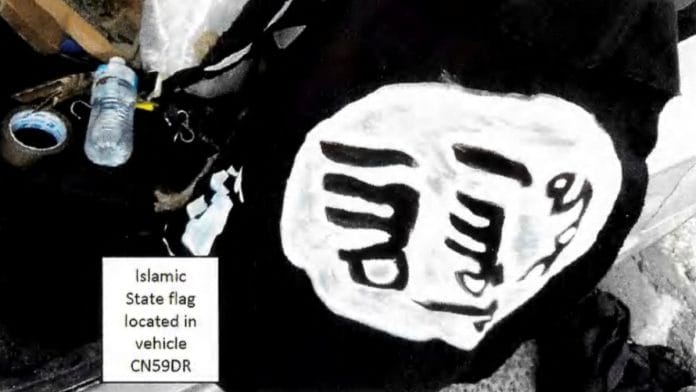
Last week’s revelations that Sajid Akram and his son Naveed carried out the murderous attack on a Jewish celebration at the iconic Bondi Beach, killing at least 16 people, has again drawn attention to the deep influence of the jihadist movement among the fringes of the Indian diaspora in Australia and beyond.
Like in so many jihadism-related cases, it’s hard to say just what might have led Sajid Akram and his son down the dark path they chose to take.
Naveed—an unemployed bricklayer—had few interests other than swimming, diving and working out at the gym, according to his mother.
The domestic intelligence agency Australian Security Intelligence Organisation (ASIO), however, investigated Naveed for his connections to would-be jihadist Isaac El-Matari.
In 2021, El-Matari received a seven-year term for a grandiose—and incompetent—plot to incite an Islamic State-style insurgency in Australia. Earlier, he had spent six months in prison in Lebanon, for seeking to join the Islamic State. Lebanese intelligence officials, an Indian government source familiar with the case said, notified ASIO of El-Matari’s ambitions.
The judge who heard his case, though, suggested mental health issues and delusions of grandeur also played a role. “The offender had grandiose ideas of undertaking some enterprise to establish the Islamic State in Australia, with the equally grandiose idea that he would be the head of it,” the judge said. “As his multiple conversations show, he had not the slightest idea how that was to be achieved.”
Even though Sajid Akram was interviewed by police together with his son in the El-Matari case, authorities say no evidence emerged that either had links to jihadists. Sajid was allowed to obtain a firearms licence, and legally purchased the six weapons used in the Hanukkah massacre.
Also Read: ThePrint Exclusive: Weeks before Delhi blast, key Kashmir terror module member fled to Afghanistan
Engineer, dentist, son of supermarket chain owner
Lit up by the hellfire and driven by hate, Kafeel Ahmed hurled his burning body at the hydrogen peroxide cylinders in the back of his Jeep Cherokee, hoping the flame would work where the detonators he’d designed had not. Even as he pursued his Ph.D in computational fluid dynamics from the UK’s Anglia Ruskin University, the one-time Infotech engineer had been planning his revenge on a world he believed was at war with Islam.
Educated as a doctor at the BR Ambedkar College, Kafeel Ahmed’s brother Sabeel was convicted to 18 months in prison in 2008 for concealing his brother’s plan to carry out suicide car bomb attack at Glasgow airport. He had worked at the Gold Coast Hospital in Australia’s Queensland, before moving to the UK for a job with the National Health Service (NHS).
Later, in 2017, he was deported from Saudi Arabia to face charges of recruiting cadres and raising funds for the Pakistan-based banned terrorist outfit Lashkar-e-Taiba. Sabeel, according to the National Investigation Agency (NIA), introduced key members of the plot, including his brother-in-law, dentist Imran Ahmed, and an engineer named Mohammed Shahid Faisal, to each other.
For his part, Kafeel Ahmed’s radicalisation appears to have begun with his involvement with a proselytising group, the Tablighi Jama’at. Later, he became involved with Islamic causes, like the wars in Chechnya and Bosnia, and at one stage drew up plans to create a Shari’a governed housing estate in Bengaluru.
The case isn’t unique. Adil Fayaz Waida, the son of a prominent supermarket chain owner in Srinagar, is alleged to have joined the Islamic State in 2012. Educated at New Era Public School in Srinagar’s Rajbagh neighbourhood, and then at Higher Secondary School in Jawahar Nagar, Adil went on to acquire an MBA from the Griffith University in Australia, and began studying for a second degree.
For reasons that have never become clear, Adil joined Street Dawah Australia—a proselytising order that preaches Islam to passers-by in shopping districts across the country. Several Street Dawah Australia leaders have died in combat alongside forces of Islamic State in Syria, among them are Ahmad Moussali, Sheikh Mustafa al-Majzoub and Yusuf Ali, as well as Ali’s wife Amira Karroum.
“If the people of Syria, Palestine, Bangladesh, Mali and all the other Muslim lands under oppression were animals,” Street Dawah Australia says in one Facebook post, voicing sentiments not dissimilar to Waida’s 2010 letter, “the whole international community would come to help.”
Like Waida, Naveed Akram does appear to have demonstrated some interest in religious activism, earning a qualification in the recitation of the Quran and classical Arabic from the Al-Murad Institute in 2019. He is also thought to have acquired a correspondence-course qualification from the Hamdard University in Pakistan, the Indian intelligence official said.
Though the sample-size of Indian jihadists in the Islamic State is too small to draw firm conclusions, it seems distinct from the Australian case, where a study found just 16 percent percent of the individuals had completed tertiary study, less than the Australian average of 24 percent. A quarter of those who joined the Islamic State proceeded to drop out of tertiary education. But there are exceptions.
Indian-origin recruits to the Islamic State also include several highly-educated individuals, like dentist Ijaz Puriyal, construction engineer Nasim Khan, Canada-based Hewlett Packard executive Mohammed Thayyib Meeran, and software engineer Syed Arshiyan Haider.
Like the group of doctors alleged to have carried out the bombing at the Red Fort last month, most drew inspiration and guidance from online forums linked to the Islamic State, and other jihadist groups.
Philippine connection
Australia has seen several significant attempts by the Islamic State to stage major terrorist operations. In 2017, Lebanese-origin brothers Khaled Khayat and Mahmoud Khayat led a plot to bomb an Etihad flight carrying 400 people from Sydney. The failed plot had been organised by their sibling Tarek Khayat and an Islamic State commander, Basil Hayat.
In many cases, siblings or kin brought up in very similar milieu show no interest in jihadism, though. For instance, Naveed Akram has two younger siblings, a brother and a sister, who are not thought to have been involved in the Hanukkah plot.
Similarly, Waida has several successful kin, including T. Mohammed Arif, a doctor at a children’s hospital in Australia; Zubair Shah, a public-relations executive in Dubai; and Tahir Maqbool, an engineer also in the Emirate.
Another angle worth looking at is that both Sajid Akram and son Naveed are said to have travelled to the southern Philippines from 1 November to 28 November, for what some investigators suspect was a training course with the Islamic State in South-East Asia.
Investigators are now piecing together the movement of the two men during that visit. The Philippines remains one of few regions outside the Middle-East and Afghanistan with a significant Islamic State presence, centred on the island of Mindanao.
Karen Aisha Hamidon, a Philippine citizen, is accused by the NIA of recruiting dozens of young Indian men to the Islamic State.
The ongoing prosecution of Mohammed Sirajuddin, a Rajasthan resident, has thrown up evidence Karen ran the equivalent of a recruitment call-centre, putting young men in touch with jihadist women.
(Edited by Tony Rai)
Also Read:Kashmir’s new-generation jihadis want to attack India’s heartland, not just its army