








Dhaka: Ever before the official declaration, a quick walk through the streets of Dhaka Friday tells one that the Bangladesh Nationalist Party (BNP) has won the landmark 2026 elections. People are only discussing Tarique bhai, the 58-year-old leader of the BNP who returned to the country after 17 years of self-exile in London.
After the country’s election commission declared a two-thirds majority for the BNP, Tarique Rahman went to a nearby mosque to offer prayers. He was thronged by a large number of people, eager to catch a glimpse of him.
In the post-Hasina era, the BNP’s rise has been meteoric. The once centre-right nationalist party is now steering towards centre-left politics, to capture the void left by the political decline and subsequent ban of the Sheikh Hasina-led Awami League.
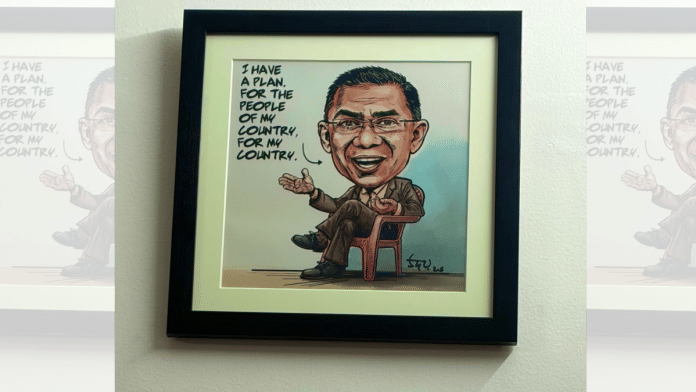
In his first speech after returning from 17 years in exile, Tarique declared, “I have a plan“. The line has since become a rallying cry for the BNP, displayed prominently at the party’s headquarters alongside a framed caricature of Rahman.
He is now set to be the first male prime minister of Bangladesh in 35 years, and the first democratically elected male PM.
The last male PM of Bangladesh was Kazi Zafar Ahmed, who assumed office in 1988 during the rule of Hussain Muhammad Ershad. Ahmed was under a caretaker Ershad administration and never elected. Since his departure in 1990, the country’s top executive office had alternated between Khaleda Zia and Sheikh Hasina.
The BNP’s resurgence in the Bangladesh politics has been driven by three key factors—the ban on the Awami League and the shift in its voter base, Bangladesh’s accommodative secular fabric and the urban middle class’ rejection of what BNP rival Jamaat-e-Islami offered, especially when it came to women’s rights and the battle for reclaiming how the 1971 Liberation War is remembered and framed.
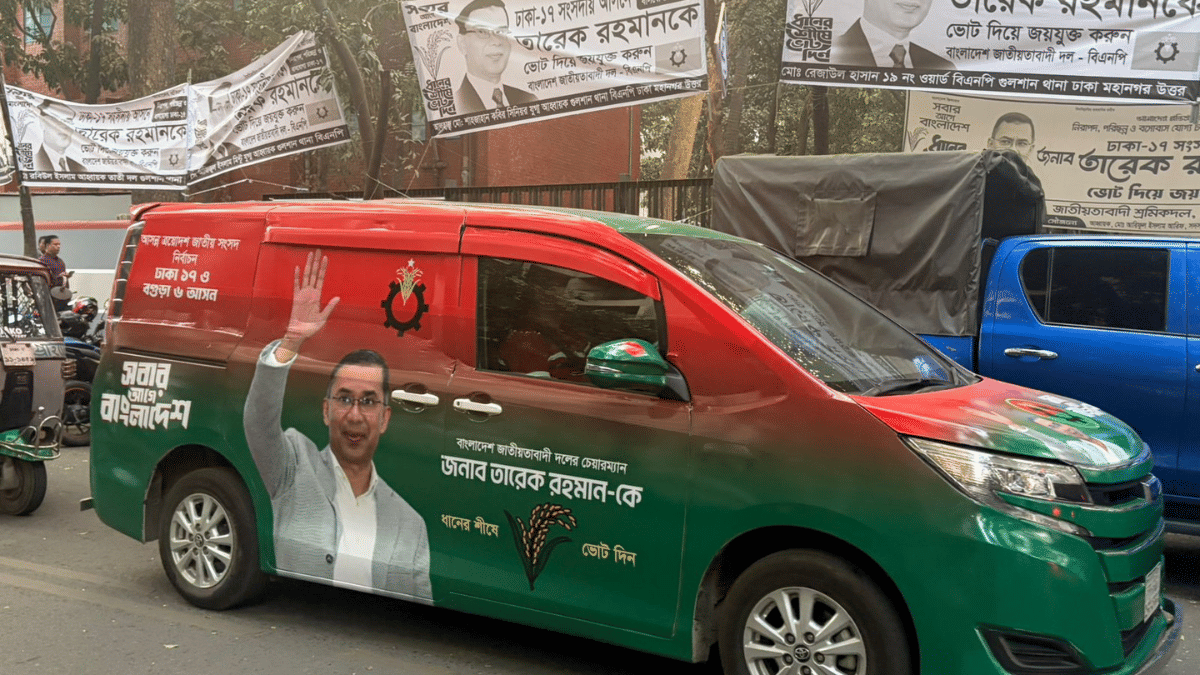
The results in Hasina’s stronghold areas establish the Awami League vote bank shifted to the BNP in these polls. In the traditional Awami League pocket borough of Gopalganj, Faridpur, Madaripur and Shariatpur, the BNP swept the polls, while the Jamaat won just one seat.
Also Read: BNP win in Bangladesh is a chance to reset Delhi-Dhaka ties—India is willing to forget the past
The return
Tarique Rahman left Bangladesh in 2008 after being released from prison amid political turmoil and legal pressure, including convictions in several high-profile cases. While in the UK, he continued to play a central role in the BNP’s leadership from afar, but even his supporters were growing tired of their long wait for the return of their leader.
But when he finally returned on 25 December 2025, he saw a massive outpouring of support.
In his absence, it was the party’s old guards like Mirza Fakhrul and Ruhul Kabir Rizvi who held the fort. The BNP remained restrained in its statements and its politics, never steering towards aggression, like the newly formed student-led party National Citizen Party, which went into an alliance with Jamaat.
What also galvanised voters towards the BNP was the demise of Rahman’s mother and former PM Khaleda Zia. In the streets of Dhaka, one can see huge banners of Khaleda Zia, remembering her and paying respect to her.
Most people ThePrint spoke to said they wanted the Bangladesh of Zia back. Tarique, until now had never won an election, Khaleda Zia had never lost any parliamentary poll.
Many saw Tarique as the alternative based on their nostalgia for Khaleda’s policies, hoping that her son, who according to them has evolved as a leader, would continue the reforms that his mother once pioneered.
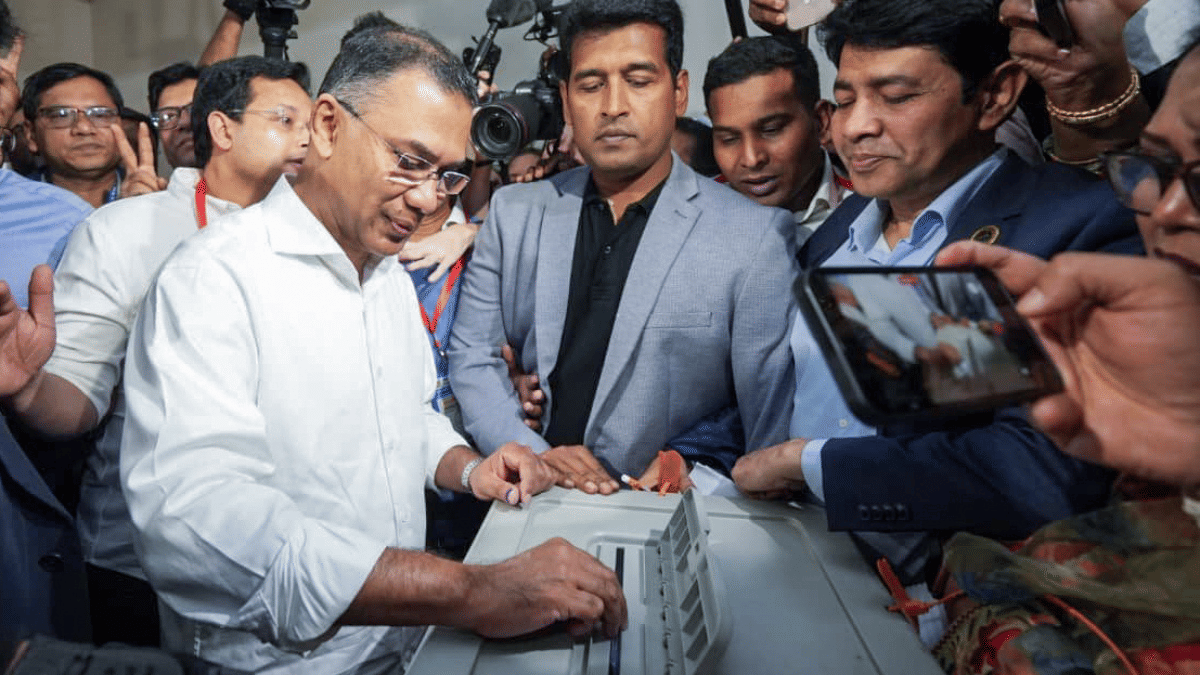
The urban middle class, increasingly wary of Jamaat’s politics, chose to vote for him in order for liberal politics to prevail. Most, especially the young crowd, are skeptical of the BNP, but would choose the party over the Jamaat.
The days leading up to the polls saw women form human chains and take out midnight marches in protest of the Jamaat emir’s statement on women. Many told ThePrint that violence against minorities, and mob-led incidents were on the rise because the current interim administration was unable to reign the Jamaat in.
After its victory was clear, the BNP through its X account urged its leaders, activists, the general public, and the members of its affiliated parties to participate in the nationwide prayers at mosques.
Besides, it called upon the people of all faiths to offer prayers at temples, churches, pagodas, and other places of worship for the prosperity and welfare of the nation.
Even in his speech, Rahman had laid emphasis on a secular Bangladesh. “As a member of the Bangladesh Nationalist Party, I want to say: I have a plan for the people of my country, for my country,” he said.
Rahman had added that his plan was designed to promote national development and enhance the lives of ordinary citizens. “Today, this plan is for the benefit of the people of the country, for the development of the country, for changing the fate of the people of the country.”
The implementation of this plan, he said, would require the cooperation of citizens “who represent the power of democracy”.
“This country has people from the hills as well as from the plains,” he said. “People of various religions, including Muslims, Buddhists, Christians, and Hindus, live here. We want to build a Bangladesh together—the kind of Bangladesh a mother dreams of.”
His speech was in line with BNP’s shift towards a more liberal approach, with focus on women and children, public security and aspirations of the working class and minorities.
Opening his address with the words “Dear Bangladesh”, Rahman had outlined a vision for a “safe Bangladesh” inclusive of all communities.
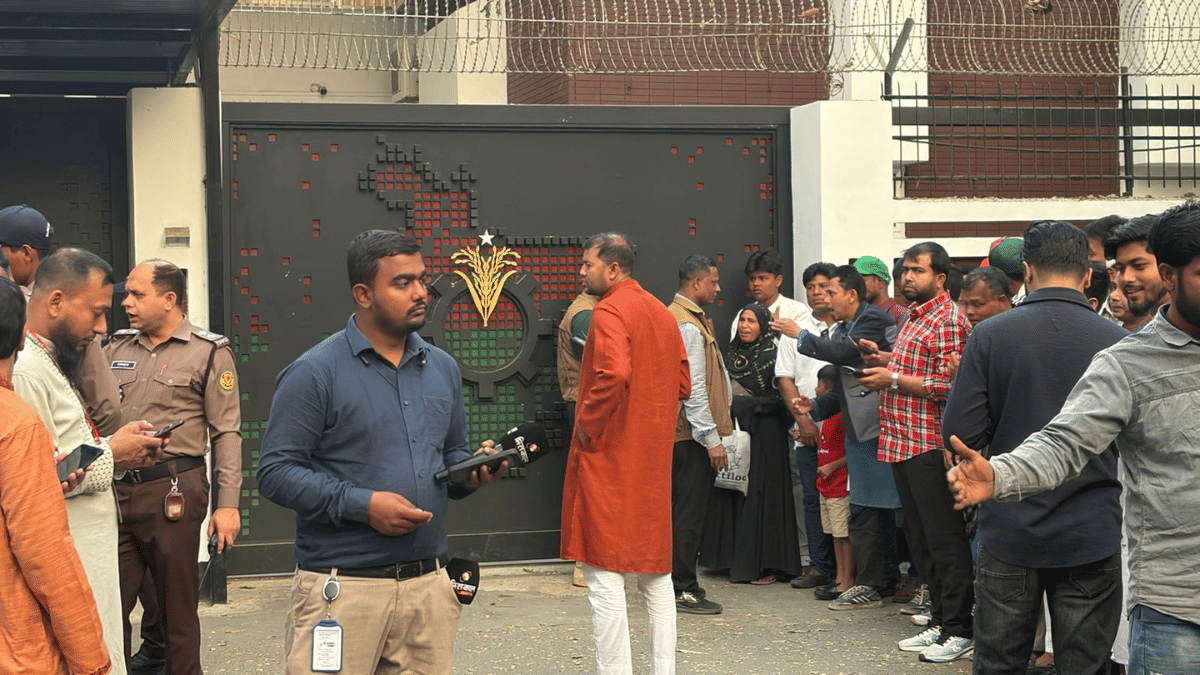
In Khaleda’s constituency– now her son’s— Bogura 6, the BNP registered massive victories with a vote margin of over 2 lakhs. Tarique, before he went into exile, was known for having done extensive social work in his constituency.
Party leaders told ThePrint that they were “confident of a win” but Tarique’s return solidified their ground.
The 1971 history
Jamaat has a contested history when it comes to the 1971 Bangladesh Liberation War. Post the Hasina ouster, Jamaat leaders were seen claiming 2024 as the actual independence. The Jamaat is still seen as a collaborator with Pakistan in the liberation war.
The battle of narratives became a key electoral point. BNP leaders repeatedly invoked 1971. One of their leaders, Fazlur Rahman, who was a freedom fighter, said in his electoral speech that the BNP would never accept “Razakars”.
In his speech on return, Tarique cast Bangladesh’s recent turmoil in historical lens, drawing parallels between the Liberation War of 1971, the 7 November 1975 soldier and people’s uprising, and recent mass movements.
“Our beloved homeland was achieved in 1971 through the sacrifice of the blood of millions of martyrs,” he had said.
(Edited by Ajeet Tiwari)
Also Read: Toppling govts is easier than winning polls for protestors. Bangladesh is the latest proof