








By Mikhail Flores and Nestor Corrales
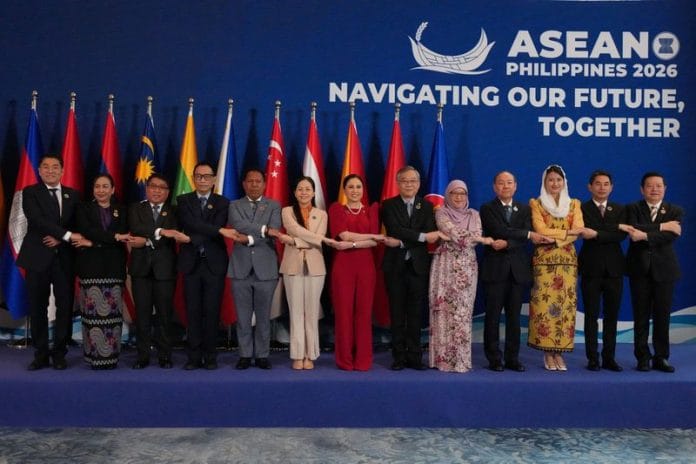
MANILA, March 13 (Reuters) – ASEAN foreign and economic ministers on Friday called for an immediate halt to the war in the Middle East, and said the effects of surging oil prices and disrupted trade are already hitting Southeast Asia’s economies.
Several members of the Association of Southeast Asian Nations have begun rolling out measures to counter the economic impact, with governments moving quickly to conserve energy, stabilise domestic markets and protect vulnerable sectors such as tourism.
“We expressed serious concern over the situation in the Middle East and its impacts in the region, and emphasised the importance of the immediate cessation of hostilities,” Philippine Foreign Affairs Secretary Ma. Theresa Lazaro told a press conference after a special meeting on the crisis, adding that ASEAN called on all parties to exercise the utmost self-restraint.
The Philippines, which is chairing ASEAN this year, convened the special meeting as concerns over the Iran conflict deepened. The ministers called for global energy supply chains to be kept open and to activate regional mechanisms to mitigate the economic fallout.
Crude oil is trading near $100 a barrel on worries about supplies, which have been heightened by the vow from Iran’s new supreme leader to keep the Strait of Hormuz, the route for a fifth of global oil supply, closed.
“The escalating conflict has generated broader economic repercussions beyond the region, particularly through heightened volatility in global energy markets and disruption of key maritime and supply chain routes,” the economic ministers of the 11-member bloc said in a statement after a separate meeting.
Lazaro said the Philippines, which is heavily dependent on imported fuel from the Middle East, was considering buying oil from Russia, but she did not elaborate.
The economic ministers warned that the region’s exposure to global oil and LNG supply routes made it especially vulnerable to further shocks, adding that reinforcing supply chain resilience, accelerating renewable energy transitions and deepening regional cooperation would be essential to preserving economic stability.
(Reporting by Mikhail Flores, Nestor Corrales and Karen Lema; Editing by John Mair)
Disclaimer: This report is auto generated from the Reuters news service. ThePrint holds no responsibility for its content.