








Vijaypat Singhania, an avid aviator and a successful businessman passed away at 87 in Mumbai, Saturday evening. He served as the CMD of the clothing brand Raymond for over two decades. His attempt to transform Raymond into a conglomerate had a chequered record. The disagreements within his family over distribution of assets also grabbed headlines in later years.
In 2005, at the age of 67, Dr Singhania broke the world record for the highest hot air balloon flight over Mumbai. After that flight he told ThePrint Editor-in-Chief Shekhar Gupta about his passion for flying, complexities in family businesses and the future of the Raymond brand, in a Walk the Talk interview.
Here is a complete transcript of the interview, edited for clarity.
SG: Hello and welcome to Walk the Talk. I’m Shekhar Gupta, and my guest today is somebody very difficult to catch on the ground. He’s an adventurer and entrepreneur. Once even a publisher. There is no dull moment in his life. In fact, he is what Tom Wolfe would have described as a man in full. Or maybe, as the most famous advertising campaign for a long time says, ‘the complete man’. Vijaypat Singhania, welcome to walk the talk.
VPS: Thank you, sir. Nice being here and it’s a privilege for me to be with you.
SG: Thank you. No dull moment in your life. You always keep on doing something more interesting, more adventurous.
VPS: Well, I keep trying. Certainly.
SG: So, what, you’re trying to defy gravity, age, belief?
VPS: Isn’t that I was trying to defy anything. I’ve always had a passion for flying from a very young age, and it turned into an obsession. I think the only difference being that passion may have rationale, obsession doesn’t. And I’ve done things in fixed wing planes. I’ve done it in small microlight planes, and it was the turn of the balloon this time. It was not that I was trying to prove something, but since it was Per Lindstrand, whose record I was attempting to break this time. He made a statement after the combination of his flight that no human being will ever break his record. And I said to myself, it has to be an Indian to do it. I’m going to do it, to attempt it. There are risks involved, but we kept them within manageable levels.
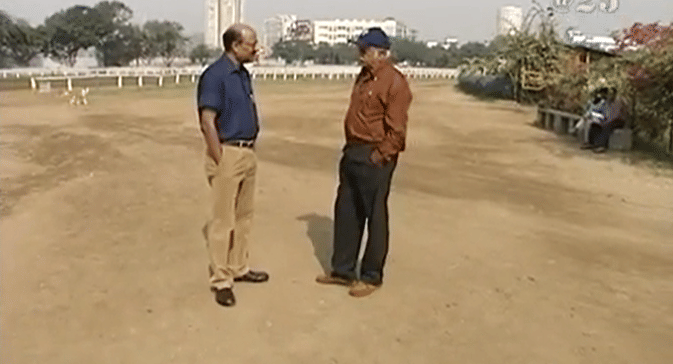
SG: You took off in your balloon from somewhere here in Mahalakshmi Racecourse. What is the scariest moment of this particular flight?
VPS: Well, there were some risks involved. For example, the life support system failure, meaning the oxygen, carbon dioxide, which fortunately worked out. There was a small leakage in my capsule, which wasn’t too bad, and I kept going. But, the second thing, of course, was the failure of the mission itself. By any systems failing. And, we had certain emergency procedures already worked out. Unfortunately, because of the strong wind and the hurry in which they had to let my capsule go and let my balloon go. Unfortunately, it didn’t meet the criteria we had earlier laid down for it. Therefore, lots of systems are switched off, and most of them didn’t work. And those which did work, I almost went into the sea, soon after the take-off. But most of my bonus didn’t work. Some of them did. My communications failed, except the VHF communication. Satellite systems failed. My cameras failed. Ten minutes after take-off, my people told me that the coastguard helicopter had just been launched, and he was going to pick me up from the sea.
I said, my God, that would be a very dramatic moment. And then it came to me that all of my effort and wok throughout the whole year have gone into vain. So, I use my landing burner, which worked fortunately and went up to 5000ft. I had been descending at 750ft/minute from 2000ft. Two minutes, and I would have hit the sea. Then I said, okay, now don’t panic, VPS, you’re going to make it. And I said, I’m not going to even meet 10,000ft in this balloon, forget 70,000ft. And, by the time at 5000ft, my fuel system had been pressurized. I started getting one, two, or three burners working and kept on climbing. So, it went on like that.
SG: Was there a moment when you were scared, when you thought you were taking a chance and maybe you shouldn’t push your luck?
VPS: No, I don’t think so. I was more worried about the success of the mission rather than a life-threatening situation. I don’t believe I went through a life-threatening situation.
SG: But you have seen those (life-threatening situations) in your flying life.
VPS: Yeah. I think I’ve done my share of wrongs in flying, prohibited things, and we have all made mistakes.
SG: I was reading someplace that you once took your plane under a bridge on the Ganga. What happened?
VPS: I wish you wouldn’t have talk about it. They’ll hang me for it.
SG: Take your license away, the DGCA.
VPS: Well, I don’t have license. So, they can’t take much away. Oh, well, I don’t know, maybe I did.
SG: But what happened?
VPS: I think I shouldn’t talk about it, I’ll get into very serious trouble. No, it was a small aircraft that I flew.
SG: Under the bridge, where?
VPS: In Kanpur
SG: Tell us a bit more about how you took to flying. Does it go back to your childhood?
VPS: Yes. In fact, when I was a kid, I used to often sit at airports and watch planes take off. What used to excite me in those days was that they only had the Dakotas, right? And I’d stand and see this little thing standing up there with a small window on top where the pilot sitting. I said, how can that little guy in that little window lift this huge piece of bulk? I think subconsciously that the quest for power, I need that power to lift so much keel of the ground. Till that became a paranoia in my mind. I have to do it! I have to do it! I have to do it better than the other guys. I became legally qualified to the age of 21.
SG: And the only difference is many of us have little boys or little children had the same fascination. But not quite the resources.
VPS: I don’t think at that time, the resources were so important because flying in those days was heavily subsidised. For my entire training, I paid ₹10 an hour which anybody could have paid. I don’t think it was a question of money. It was a question of it being in your blood.
SG: Going back to that plane, the Dakota. One of the most marvellous planes ever designed. I’ve flown in it, with Indian Air Force in the Northeast, and I’ve flown in a Dakota whose age was more than the age of both pilots put together. And yet they trusted it so much. And I believe the plane is almost indestructible, except in one particular way that I think your trophy plane got destroyed.
VPS: Well, my trophy plane was not destroyed. It was very badly damaged by unfortunately, human beings on the ground.
SG: By a mob
VPS: Yeah, by a mob. We live in Thane. They destroyed my hospital, and nobody was ever convicted.
SG: But what happened? Tell us about that.
VPS: Well, there was one of the Shiv Sena leaders who came in, with a very serious injury. And like many other people who die in hospital, he was one of those who died in my hospital. Shiv Sena came and ransacked my hospital, beat up people, burned the whole hospital while the police stood outside and just watch.
SG: This is a charitable hospital
VPS: Yes, it is a public trust. In fact, I’ve been losing money on it. I have never made money on it. We tried to build a very good hospital in my mother’s memory and to burn it down totally. And nobody came to protect me. And the police just stood outside. The fire brigade stood outside there, they refused to come in.
SG: That’s where you had parked the Dakota
VPS: They came in and broke the engine and everything and stuff.
SG: But it was a great plane.
VPS: I have a few thousand hours on it. It was a great plane
SG: This is a good thing because I know people whose engines failed while they were Dakota, and they were able to glide and land. I’ve heard the most amazing stories about it.
VPS: Engine failure is not such a big deal. Even on a jumbo, you can land with, engines failed. There has been more than one instance where four engine failure on a jumbo has still enabled it to land. Once in Jakarta Airport and once in Sydney.
SG: If you are a good pilot.
VPS: Well, you need a lot of skill to manage it, but the aircraft is capable of doing it. Its area of travel becomes considerably less, but it doesn’t fall like a rock. You have to know it’s capability.
SG: I’d rather not be being one of those. But Mr. Singhania, a lot of what you know about your life also comes from your book, ‘An Angel in the cockpit’.
VPS: Have you read it?
SG: Yes. And you describe some really hairy experiences on your microlight expedition. Tell us about some now. Tell us the three most interesting, two most dangerous and one most fun. That was your first big world record.
VPS: Yeah. And my most dangerous was, when I was over the Mediterranean Sea, and I had forgotten to change my fuel tank and the engine coughed. And I think my quick reaction in changing the fuel tank and repumping them, made the engine come back to life. Otherwise, if it had stopped, there’s no way I could start in air. It had to be started on the ground because of logistic problems. I didn’t want to land in sea and be eaten by sharks. I was pretty sure I’d be able to float on top till I was rescued. I don’t know how long that would have been, could have been several hours, but that was getting a small bottle of shark repellent, which later, when I landed in Delhi, a girl reporter asked me and she said, how long do you think that this would have lasted? I said: I don’t know, half an hour, 45 minutes. She said, don’t you think the sharks could waited for 45 minutes? I said, I’m glad you didn’t interview me before my flight.
That was, in my opinion, some life- threatening point of view. That was the most dangerous. Yeah, from a landing point-of-view at least one airfield, I remember in Saudi Arabia, called the Rafah airfield. The wind was so strong and so cross across the runway that it was impossible to land. I mean, I would have turned it over and broken it into pieces. So, when I was coming down on the runway, I was not coming in straight to land. I was coming in like this because the wind was from here. And ultimately, I said, there’s no way I can land, and I can’t go much further. So, I came back and landed across the width of the runway rather than the length of the road. Never been done in the world. I would never talk to do it, but I think the survival instinct took over and I did this. And by the time I reached the centerline of the runway.
SG: You nearly got shot down once.
VPS: No, I wasn’t nearly shot down. I was shot at in my Dakota in Kanpur, by a drunk Air Force officer, who was firing at a bird and my aircraft came behind the trees. It cut my propeller, but fortunately I was, maybe less than two minutes from touch down. I did touch down and found the bullet there. It was very a military service bullet. Civilians can’t have that. And yet no action was taken. That bullet went through my fuel tank. My whole family was there that bullet had hit the fuel tank, so there would have been no survivors.
SG: This was the closest thing, you have had?
VPS: To dying? Yes.
SG: The Angel in the Cockpit, the title of your book, is your granddaughter.
VPS: Yes
SG: And yet I believe you haven’t seen her for a long time.
VPS: That’s one of those things in life that happens to all of us.
SG: Tell us a bit more about it, because obviously she’s your favourite granddaughter. You don’t name your book in somebody’s name, just like that. In fact, not just your book, your autobiography.
VPS: Well, she was my first grandchild. I think more than being a granddaughter, she became part of my soul, which she still is, irrespective of what happened. Things happen in life. Times change.
SG: Business families have their complexities.
VPS: Every family has their complexities, I suppose. Life is such.
SG: Looking at your book, I am very pleasantly surprised by how open you have been. In fact, you say a thing that there are two kinds of Singhanias. As in one are very conscientious businessmen who are a little bit shorter on imagination. Or then you have the more fun-loving playboy types. How many businessmen will say so?
VPS: I don’t remember saying that they are short on imagination. They may be short on things that I have. This or that. It’s a burning fire for my definition of fun. People can give it different names, but actually, at the end of the day, you’re really doing it for yourself. I want to do it. I want to be better than the best.
SG: The other amazing thing is in your parent group, JK. Yours is the only group that has survived. So much else has gone into oblivion, into disrepair. There are debts, there shareholders feel they’ve been vacuum-cleaned. Something so drastically gone wrong in the whole JK Group.
VPS: I think you have asked a difficult question to answer. It’s a family issue.
SG: But it’s also a shareholder issue. Do you reflect on it?
VPS: I don’t know how to answer it, but I suppose we all run to the best of our ability. Sometimes things go wrong.
SG: It’s a bit like a typical Indian innings. You know, 185 all-out and one batsman gets 100.
VPS: So, I suppose it can happen anywhere. And I think it would be wrong and unfair for me to point fingers, because I’m not saying that I have never made a mistake in my life and business. Of course I’ve made mistakes.
SG: You made one mistake. You started a newspaper.
VPS: I still don’t believe it was a mistake. And I think what happened was different.
SG: You courted danger.
VPS: There was no danger. But sheer strength of my opponent killed it. If I had an opportunity today, I would start one. I still believe it’s a good thing to do, because I believe whether it’s a newspaper or a movie, my reasoning for getting in was the same. It’s a very strong medium of communication.
SG: What made you think of starting a newspaper?
VPS: Most importantly, I believe that a newspaper, like a movie, like a TV, is a very strong medium of communication. It’s much more important in a place where people are highly uneducated, but they can read a little bit, they can see a lot more.
SG: You were not looking at profits right away.
VPS: I have nothing against profits. I don’t take any defensive stand on profits. I love to make profits. That’s my business. I want you to do it for profit. Yes. It was not a charitable organisation.
SG: How did you rivals kill it?
VPS: Well, I don’t want to name them, but the first thing is that they took notice of me itself is a compliment. They told all the vendors that if you carry it, you will not get any of our publications.
SG: You know, why has this the Times Group, I think they’re everybody’s rivals and they are great rivals, they are such a dominant media organizations, so stunningly successful.
VPS: And so vendors were told that if you carry it, you will not get any of our publications. They had no choice. They have some 35 publications so they stopped carrying mine.
SG: But I believe you also ran into trouble with the government of the day.
VPS: No, I never had problem, that was very wrongly reported.
SG: You were not arm-twisted by Rajiv Gandhi’s people?
VPS: No.
SG: And all these stories that you had put out a list of people against whom nothing was to be carried.
VPS: Never. I never did it. Let anybody in my company say that. I never interfered in editorial freedom. I never tell them what to write, what not to write.
SG: You had a very free editor, Vinod Mehta.
VPS: Yeah. I had Nihal Singh, who was very, honest and down to the core, very competent person. I had Vinod Mehta. I had Rahul Singh, later, who worked for me. And none of them can say with any degree of honesty that Vijaypat ever asked them to either print or refrain from printing against anybody. In fact, I remember some stories printed so strongly against Rajiv Gandhi. I think they were right in printing what they did. Though, when I met Rajiv Gandhi, I felt that he was a very charming man, but unfortunately not so effective in management because he depended a lot on people. Maybe some of them were not so dependable. We all go wrong. I mean, don’t we do that in life?
SG: So, you were not so badly burned by your newspaper experience that you won’t think of doing it again?
VPS: As I just said I’d be happy to do it, to get to do again. If I could put the right team together. Unfortunately, the newspaper field has got very, very overcrowded.
SG: Less risky than going 68000ft in a balloon?
VPS: I don’t think, there is risk involved because this was not profit-motivated. A newspaper should be profit motivated. It should be very oriented towards, directed towards communicating to people the happenings of the day. And it should be communicated in as unbiased manner.
SG: In my business, kite flying or a hot air balloon has a completely different connotation, except that it’s not so much fun. Now, Mr Singhania tell us about the other remarkable thing. Your flying, your newspaper, getting into newspapers, producing a film, all that is one part of your life and a large part of your life. The other is Raymond. As I said, the last batsman standing. It was really Gavaskar 105 not out, India 186 all-out or Tendulkar or Dravid. The Raymond story. How did you come up with the idea of the complete man? What happened? It is one of the longest lasting taglines in Indian business for any Indian brand.
VPS: Well, when it was coined, I don’t think it had the kind of deep meaning that it has today, in my mind. It was really designed to show that clothes form part of demand, and it was like a cliché used to show that if you are a complete man, you wear Raymond’s clothing. But I believe that, in time to come, it became much more philosophical to me that the complete man is one who is an ideal person in society. Who does what is expected of him, who is the right kind of guy. Of course, there are lots of wrong guys who may Raymond Suiting, but this complete man was not directed against them. Just because they wear a Raymond suiting, it became much, much more of a connotation of the kind of person I would like to believe as an ideal person. The complete man will probably become a complete family now, very soon, because we have started getting into, ladies garments wear, apparels, and hopefully in time will get into the line of childrenswear.
SG: Maybe the idea of the complete man also, because it had such a good mascot, because every time you break a new record, we find your, your image on the complete man.
VPS: Well, I like to believe that Raymond is the so-called image of the complete man. I’d like to believe that Raymond conducts its business in as ideal a manner as I would like it to. I like to believe these products are as respected as I would want them to be, and I like to believe in totality that Raymond is better than the best. Now, I may be arrogant in saying that, but that is my belief.
SG: And we’d like to believe that you are the best mascot for the for that line. The complete brand, Vijaypat Singhania. Keep on soaring higher and higher. Breaking more and more records. But more than anything else, be yourself, standard in the world of business. Particularly business families with very rare qualities.