








New Delhi: Living up to the reputation of being ‘highly obsessed with looks’, a new debate on hair loss has caught people’s attention in South Korea, dividing the country into two halves.
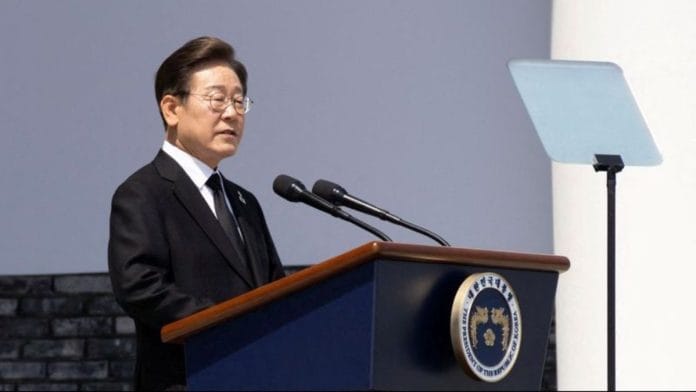
In a televised policy meeting last month, President Lee Jae Myung took on the responsibility to resolve the balding problem of the country. He urged the government to seriously consider extending the state-sponsored health insurance to include hair-loss treatments, arguing that baldness has become a “matter of survival” rather than a cosmetic concern for young people. “Hair loss is a disease, is it not?” the 61-year-old leader asked.
The idea has since drawn criticism from conservative politicians and medical professionals.
The Korean Medical Association reacted to Lee’s proposal, saying, “Rather than investing health insurance finances in hair loss treatment coverage, prioritising coverage for cancer and other serious diseases would better align with health insurance principles.”
Yoon Hee-sook, a former conservative lawmaker with a relative undergoing cancer treatment, stated on Facebook that although she understands the stress caused by hair loss in young people, “prioritising treatments directly connected to life and bodily function represents the current social consensus.”
The national insurance program in South Korea is financed by premiums that are determined by income. Only hair loss brought on by medical conditions like alopecia areata is currently covered under the program. The majority of therapies for common male pattern baldness are still not covered.
President Lee argued that such an arrangement is unfair to the country’s youth, adding that it would worsen the “sense of alienation” among them. “There may be young people who think it’s unfair that they only pay insurance premiums and can’t receive benefits,” the President said.
Also read: How Venezuelan media sees Trump’s capture of Maduro
Delicate timing
Lee first floated the idea during his failed 2022 presidential bid, but it was removed from his most recent platform after it was criticised as populist pandering.
The suggestion has brought attention to the strong cultural emphasis on physical appearance in South Korea. According to a 2024 study of young adults, 98 per cent of participants think people with good looks receive preferential treatment in society.
For women who must adhere to rigid standards regarding skincare, makeup, and body form, the cultural pressure is especially severe and intense. For men, the topic is not very highly discussed.
Given the increasing financial strain on South Korea’s health insurance system, the timing of Lee’s proposal is especially delicate. According to recent internal estimates, the system may incur deficits of up to 4.1 trillion won (approximately 2.1 billion euros) in 2026.
The market for hair-loss treatments in South Korea was estimated to be worth 188 billion won (95 million euros) in 2024. Industry associations assert that 10 million of the country’s 51 million population suffer from hair loss, though this number has never been formally confirmed.
Lee’s idea conflicts with the rising shift towards “geongangmi” (healthy beauty) in the K-entertainment space. It throws the entire ‘I am comfortable in my own skin’ debate to the backseat and gives South Korean people another way to conform to the already rigid beauty standards of their own society. Will the young population fall prey, only time will tell.
(Edited by Saptak Datta)