





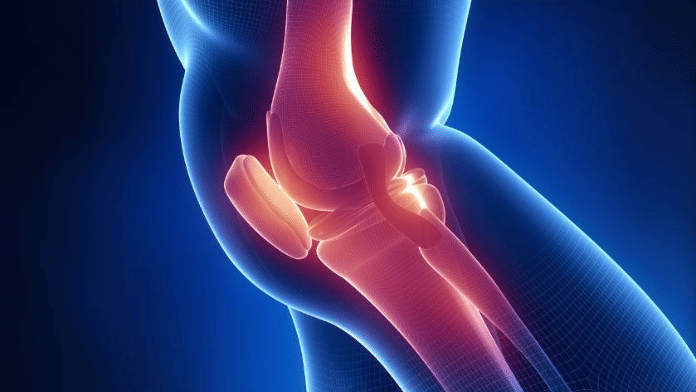



Hyderabad: Researchers at Stanford University School of Medicine have found a way to regenerate cartilage, the cushioning tissue that protects joints. The discovery suggests damage caused by ageing or arthritis could one day be reversed using a pill or a targeted injection.
The findings, published in the journal Science Daily on 20 January, show successful cartilage regeneration in mice and in human cartilage tissue taken from knee replacement surgeries.
If the approach translates to humans, it could mark a major shift in how degenerative joint diseases or osteoarthritis are treated.
Why is cartilage loss hard to treat
Cartilage is the smooth, resilient tissue that allows joints such as the knees, hips and shoulders to move without friction. Unlike most other tissues, cartilage usually does not heal once damaged.
With age, injury, obesity or arthritis, cartilage-producing cells, primarily chondrocytes, begin releasing inflammatory molecules, breaking down collagen, the protein that gives cartilage its strength. As collagen erodes, cartilage thins, softens and loses its shock-absorbing ability, leading to swelling, stiffness and pain.
Current treatments for arthritis largely manage symptoms. Painkillers, physiotherapy and steroid injections can reduce discomfort, but they do not stop or reverse cartilage loss. In advanced cases, joint replacement surgery becomes the only option.
“There has been no drug that directly treats the cause of cartilage loss,” said Nidhi Bhutani, associate professor of orthopaedic surgery at Stanford and a senior author of the study.
Also Read: Muscle tissue damage, hormone imbalances: Hard workouts can lead to overtraining syndrome
An enzyme-focused approach
The Stanford team focused on an enzyme called 15-prostaglandin dehydrogenase (15-PGDH). Levels of this enzyme increase with age and are known to suppress tissue regeneration.
Earlier research had linked high 15-PGDH levels to declining muscle strength. The study found that blocking the enzyme boosted muscle mass and endurance in older mice, while increasing it caused muscle wasting in younger ones. It has also aided in nerve and blood cell regeneration.
The Stanford researchers wondered whether the same mechanism could be used for cartilage repair.
What the study showed
In the study, older mice were injected with a small molecule that inhibits 15-PGDH. Some received the drug systemically, while others were given injections directly into the knee joint.
In both cases, cartilage that had thinned and deteriorated with age thickened across the joint surface. Tests confirmed that the regenerated tissue was hyaline cartilage, the smooth, load-bearing type found in healthy joints, rather than fibrocartilage, which is mechanically weaker for joints.
The team then tested cartilage taken from patients undergoing knee replacement surgery for osteoarthritis. After a week of the inhibitor, the tissue showed reduced markers of cartilage breakdown and early signs of regeneration.
“The mechanism is quite striking and really shifted our perspective about how tissue regeneration can occur,” Bhutani said.
Helen Blau, professor of microbiology and immunology at Stanford and co-senior author, said that the findings raise the possibility of regrowing cartilage instead of replacing joints.
“Phase 1 clinical trials of a 15-PGDH inhibitor for muscle weakness have shown that it is safe and active in healthy volunteers. Our hope is that a similar trial will be launched soon to test its effect in cartilage regeneration. We are very excited about this potential breakthrough,” Blau said.
While the findings are still at an early stage, the results in mice and human tissue are promising. Clinical trials are needed to establish safety, dosage and long-term effects in humans before the findings can change the course of treatment for osteoarthritis.
Still, the idea that cartilage regeneration through a pill rather than invasive surgery marks a major conceptual shift.
Also Read: Indian scientists, entrepreneurs are trying to understand chronic pain. Finally
Why this matters for India
The study can have a significant impact on the Indian demographic as degenerative joint diseases continue to grow at a rapid rate.
Arthritis is a growing public health challenge in India, more than 195 million Indians, about one in six, suffer from joint pain linked to cartilage degradation. Women account for nearly two-thirds of this demographic, a study by the World Health Organisation found.
India also has a high prevalence of musculoskeletal pain driven by ageing, obesity and physically demanding work.
(Edited by Insha Jalil Waziri)