





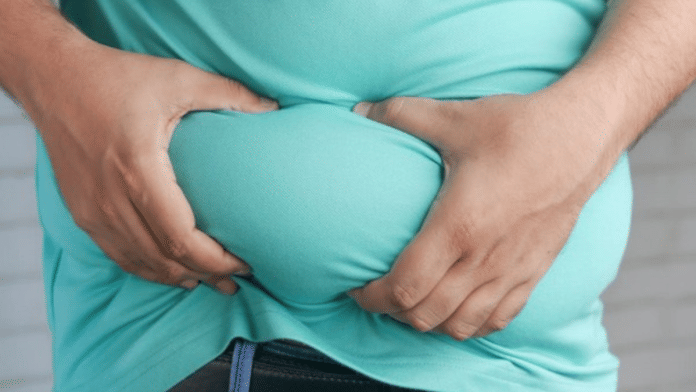



New Delhi: Weight loss has a new ally—brown fat—and winter’s discomfort might just be the spark it needs. Several researchers have found that feeling cold in winter can activate this fat, burning calories and converting them into heat.
The human body has two kinds of fats—white and brown. White fat—also known as hugging fat—is generally considered stubborn and difficult to lose. It clings quite rigidly around the belly, hips, and thighs. Brown fat, however, is metabolically active. It’s easier to burn, and it gets triggered readily in cold temperatures.
And Instagram is brimming with users discussing the benefits of Brown fat and how to fire it up. Brown fat also helps control blood sugar and insulin levels.
“White fat is an organ that stores calories from foods and whose size expands in obesity and causes medical problems,” said Jan-Wilhelm Kornfeld, a professor and co-lead author of a study on Brown fat. “Brown fat stores only little amounts of fat, but in contrast can convert calories from food into heat, which is thereby ‘lost’ for the body.”
Secret superpower for babies
Babies are born with large deposits of brown fat. For infants, brown fat is their secret superpower that keeps them warm in the absence of low muscle mass. These brown fat deposits in babies are called brown adipose tissue (BAT). According to a Cleveland Clinic report, brown fat makes up to 2 per cent to 5 per cent of total body weight in infants.
“Human newborns lack enough skeletal muscle to stay warm through shivering, as adults do. Instead, evolution has provided them with BAT, which converts stored energy into heat through non-shivering thermogenesis,” reads a study by the National Library of Medicine on BAT in human infants.
However, as we age, the brown fat goes down and is usually found around the neck, shoulders, spinal cord, kidneys and heart. But is feeling cold, taking ice baths, or chugging caffeine really enough to boost brown fat? The catch is that even a certain kind of protein can throw things off.
Also read: What is autopen? The signature device Trump is threatening ‘sleepy Biden’ for
Key weapon against obesity
An enemy of brown fat is the AC3-AT protein—found within the fat itself—which can shut down brown fat’s activation and cancel out its calorie-burning benefits.
Kornfeld used a mouse model to test this theory. In the experiment, researchers removed the AC3-AT protein from the mice’s genome. What they found was fascinating. The mice without AC3-AT were shielded from obesity, and their bodies burned calories more efficiently compared to those that still had the protein. The rodents are said to have large reserves of brown fat, which keeps them warm during winter.
In addition, chilli peppers reportedly fire up brown fat levels in mice.
“In principle, this shows that inactivation of AC3-AT can lead to weight loss and improvement of metabolic health in obesity,” Kornfeld told MedicalNewsToday.
However, humans rely on external sources of heat to stay warm—be it piling on layers, turning on the heater, or pulling up a cosy blanket. For a long time, researchers believed that brown fat is found only in infants and young adults, disappearing as we age.
A research in 2009 by The New England Journal of Medicine changed that, and it was found that the most common location for BAT in adults was the cervical-supraclavicular depot. And it can be correlated to your body mass index (BMI).
“In the past few years, however, studies conducted… have indicated that brown adipose tissue is occasionally present and active in adult humans with the prevalence ranging from 2.5 per cent to 45 per cent,” the journal on Brown Adipose by The New England Journal of Medicine read. “Some studies indicate that brown adipose tissue is related to BMI.”
Meanwhile, in 2013, a study in the Netherlands found that subjecting adults to 15-16 degrees Celsius for six hours a day can increase brown fat. The researchers had put 17 healthy adults through this experiment.
With the prevalence of brown fat in adult humans, researchers are saying that it could be a key weapon against the global obesity epidemic.
(Edited by Saptak Datta)