





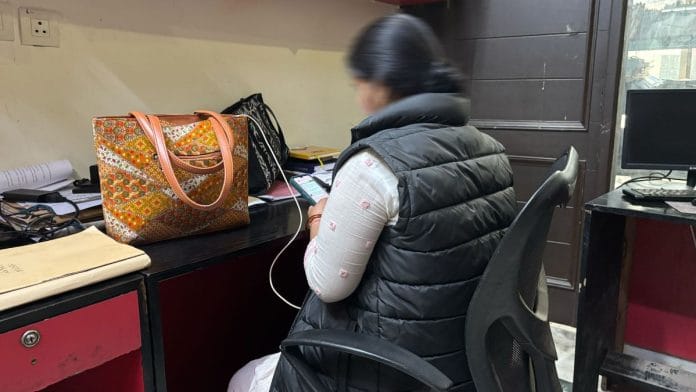



New Delhi: As she adjusted her light pink dupatta, 25-year-old S refused to cover her face. As the survivor of the Unnao rape case, privacy is now the least of her priorities.
“What is left now? Just blur my face,” S told ThePrint with a sense of resignation as she sank into a chair inside her lawyer’s office in Delhi’s Nizamuddin East. “After everything that has happened to me? I lost my father, I lost my honour. Showing my face or not won’t change anything.”
She said she has visited courts over 100 times in eight years.
S’ exhaustion is visible but so is her refusal to disappear in the face of continued insults and accusations from the supporters of former BJP MLA Kuldeep Singh Sengar, the man who raped her when she was still a teenager. In the years between accusation and Sengar’s conviction, the case altered the course of her life.
Assault, threats, court dates, boycott, protests, defence, TV news interviews, court rooms, lawyers, and judges—it has been all chaos this past decade. Today, S is a mother, she is pursuing a degree at Delhi University, and has ambitions to study law, to follow her own case through its final appeals—and to fight other rape cases that fade when the TV cameras move on. Justice, she has learned, does not come with a verdict. And the fight is not restricted to courtrooms.
“Trauma is not just about what was done to the body,” said Neetu Sarin, a psychologist. “It fractures the sense of self. It leaves a person exhausted, emotionally, and physically; and unsure of how to feel or when. They think about how it is not their shame to carry, but they have to continue surviving.”
On hearing day, S wakes up at 4am. She cooks, cleans, prepares food for her family of four, before calling the CRPF escort. By mid-morning, she is in a car headed to court, usually accompanied by two or three lawyers. The government provided her the car and security
Also read: Meet Aishwarya Sengar, Unnao rape convict’s daughter & defender. ‘I’m a feminist’
Between courts and a home
S moved to Delhi in 2019. Due to safety and security reasons, she was given a house in the national capital by the government. Away from the open fields of Unnao, the tightly packed lanes of southwest Delhi’s Ghitorni became her new neighbourhood. Her movements are guarded by Central Reserve Police Force personnel. It’s a small space that is now made busy with her two toddlers.
Since she came to Delhi, S has lived two types of days—with court visits and without court visits.
In December 2019, a Delhi court convicted Sengar of rape and sentenced him to life imprisonment. The latest development in this case came on 23 December 2025, when a Delhi High Court bench suspended Sengar’s life sentence and granted him conditional bail. His appeal against conviction is pending in court. This Delhi HC order temporarily suspends the sentence but does not quash the conviction. The court has attached strict conditions to the bail.
The court had also awarded a 10-year jail term to Sengar’s brother for their role in the custodial killing of the father of the rape victim.
On hearing day, S wakes up at 4am. She cooks, cleans, prepares food for her family of four, before calling the CRPF escort. By mid-morning, she is in a car headed to court, usually accompanied by two or three lawyers. The government provided her the car and security.
Her calendar for the month is packed. A date in the High Court, then in Saket Court, then Supreme Court, and then a matter in the CBI Court. Some days, the hearings last minutes. On others, she waits for hours, sitting on benches outside the courtroom, and sometimes, under a tree inside the Delhi High Court premises. She watches the day go by
At a recent hearing at the Delhi High Court, a battery of Sengar’s lawyers — between 10-12 — were present. The survivor, on the other hand, was in the company of two junior associates of her lawyer Mahmood Pracha.
“It used to feel intimidating,” she said, firmly. “Now, it just feels like routine. I’m not there to be scared. I’m here to fight. I am not leaving.”
Her calendar for the month is packed. A date in the High Court, then in Saket Court, then Supreme Court, and then a matter in the CBI Court. Some days, the hearings last minutes. On others, she waits for hours, sitting on benches outside the courtroom, and sometimes, under a tree inside the Delhi High Court premises. She watches the day go by.
By evening, she heads straight to her lawyer, Mehmood Pracha, who deconstructs the court’s legal jargon for her.
“A lot of it happens in English. When he breaks it down for me, I understand what is happening in my case. I feel more aware,” she said.
On non-court days, the house becomes her classroom. In 2022, she completed her intermediate, scoring 89 per cent marks. A year later, she enrolled in a BA programme course at Delhi University’s School of Open Learning. Her subjects range from history, literature, environmental science, and economics. When textbooks feel difficult, she watches YouTube tutorials in Hindi.
“I should have studied this when I was 18. I could not because of what had happened. But I feel I’m not late. Kahin toh shuruwat hui,” she said, with a faint, and tired smile.
Resuming studies has not been easy either. She often forgets her lessons. Sometimes, she forgets small details, whether she fed her children, or finished her work.
“In trauma survivors, exhaustion is a big factor. It injures the capacity to feel appropriate emotions at appropriate times. There are memory lapses too,” said Sarin.
In between court dates, classes, and taking care of her children, S scrolls through WhatsApp forwards about her case, and updates relatives on the latest court hearing.
She wished she had more time to read poems, books, stories, or watch a film of her favourite Bollywood actor, Akshay Kumar.
Resuming studies has not been easy either. She often forgets her lessons. Sometimes, she forgets small details, whether she fed her children, or finished her work
Also read: From ‘azadi’ to biometrics—a new wave of protest takes shape at JNU
‘We remember’
Every morning, when S picks up a newspaper, the headlines feel familiar to her. Filled with news of toddlers, teenagers, women subjected to sexual violence. Many are even killed, and those who survive, are left to fight cases that go on for years with no sign of justice.
“From 2017 to now. Nothing has changed,” she said.
To be the survivor of Unnao gang rape, is to live under fear, threats, and under silence. S has lived through intimidation, loss, and a near fatal accident.
The survival, she said, pushed her into becoming what she is today.
When she first faced TV cameras, she was terrified. Of questions, of statements, of speaking the truth.
“But I had to speak up because my honour was gone,” S said, immediately looking down.
S repeatedly used the phrase “her honour is gone.” Others around her insist it isn’t. “Not only am I Unnao’s daughter, but also India’s. But I’m and was not made to feel that way.”
She said she was let down by politicians, who did not support her, female lawyers who said negative things about her, police officers who did not act in time, and the people of Unnao, who questioned her, sought proof from her—and not Sengar.
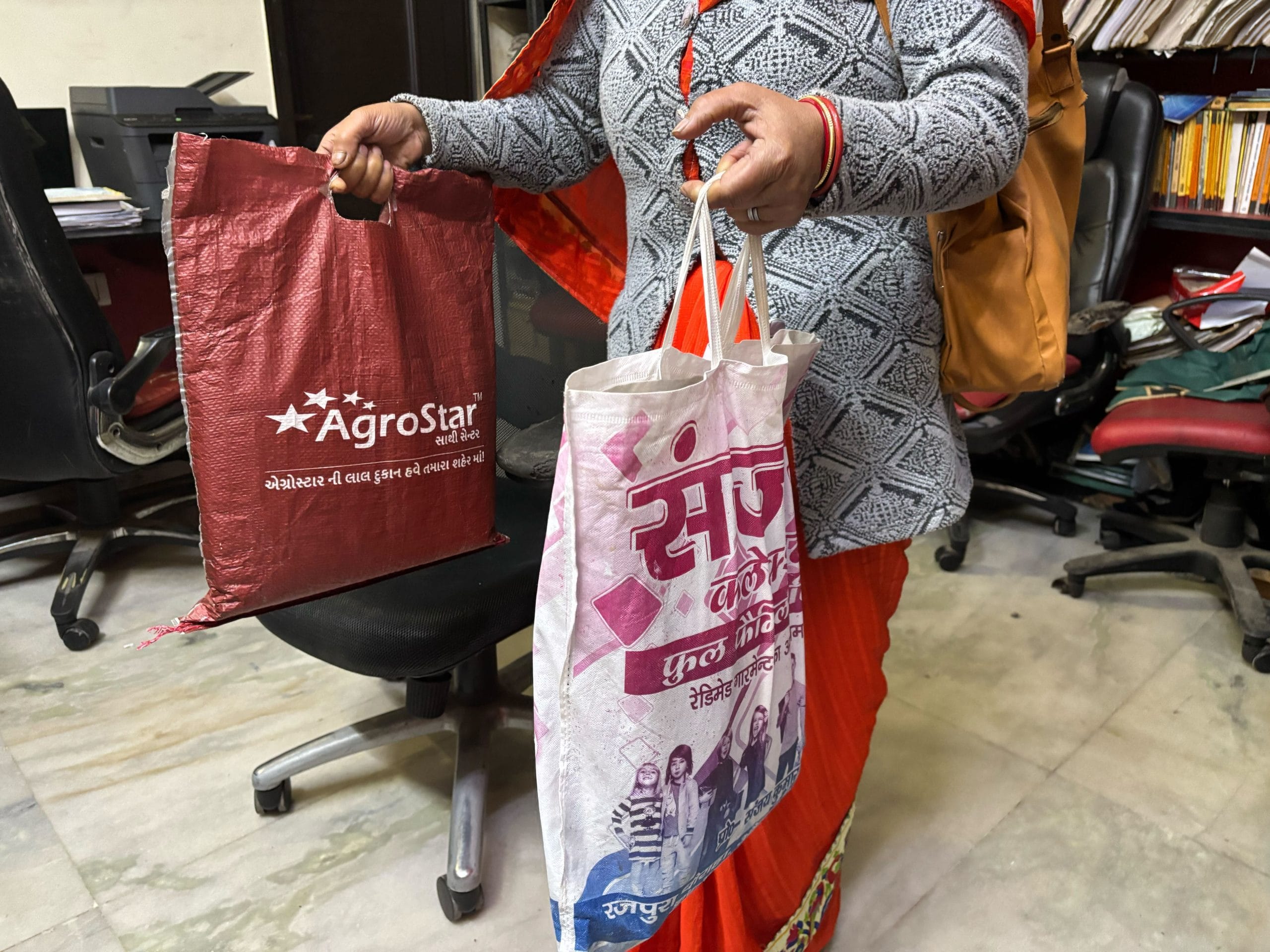
The one woman who stood next to her throughout the legal battle is her 72-year-old mother. Every other day, when the hearing is scheduled, she travels from Nangloi to the different courts of the city to stand by her daughter. She moved to Delhi few years ago to support the survivor.
The mother holds on to a crumpled polythene bag containing eight years’ worth of paperwork. It includes FIR copies, medical records, court records, photocopies.
When the TV cameras appear, her mother quietly pulls out a face mask.
Every time the mother begins to speak in front of the camera, and says, “Sengar ko saza ho,” S interrupts her mother and says, “phansi.”
“My daughter is fighting for her father’s justice,” she said. The family never performed his last rites. “We will do that when we get justice.” The mother doesn’t mince words.
“The way they talk about my daughter, the kind of comments they make, the way they invalidated the rape. We will remember it.”
In S’ family, all the younger girls look up to her. S became that elder sibling who went to the court to fight her case, and did not settle for any less.
“We’re not in constant touch with our family; that is the sacrifice we had to make. But, all the women in our family are super proud of her.”
Also read: It took 42 years to acquit UP’s Dhani Ram of murder. He just says ‘What?’
The hate, online and offline
The fight is not limited to courtrooms. Scandalous claims discrediting the survivor’s version of events are frequent on social media, invading her privacy. Online, S said, she is not treated as a survivor. She is put on trial every day.
Her case has been called “farzi” and that she is “fabricating” her trauma. She is vilified on X, on Instagram and on Facebook by local journalists, activists.
On Facebook, supporters of Sengar regularly post. “Gajab ka shatir kher gai,” said Hariom Singh Chandel, in a post, defaming the survivor.
There are morphed photos being circulated—where the survivor’s face is clearly visible, and she is seen keeping her hand on the CRPF personnel’s shoulders.
Lawyers from Unnao and Delhi have posted videos on the case, “dissecting” each of her statements. Facebook pages such as Humara Kuldeep Nirdosh Hai have circulated photographs of her, her mother, and Congress leader Priyanka Gandhi
Unnao lawyer, Nandini Dixit shared this photo with the caption, “CRPF should be scared of her.” Several social media posts call the victim, “the mastermind.”
A purported recording of a call between the survivor and her uncle was spread on social media too. In the audio, the uncle is heard telling the survivor to frame Sengar.
Her audio recordings have been shared widely by local media. Her face has been exposed several times, with captions like “this is the victim of Unnao gang rape.”
“Constant questioning (from media and courts) about my case has left me forgetful of trauma. Sometimes, I don’t remember the sentences I have said to the media,” she said.
Lawyers from Unnao and Delhi have posted videos on the case, “dissecting” each of her statements. Facebook pages such as Humara Kuldeep Nirdosh Hai have circulated photographs of her, her mother, and Congress leader Priyanka Gandhi. The accounts label her as a “nakli rape victim,” who “misleads the media, the Prime Minister and the Chief Minister.” A comment on Facebook said “this is the result of Hindustan’s andha kanoon.”
In a WhatsApp group of local journalists, the survivor’s pictures are regularly shared. Members shame and blame the survivor. Many posts on this group end with the same argument: ‘but, she is the one who went out with those men.’
S’ android phone tells her story.
“Meri jaan basti hai isme (My life depends on this),” she said, clutching onto her mobile phone. She has saved more than 200 screenshots of the abuse, comments, and posts. She doesn’t delete anything. This has become a digital repository of her daily humiliation.
Meanwhile, in Unnao, people have organised “hawan” and “public prayers” for Sengar.
“My rape has become content for people,” said S, breaking down.
After the Delhi High Court’s order granted conditional bail, the survivor, decided to take to the streets of the national capital, where India once saw protests in support of the 2012 Nirbhaya gang rape case.
In December, the survivor, her mother along with activist Yogita Bhayana and a few other activists took A4 size sheets of paper and a few black markers, from their lawyer Mehmood Pracha’s officer, and went straight to India Gate in the evening to protest. They wrote slogans and sat on the lawns of India Gate.
“We just sat there because we had to make our voices heard. The lawyer did not fight the case well. He was too casual. All we could do was to protest,” said Yogita.
She first met the survivor in 2018, when S was admitted to AIIMS after the crime.
“I tried approaching her, but nobody was allowed to meet her. I kept checking on her multiple times. Finally, in 2022, she reached out to me from an unknown number that she was in need of financial assistance, since she was pregnant and the litigation was ongoing. Which we got,” Yogita added.
For Yogita, S wasn’t like any other victim.
“She is strong. She speaks well. She would ask for help, when needed. S comes from a family that has seen netagiri closely. I never saw the trauma from rape, but it was the road accident that really shook her.”
As per case records, in 2019, a truck collided with the car in which the rape survivor, her lawyer and two aunts were travelling. While her aunts were killed in the collision, the woman and her lawyer sustained serious injuries.
On 23 December, the day Sengar got bail in the rape case from the Delhi High Court, S called Yogita to meet her.
“She hugged me and cried. That was the first time I saw S break down,” she said.
A lot was different for S before 2017. Before the incident, before she had to write a police complaint all by herself.
S lived with her uncle in Rae Bareilly since a young age. In 2013, she moved to Unnao.
“It was a new city. I was excited for my new life. I could not go to school, but I really wanted to. I had not imagined my entire life would turn upside down in just four years, in the same city I was hoping to have a new life,” S said.
The next chapter of her life is now being written in Delhi. And she is ever determined than before.
“I refuse to disappear. I refuse to back down.”
(Edited by Anurag Chaubey)