








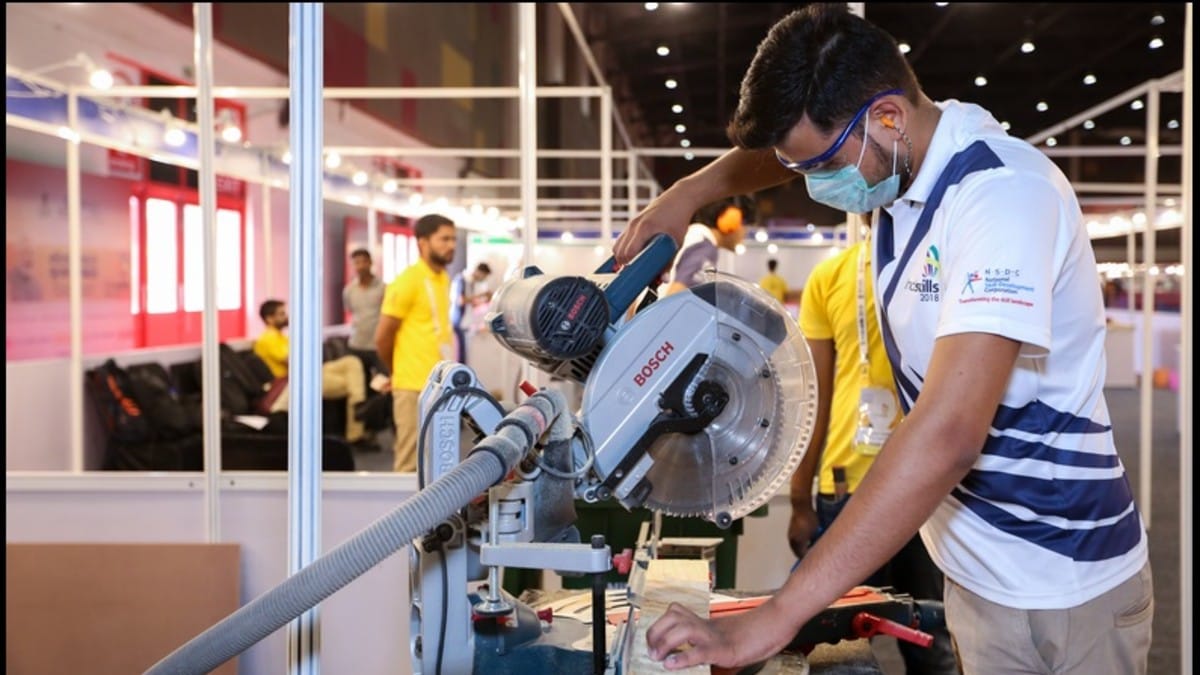
Delhi: It happened mostly on weekends over a decade ago in 2016. Some 20-odd students were made to board a bus from a small NGO in Delhi’s Peeragarhi and taken to a big training centre in Rohini. There, they posed, sitting at neat desks inside well-equipped laboratories. Their photos and videos were used as evidence to demonstrate their skill training under the Modi government’s Pradhan Mantri Kaushal Vikas Yojana, or PMKVY.
“It was a cumbersome exercise and cost me money. But I hoped I would receive the payment promised by the training institute which was also an NGO but operating at a large-scale,” said Sunita, the owner of the now shut Peeragarhi NGO.
Her NGO wasn’t registered with the PMKVY programme. She was just another supplier—among thousands spread over states—of unskilled youth to bigger NGOs sourcing students through a network of middlemen who promised cuts to smaller players like Sunita.
An informal agreement was struck: Sunita would receive Rs 1,000 per student. But the money never came. The middleman stopped taking her calls. It was then, Sunita said, she realised she had been duped.
“The scheme had failed completely. Neither did we get paid, nor did the students get jobs. We even had to beg for students’ certification, which came only after the delay of 6-7 months,” said Sunita.
Sunita’s role and experience in the national skilling mission is symptomatic of the irregularities in the flagship scheme—something that has now been flagged by the Comptroller and Auditor General of India in its performance audit report released in December.
PMKVY has all the ingredients needed to make India’s youth skilled and employable. On the ground, however, its implementation has given rise to a parallel ecosystem of brokers, middlemen, small and large NGOs, training centres and private companies that exploited the loopholes in the scheme to earn money and deprioritised skilling. The scheme has been riddled with fraud, fake enrolments, and abandoned training centres, leaving thousands of students uncertified and unemployed.
Multiple NGOs ThePrint spoke to alleged that records were falsified to show students had completed training and received certificates. In some cases, training partners allegedly enrolled family members and relatives to add up numbers on paper. Many trainees said they never received the monetary rewards promised upon completion of the course under PMKVY. Training partners admitted having taken shortcuts to bypass government checks and monitoring mechanisms.
“We have taken the CAG report seriously. Skill development is a challenge for us. And we are working on it,” said Shamika Ravi, Member, Economic Advisory Council to the Prime Minister.
Also read: India is facing a silent elderly care crisis. Budget 2026 must confront it
Circumventing rules, underutilised funds
PMKVY was rolled out in four phases, with each phase introducing stricter compliance norms on paper. Yet training partners admitted finding newer ways to circumvent these safeguards. At one training centre in Delhi’s Preet Vihar, for instance, an administrator allegedly used fake fingerprints to mark biometric attendance when students failed to turn up.
Middlemen marketed it as a “money-making” opportunity, small NGOs alleged. For people with money, the requirement was minimal: secure a 300-square-foot room, gather students, click nice photos, and reuse the same images for multiple centres.
For officials at the Ministry of Skill Development and Entrepreneurship (MSDE), the programme was imagined in a perfect world—away from ground realities that give birth to loopholes. On the ground, it collided with chaos.
The MSDE has placed the blame on the states for the lapses in the scheme, saying state governments were unable to implement it properly
“See, India is a diverse and highly populated country. While making the plan, we didn’t account for factors like the multiple layers of bureaucracy, outsourced agencies and middlemen that can emerge,” a senior official overseeing PMKVY Phase 4 told ThePrint requesting anonymity. “Once the scheme travelled through all these layers, it began to fall apart.”
The MSDE has placed the blame on the states for the lapses in the scheme, saying state governments were unable to implement it properly.
“A total of Rs400 crore was returned to us at the end of PMKVY Phases 2 and 3 by the states, as they were unable to implement the scheme properly,” said the senior official quoted above.
The CAG’s analysis of PMKVY 2.0 and 3.0 revealed that the ‘bank account details’ field contained zeroes, ‘null’, ‘N/A’, or was blank for 90,66,264 of the total 95, 90,801 participants or 94.53 per cent of cases.
“Even in cases of use of single account for one candidate (4,72,156 unique accounts for each candidate), instances of apparent wrong account numbers were noticed viz., ‘11111111111…’, ‘123456…..’, single digit account numbers, or just text, names, address, or special characters etc…,” the CAG report read.
Also read: Atmanirbharta won’t save India in a tariff-driven world—hedging and reform will
Targets only for big fish
After Sunita did not receive her payments, she and her husband, through a friend, directly tried to register under the PMKVY. But the infrastructure requirements were far beyond the capacity of their small, modest NGO set up. The guidelines mandated 3,00 sq. ft. of carpet area, a reception, a counselling room, classrooms and laboratories with 10 sq. ft. per student, separate washrooms, a pantry, and Aadhaar-enabled biometric facilities.
“We wanted to do it right and make money honestly,” said Sunita, who had also enrolled as a trainee under the scheme in 2017-18.
The couple’s friend Preet Luthra owned a four-storey building in Rohini, which was revamped into a modern training centre.
India is a diverse and highly populated country. While making the plan, we didn’t account for factors like the multiple layers of bureaucracy, outsourced agencies and middlemen that can emerge
a senior official overseeing PMKVY Phase 4
Like Sunita, Luthra too had been duped by middlemen. So, this time, they decided to apply directly, hoping to run the centre without relying on intermediaries.
The plan was for Sunita’s NGO to formally run the programme, while the infrastructure would be provided by Luthra. “The entire process of setting up the infrastructure cost us Rs 10 lakh,” Luthra said.
Luthra registered on the Skill India portal, after which an inspector visited the centre. Each application file, Luthra said, “cost about Rs 25,000 to process.”
Training centres were graded under a star-rating system displayed on the PMKVY portal. After heavy investment and alleged bribing to the inspectors, the centre secured a rating of over three stars.
Inspectors from government outsourced agencies conducted physical verification, and the portal showed the centre as approved.
Yet the most critical component—student targets—never came.
“We applied twice. Approval came both the times. They told us the centre was approved,” Luthra said. “But we never received a single target. All our money went down the drain.”
According to the CAG report, “84 per cent of the total PMKVY training targets were allocated to 10 per cent of the total Training Partners, whereas only around two per cent of targets were allocated to the 50 per cent TPs.”
Eventually, Luthra sold the building and shut the centre. Luthra now runs a computer institute in Rohini. “All the big fish got the projects,” she said.
“The criteria and guidelines were framed in a way that benefited large companies. Smaller NGOs and educational institutions got nothing.”
According to the CAG report, until September 2022, around 14,800 training centres (TCs) were involved in various skill training projects under PMKVY. However, inspections revealed that several of these centres existed only on paper. Three of the 10 trainning centres inspected in Bihar and one of the 17 in Odisha were found to be closed at the time of a joint survey conducted with District Skill Committee (DSC) representatives.
“The problem with PMKVY was that projects and funds were largely channeled to big NGOs empanelled with, or close to, the government. These organisations were awarded contracts across multiple districts, along with funds to establish training centres,” said a senior official at a prominent NGO in Delhi.
ThePrint called nearly a dozen companies listed on the Skill India portal as Training Partners. Most of them said that they were not providing training any longer as they haven’t received the targets.
Bhopal-based NGO AISTEC, which works in the field of skill development and was established in 1985, had several projects in Madhya Pradesh and Uttar Pradesh.
According to the CAG report, until September 2022, around 14,800 training centres were involved in various projects under PMKVY. However, inspections revealed that several of these centres existed only on paper
When contacted, an assistant at the organisation said, “We aren’t getting new projects and the scheme is under suspension.”
This is despite the fact that the fourth phase of PMKVY is officially continuing from 2022 to 2026.
Also read: What did forensic lab reports say in high-profile beef lynching cases of the past decade?
Stuck salaries, fake entries
Bob Motgarhe was a student of mechanical refrigeration at an ITI in Nagpur. In 2017, some lecturers asked around 20–25 students to gather outside the institute. They were then taken to a classroom on the campus itself, instructed to press a biometric device, and leave—the same routine was to be repeated at the end of the day. Motgarhe was one of them.
“I enquired with friends and seniors. What was this about? They told me it was done to show training under PMKVY. But there were no students and no training happening,” said Motgarhe. “It wasn’t just students from our department; students from other departments were also made to do the same.”
Motgarhe went to the college authorities to ask why they weren’t actually offering the training. “They said, ‘This is how it goes in the training. On paper we are giving training, but on the ground it doesn’t happen,’” he recalled.
Vikas, who completed his training in mobile repairing at a skill centre in Delhi’s Vasant Kunj in 2018, is still unemployed—and so are his friends. He said that most of the time, trainers would either be absent from the institute or simply ask students to leave after punching in and out
During routine inspections, the inspectors and agencies outsourced were bribed, alleged Motgarhe.
Several students who enrolled under PMKVY allege they have remained unemployed despite receiving certification as they weren’t imparted the right skills.
Vikas, who completed his training in mobile repairing at a skill centre in Delhi’s Vasant Kunj in 2018, is still unemployed—and so are his friends. He said that most of the time, trainers would either be absent from the institute or simply ask students to leave after punching in and out.
Vikas had to struggle for over a year to get his certificate, which involved chasing the training centre.
A trainer in Lucknow said the institute he taught operated across districts such as Ghazipur, Ballia, Mau, and Gorakhpur, running around 40-45 training centres under the PMKVY scheme. But the owners are yet to release his salary. He taught for six months and his monthly salary was Rs 15,000.
He alleged that bank accounts were opened in the names of 1,500–2,000 students, many of them entirely fake, and no books or training materials were provided.
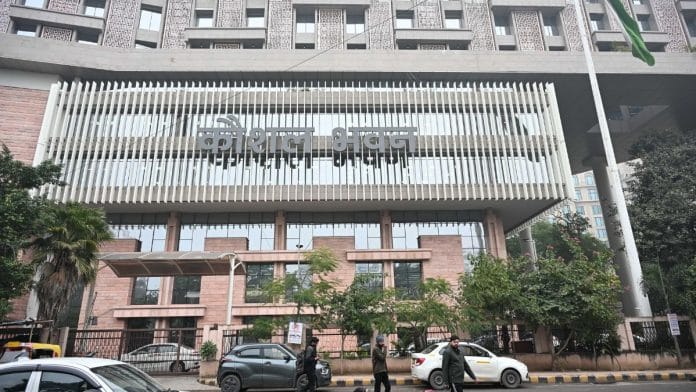
At the Skill Development office in Kaushal Bhawan, Chanakyapuri, officials overseeing PMKVY Phase 4 are inundated with applications by the training partners seeking target allocations. This time, however, the scrutiny is tighter, the pace more cautious.
“The scam also happened under the Uttar Pradesh Kaushal Vikas Mission, and these were people who had photos with prominent party leaders in the state, showing how strong their connections were,” he alleged.
The teacher filed a police complaint in Lucknow but he was pressured to withdraw it, and his salary was blocked.
“I even filed an RTI and I didn’t even get my payment,” he said.
Learning from the mistakes
At the Skill Development office in Kaushal Bhawan, Chanakyapuri, officials overseeing PMKVY Phase 4 are inundated with applications by the training partners seeking target allocations. This time, however, the scrutiny is tighter, the pace more cautious.
Officials were pulled up after the critical CAG report, said a senior official working at this centre on the condition of anonymity. And the officials are not shying away from acknowledging that there were serious lapses in implementation.
“PMKVY has become a cautionary tale of sorts, and we are rectifying our mistakes,” said a senior official quoted above. The fate of PMKVY is now being used as a reference point within the ministry—to warn officials against repeating the same mistakes in future schemes.
Over the years, the scheme has been tweaked and updated to address the loopholes, though officials concede some gaps persisted. In the scheme’s first phase, trainees were entitled to a direct benefit transfer of Rs 8,000. But in most cases, the money was automatically debited by training partners.
For phase 4, the officials said, they have been overhauling the scheme. From face authentication and geo-tagged attendance for the trainees, trainers and assessors to QR-coded digital certificates for instant verification
In the second phase, as the central government expanded the programme, it introduced a franchisee policy. The officials said the idea was to take the scheme to every corner and village of the country. But it led to the mushrooming of training centres across states.
“During quality checks, MSDE found that there had been a sudden mushrooming of a large number of franchisees, with more franchise owners applying for targets than training partners in the ecosystem,” the Ministry of Skill Development and Entrepreneurship (MSDE) said in its official response.
The ministry acknowledged that there were instances where work was sublet.
“In some cases, training partners outsourced core training functions to franchisees, leading to a dilution of the standards that the skill development programme sought to ensure,” it said.
But ThePrint found that franchising— the outsourcing of work—continued even after the option was officially removed.
Under PMKVY 2.0, the Centre introduced a dual model of implementation—centrally sponsored but state managed. Under the Centrally Sponsored State Managed (CSSM) model, states were encouraged to conduct training programmes in school and college premises, particularly for students who had failed Class X, Class XII or college-level examinations.
Of the total PMKVY 2.0 funds, 75 per cent were managed by the Centre through MSDE and the National Skill Development Corporation, while the remaining 25 percent was allocated to states to run the programme.
“But the states failed, they couldn’t run the programme. And we had to bear the consequences,” said a senior official at MSDE.
For the lapses in the third phase, the officials blamed the Covid-19 pandemic.
“Training centres were shut because of Covid. And then we undertook a COVID crash course for covid warriors,” said the official quoted above.
For every phase of PMKVY, the MSDE has offered a reason for why the scheme failed, pointing to poor implementation.
But for phase 4, the officials said, they have been overhauling the scheme. From face authentication and geo-tagged attendance for the trainees, trainers and assessors to QR-coded digital certificates for instant verification. They are also preparing a mail to the CAG to acknowledge its report and highlight the improvements made in the fourth phase of the scheme.
“To ensure there is no outsourcing and duplication, we have incorporated e-KYC and Aadhaar authentication for all stakeholders including trainers and trainees,” said the official. And the payment to Training Partners (TPs) will only be disbursed upon successful verification of candidates and trainers attendance.
A centre in Vasant Kunj that was once associated with PMKVY now stands closed, replaced by a computer institute. Several similar centres across the country have also shut down.
“We are not liable for running these training centres; we only provide the training programmes. Why these centres are still listed on our website is something we are looking into,” said the official quoted earlier.
For neighbours in the area, the institute had long been defunct. “Hardly anyone ever came here. The place was just a name—PMKVY,” they said.
(Edited by Anurag Chaubey)
Why dont you make the payout linked to 50% on Job placement and balance 50% on still having a job at the end of the year for each candidate. No inspectors required. Increase the payout to the skill centre bu 100%. Govt will save money on inspections and skill centre will save money by not having to pay bribes. Market should decide if a Skill centre is effective and not some Babu or inspector.
It’s the same story with all private medical colleges.
I think u should check on these institutes the health and life of people is being put at risk