





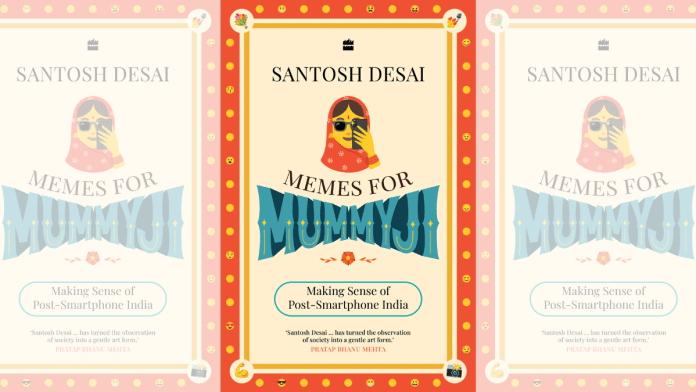



Santosh Desai’s Memes for Mummyji is a collection of updated columns that tries to read India through the everyday effects of smartphones and digital life. Rather than offering grand theory, Desai walks street corners, living rooms and WhatsApp groups to show how a tiny slab of glass has become our camera, calendar, confessional, shopping mall and mirror. The book is organised thematically (digital culture, family and gender, leisure and the body, urban life, work, media/outrage and politics), and each essay has been revised to reflect recent shifts while retaining its original moment-in-time reportage.
A large portion of the book examines how digital technologies reconfigure identity and sociality. Desai dissects the “overdocumented self”, the grammar of new verbs, the power of WhatsApp as an intimate public, and the economics and ethics of influencers and short-form video. He links these everyday practices to consequences such as shrinking privacy, algorithmic surveillance, attention scarcity and the normalisation of performance as the default mode of being.
Beyond screens, the book maps how these technological currents remix older social structures. Chapters on culture and modes of living look at changing families and weddings, the rise of female entrepreneurship alongside continued constraints, the “builder flat” and new urban public spaces, food and fitness as identity work, and the recreational body.
Published by HarperCollins, ‘Memes for mummyji’ by Santosh Desai will be released on 8 December on SoftCover, ThePrint’s online platform for launching non-fiction books.
Santosh Desai is a long-running columnist, social commentator and author of Mother Pious Lady. He combines two decades in advertising and many years in brand consultancy with a habit of close observation. He is also a founder at Think9 Consumer Technologies and holds degrees in economics and management from IIM Ahmedabad. He tweets at @desaisantosh.
Also Read: New book delves into the Indian Air Force’s daring operations