








New Delhi: The oldest living man in the world is Brazilian. Some Brazilians even live to be 110, while being active and mentally sound. Now, a group of scientists think it is time to study the country’s supercentenarian population to decode the secrets behind human longevity.
An article published on 6 January in Genomic Psychiatry states that Brazil is one of the world’s most underutilised settings for genomic studies to understand human longevity. According to the article by researchers from the University of Sao Paolo, most human longevity studies focus on genetically homogenous groups. However, this misses the number of helpful genetic changes that can occur in societies with a more heterogeneous population, like in Brazil.
From Indigenous tribal populations to European colonisation to the forced migration of Africans to later migrations of even Japanese populations, Brazil is supposed to have the richest genetic diversity in the world. The hypothesis goes that genetic diversity results in more DNA changes, meaning more chances of improved immune responses and genetic causes of longevity.
The authors themselves are currently studying centenarians and supercentenarians in Brazil, and have found examples of people staying alive and functional to a very old age, despite limited access to healthcare. While not exactly developing a causal relationship, this study indicates that there is enough evidence in Brazil to study the genetic varieties and understand how genetic changes can give humans long life expectancies.
World’s oldest poisoned arrowhead was used in Africa 60,000 years ago
Researchers have found the world’s oldest known evidence of arrow poison on Stone Age arrowheads from 60,000 years ago. The arrowheads were found in KwaZulu-Natal, South Africa, by Swedish and South African scientists. Published in Science Advances on 7 January, the study explained how the researchers detected chemical residues from gifbol (Boophone disticha), a highly toxic plant on the arrow. The poison is still used by traditional hunters in the region today.
This study is the first direct proof that early humans used poisoned arrows. It shows that people in southern Africa not only developed bow-and-arrow technology earlier than previously thought, but also possessed sophisticated knowledge of toxic plants and their effects.
The residues correspond with those found on 250-year-old poisoned arrows from South Africa, revealing a long continuity of plant-based hunting knowledge. The discovery highlights advanced planning, experimentation, and cause-and-effect reasoning in early modern humans, offering new insight into the cognitive abilities of Stone Age societies.
Also read: Supercomputer Param Shakti’s server has been designed in India, says IIT Madras professor
Multiple brain signals are involved in a single facial expression
While facial expressions may seem effortless, the brain actually prepares them through a sophisticated, coordinated process that begins well before the face moves. Scientists at The Rockefeller University and the Hebrew University of Jerusalem in a new study published on 8 January, overturned the long-held idea that voluntary and emotional facial expressions are controlled by separate brain systems. Instead, multiple face-control regions of the brain work together, using different neural signals operating over distinct time scales.
The researchers found that these brain regions encode facial gestures in advance, combining fast, dynamic signals that track muscle movement with slower, stable signals that reflect intention and social context.
The findings of this research help us understand how facial communication is finely tuned—and what may go wrong after brain injury or in conditions where facial expressions cannot adequately signal social cues. It opens up new avenues for us to understand and potentially restore facial communication for people in need.
Also read: The twist no one saw coming — comet 3I/ATLAS is older than the Sun
Zebrafish embryos depend on geometry to grow
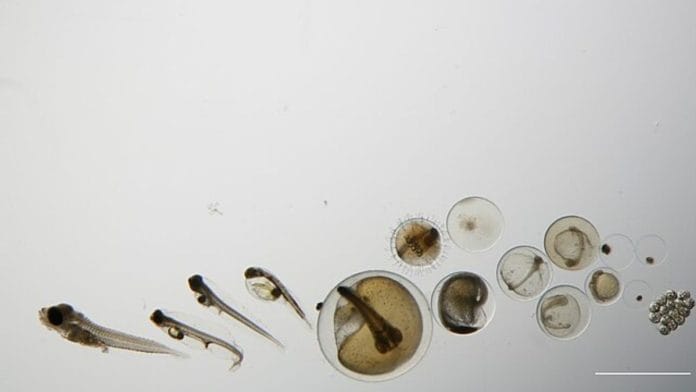
A study by the Institute of Science and Technology in Austria, published on 5 January, talks about the necessity of physics in the biology of early life. By studying the development of a zebrafish embryo, which grows outside the mother’s body and is transparent, the scientists were able to explain that embryo growth does not just depend on genetic instructions, but also on the physical shape and geometry of the egg.
The scientists watched exactly how a fertilised egg goes through cell division and becomes a full-fledged living being. They used high-resolution imaging, experiments, and mathematical modelling, and found that the egg’s curvature is responsible for the difference in cell size during the earliest divisions. These size differences translate into variations in how fast individual cells progress through their division cycles. Smaller cells divide more slowly, creating gradients in timing across the embryo.
The importance of this physical pattern was visible when the scientists experimentally altered the embryo’s early geometry. They found that the cell division gradients and gene-activation patterns changed, which led to downstream effects on cell fate. The findings suggest that embryos read their own geometry to stay on schedule, and they have an essential geometry of their own.
(Edited by Prasanna Bachchhav)