





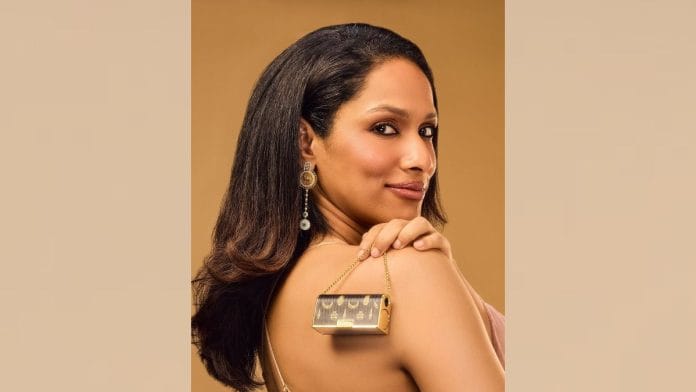



By 2021, when Masaba modelled for Sabyasachi Mukherjee’s bridal campaign, draped in finery and kilos of haute jewellery for Condé Nast Traveller, her ‘influence’ was no longer budding; it was in bloom.
Even earlier, actor Sonam Kapoor and stylist–aesthete Rhea Kapoor, then Masaba’s close friends in the film industry, had boosted the Masaba brand across Instagram. Her designs and images circulated through their friend groups, parties and curated posts.
In India’s competitive beauty market—as varied and volatile as a shade card of skin tones—being seen and heard isn’t merely about marketing. It’s about echo chambers and amplification, aesthetic clout and relatability. Every year, more than a few new colour cosmetics and wellness brands—or sub-categories—enter the market. International brands roll out competitively planned launches, with lavish experiential marketing and high-spend events with invites and boxes of cosmetics sent to beauty influencers, celebrities and lifestyle media. Many Indian brands, though equally good in quality and product diversity, struggle to match the scale and extravagance of these seasonal unveilings. Brand battles are also about the ‘face’, with bigger budgets and promotional heft attracting A-list celebrity endorsers.
‘Launching Lovechild and taking it where it is today has consumed my life for the past two years,’ Masaba tells me. And then there is fashion—her karmic playground. As an industry, it feeds the churn of hashtags every few hours, like a hungry tide. AI-generated reviews, trolls, paid endorsements and aesthetic trend forecasts, all fuel the mix. In this visual onslaught, a figure like Masaba needs more than visibility—she needs a story.
And that’s where she wins.
There are no awards yet for building a personality cult out of confession, but if there were, Masaba would be a top contender.
‘I’m a better entrepreneur and storyteller than designer,’ she admits. She enrolled early in the school of the confessional, reading the rhythms of the attention economy before most had even named it. Her mode is the Russian doll: story within story within story. She edits, tweaks, repackages and remixes her lived experiences, until they’re both intimate and broadcast-ready.
Also read: Goan bakers brought bread to Mumbai. Then passed the mantle to Iranians
The Print Run: Sari to Satya Paul, Pattern to Persona
Masaba debuted at Lakmé Fashion Week in 2009, at just nineteen. She won the Most Promising Designer Award that season. I remember the two garments she submitted—I was on the Gen Next jury that year. One was a sari: bold, colourful, cheerful. Years later, she tells me she’ll never forget her mother’s support. Neena Gupta had sponsored her debut collection once it was shortlisted. ‘That’s what allowed me to start,’ Masaba says.
Some say her juggernaut began with prints. Cows, cameras, open palms, Tamil script, ripe lemons, pineapples, orange tigers, telephone booths—her motifs marched across colour-blocked saris, striped kurtis and asymmetric kaftans. They stood out in a landscape saturated with predictable paisleys, weary lotuses and overly polite florals. Masaba’s prints rejected the hand-block nostalgia that had been smiling forcefully on Indian fabrics for years.
These early designs filtered down from ‘fashion–fashion’—the phrase that captures the buzz of high-street knock-offs and local bazaar remixes. Her cow prints became iconic before the cow became politically fraught. She printed Tamil script before cultural appropriation became a hot-button issue. In both instinct and timing, Masaba was ahead of the conversation.
She had a good print run.
In 2010, she opened her first store. Two years later, at the age of twenty-four, she stepped in as creative director at Satya Paul, taking over after founder Puneet Nanda stepped away for spiritual pursuits. Her debut collection featured lipstick-print saris, Peter Pan collars and an irreverent youthful energy. Though her collaboration with parent company Genesis Colors was short-lived, Masaba kept moving. She made it to Forbes’s 30 Under 30 in 2017, picked up design awards from Femina and Cosmopolitan and dressed Sonam Kapoor in a dhoti-sari for Cannes. Her collaborations spanned Tata Nano (cars), Titan Raga (watches), Levi’s (denim), Ekaya (Banarasi saris and a cricket game theme), Amrapali (jewellery) and Nykaa (make-up)—even before Lovechild was launched.
Her public and private lives blurred in her brand universe. In a campaign for the Mumbai Indians women’s cricket team, Masaba held a bat—a nod to her father’s career—with ‘Lovechild Masaba’ inscribed on it. The ‘i’ in Lovechild bore the red bindi from Saans, the 1998 TV show written and directed by Neena Gupta.
Through it all, Masaba kept narrating her life—weight and all. Long before Instagram’s reign, she was open on Facebook about PCOS, acne and dark skin. Her hair, her name, her mixed-race identity attracted an unusual kind of interest—part exoticism, part scrutiny. She understood its pull. And she built a community out of it. She spoke about gender, yoga, diet, Afro hair, wide hips, full lips and travel. Her candour became an aesthetic. In Masaba Masaba, the semi-fictional Netflix series based on her life, one of her fashion collections was called Hot Mess. It was a wink at the persona she had carefully curated—and constantly revised.
Masaba remained the core of the Russian doll—the self, inside all the encasements: Sabyasachi, Nykaa, Mumbai Indians, Ekaya, even Lovechild. While others peddled filters and fleeting trends, she traded in a version of authenticity. Even when she may be using photo filters. She styled herself as a rebel with a cause. Her body—its contours, colour, contradictions—wasn’t just a vessel. It was a narrative.
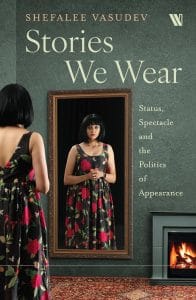 This excerpt from ‘Stories We Wear’ by Shefalee Vasudev has been published with permission from Westland Books.