









It is 1915. Undivided Bengal. A father leaves behind three young children, aged two and a half, five, and seven. He travels toward Balasore on the Odisha coast. There, Jatindranath Mukherjee, better known as Bagha Jatin, waits for a German warship carrying arms at the height of the First World War. The plan is audacious: to initiate a coordinated, countrywide uprising against British rule.
The ship never reaches Indian shores. British intelligence intercepts the consignment, leading to what history records as the Battle of Balasore, a 75-minute gunfight between five revolutionaries armed with Mauser pistols and the British police. Mukherjee succumbs to his injuries on 10 September 1915.
History textbooks document this event. Few ask what happened next.
“What about the three children?” asks Manjusha Chatterjee, Bagha Jatin’s granddaughter, pausing as she recounts her grandmother Indubala’s life after her husband’s death. Widowed, and under constant police surveillance, Indubala moved from shelter to shelter as colonial authorities raided homes suspected of harbouring revolutionary families. Relatives often turned her away, fearing persecution. For years, she and her children lived disguised as domestic help, hiding in outhouses, constantly on the move.
Cut to Kolkata in 2022. During a public survey in the city that once formed the epicentre of Bengal’s revolutionary underground, a middle-aged man confidently responds to my question, “Who was Bagha Jatin?” He says: “Bagha and Jatin were two different people.”
Having witnessed this widening gap between spectacular sacrifice and public memory, I co-founded the Agnijug Archive in 2022 with Shriya Dasgupta. Agnijug literally translates to ‘Age of Fire’. Our archive is an independent oral history project documenting militant anti-colonial movements between 1900 and 1946 by recording the memories of surviving revolutionaries, their families, and descendants.
Through the archive, I have conducted over a hundred interviews and collected privately held letters and photographs, seeking to recover what colonial records, and later nationalist historiography, largely erased: how revolutionary politics reshaped family life, childhood, love, and the inner worlds of men and women who left everything behind to fight for a free India.
The political historiography of the Indian freedom struggle has largely focused on organisations, leaders, and isolated acts of violence. Missing from this narrative are the domestic consequences of underground politics: wives who lived under constant surveillance, children raised in secrecy, love stories fractured by prison, exile, and execution.
Listening to these accounts, we realised that private lives were not peripheral to revolutionary politics, but part of its fabric.
By foregrounding these experiences, our archive reframes revolutionary nationalism not as a series of individual heroic acts, but as a social world forged through continuous negotiation with colonial power.
Also Read: Subhas Chandra Bose’s early portraits show why he became iconic in freedom struggle
A reunion, 93 years later
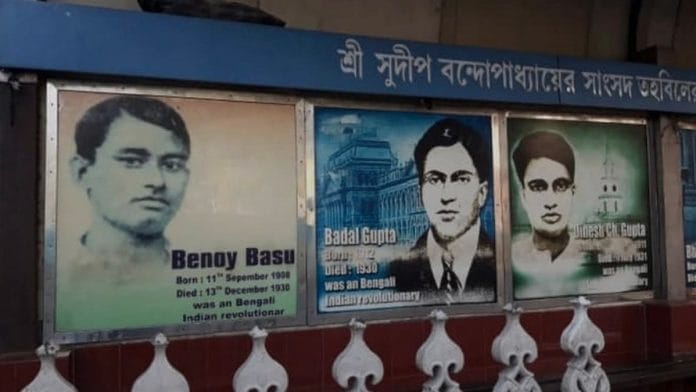
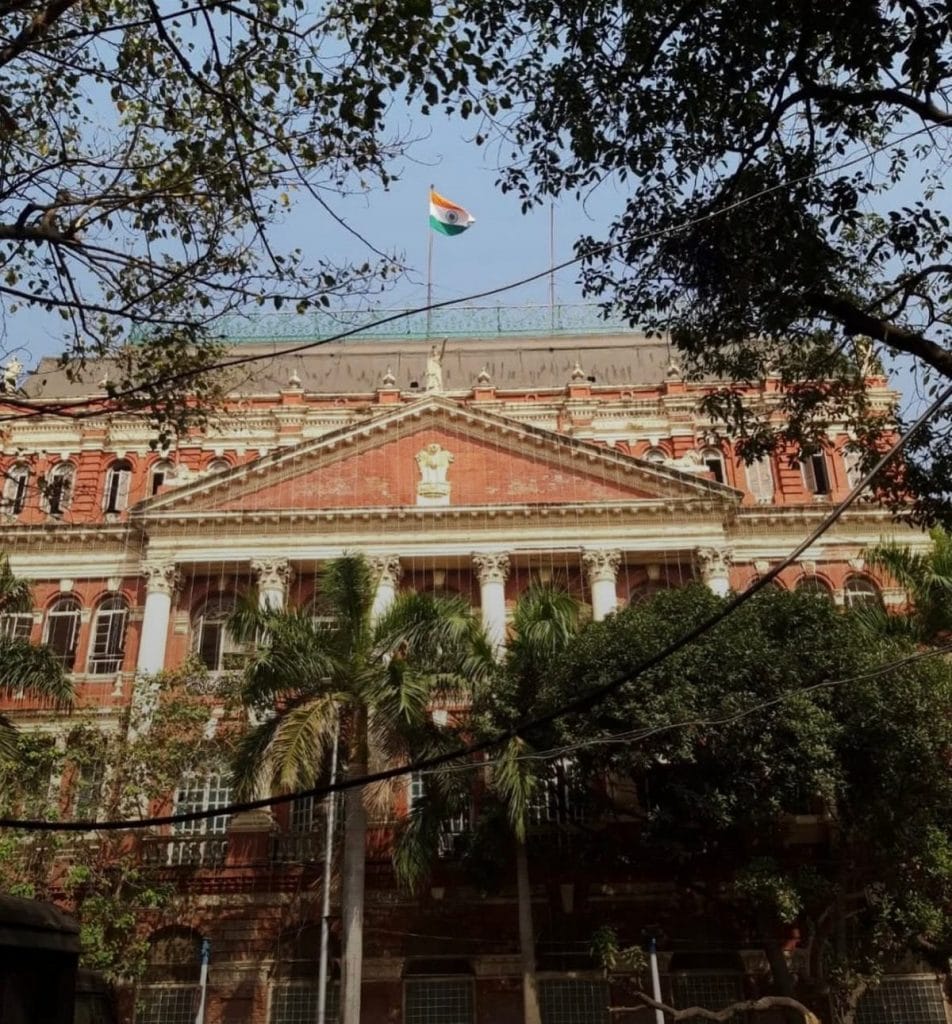
On 8 December 1930, three young men, Benoy Basu (22), Badal Gupta (18), and Dinesh Gupta (19), stormed the Writers’ Building in Calcutta and assassinated NS Simpson, the Inspector General of Prisons. The attack ended with Benoy shooting himself, Badal consuming potassium cyanide, and Dinesh being arrested. He was later executed on 7 July 1931.
But who were these men, really?
Through the Agnijug Archive, we traced and interviewed their families, including Soma Bal (Benoy Basu’s grand-niece), Bishwanath Dasgupta (Badal Gupta’s nephew), and Sunanda Sengupta (Dinesh Gupta’s grand-niece).

Soma Bal recalled that Benoy, a medical student and talented tennis player, grew up in an anglicised, affluent household where his mother was renowned for her continental cooking. Yet despite the British cultural milieu he was raised in, Benoy gravitated towards the Bengal Volunteers, a militant organisation mobilising resistance against colonial rule in Bengal.
Bishwanath Dasgupta recounted how, a day before the raid, the teenage Badal visited his family and gifted his six-year-old sister a doll. After the attack, it was Badal’s uncle, Taraninath, who surrendered at Lalbazar police headquarters to identify his body and perform the last rites, as Badal’s father refused to do so, fearing police persecution.
From his condemned cell, Dinesh Gupta wrote 93 letters. During our interview, Sunanda Sengupta recalled how he eagerly awaited visits from his toddler niece and encouraged her to pursue Rabindrasangeet. The child grew up to become the celebrated singer Maya Sen.
In 2023, the archive reunited the three families, creating a space for descendants, separated by grief and circumstance in 1930, to share loss and memory for the first time, 93 years later.
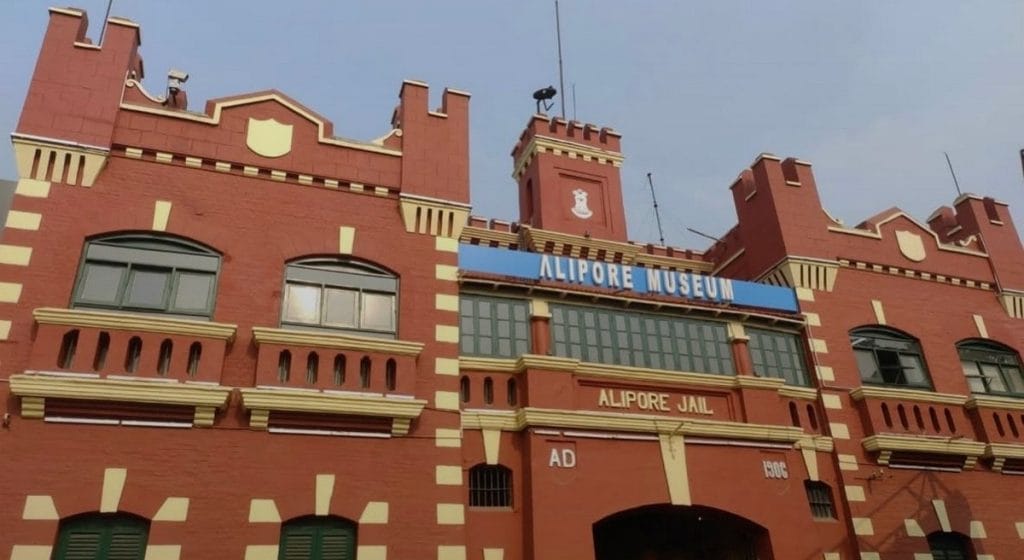
This public event also included readings from a few letters Dinesh Gupta sent to his family members and friends as he awaited the gallows in Calcutta’s Alipore Jail. One of the letters carried a doodle of a prison cell window, sketched in a corner.
Love in the time of bombs
Among the most striking lives documented by the archive is that of Ullaskar Dutta, a bomb-maker in the Alipore conspiracy case of 1908. Brutal torture during his incarceration in the Cellular Jail in the Andamans left him mentally and physically broken.
But there was another side to him. Before his arrest, he had been in love with Lila Pal, the daughter of nationalist leader Bipin Chandra Pal. During Dutta’s imprisonment, Lila was married off to another man. Love still found a way.
After independence, following the death of her first husband, Dutta married Lila despite her being paralysed from the waist down. For the rest of his life, he carried her wherever they went. Local residents in Silchar referred to the couple as “Shiv-Parvati,” invoking the image of Shiva carrying Parvati after her mortal body was destroyed. It is a story absent from official records, yet one that captures the enduring emotional aftermath of revolutionary politics.
The archive contains many such accounts: Rashbehari Bose, exiled in Japan, marrying a Japanese woman and running a bakery as a cover; Pritilata Waddedar, the first female martyr of twentieth-century India and the sole breadwinner of her family, leaving her impoverished household to lead an attack on the Pahartali European Club; schoolchildren-turned-revolutionaries who moved from classrooms to armed raids; families destroyed by surveillance and long imprisonments.
Also Read: From Lahore jail to Bose’s INA—women who fought for India’s freedom but remained forgotten
Taking revolutionary history beyond textbooks
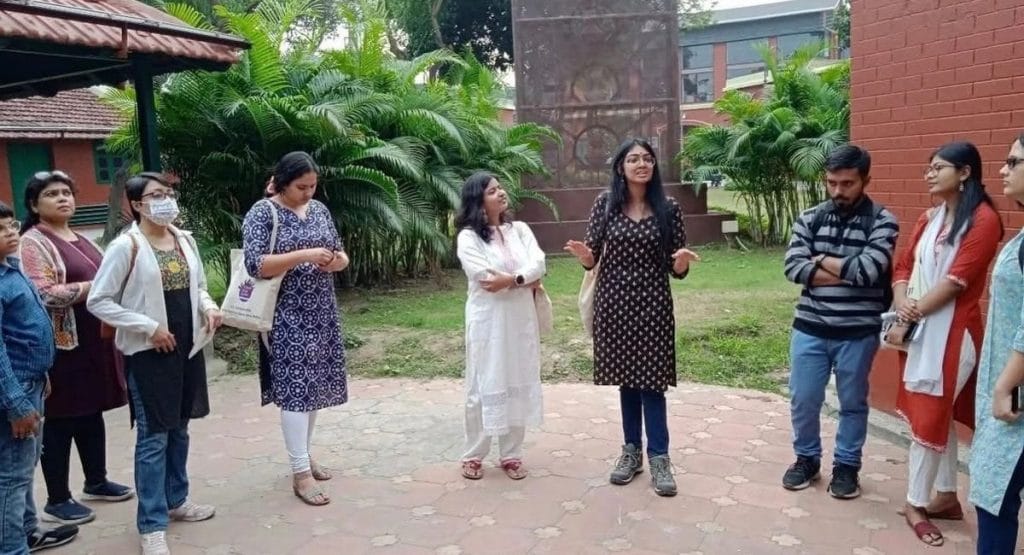
Documentation alone felt insufficient to us. We began sharing these histories through storytelling workshops and oral history walks in Kolkata, situating revolutionary lives within familiar neighbourhoods, former shelters, and colonial sites. In classrooms, public forums, and international institutions, including sessions at Columbia University, we use lived experience as an entry point into political history.
Participants are encouraged to engage with revolutionaries not as distant heroes, but as young people, family members and citizens shaped by choice and consequence. For many, especially younger audiences, learning the ages, relationships and vulnerabilities of revolutionaries makes the freedom struggle feel less monumental and more personal.
Colonial intelligence regimes documented revolutionaries as threats, not as people. In doing so, they erased entire lives from the historical record. Stories of heroism, too, whittled away their complexities.
At a moment when archives, surveillance and state power are again central to public debate in India, these histories acquire renewed relevance. In four years of running the Agnijug Archive, we have gradually realised that recovering these silences is not an exercise in mere nostalgia, but a reminder of how states decide what is worth recording and what can be forgotten.
The Agnijug Archive intervenes at this fault line, using oral and public history to restore political lives that were never meant to survive either the archive or public memory. Sharing these stories abroad has only reinforced the idea that they possess a universal character. Themes such as terrorism and colonialism not only transcend borders, they echo in private spaces as well.
Oyeshi Ganguly is a Berlin-based oral historian, archivist, and the founder of the Agnijug Archive. Her work focuses on anti-colonial movements, cultural history, and environmental history. Views are personal.
(Edited by Asavari Singh)