










Every morning in India’s metropolises begins with a quiet test of governance — will the tap run? Will the bus arrive? Will the street be cleared? The foundational success of the Viksit Bharat 2047 vision will be reinforced by the efficiency of these daily urban touch points. Urban public services form the backbone of a city’s economy and social well-being, directly impacting the health and productivity of millions of residents. These systems, ranging from health and sanitation, define the lived experience of the urban population and serve as the primary interface between the citizens and the state.
India’s cities, now central to economic growth, expose a persistent gap between ambition and everyday reality. As urbanisation accelerates, the question is no longer about scale, but about delivery: are cities getting the basics right? Evidence suggests otherwise. A 2024 multi-city study conducted across Delhi-NCR, Mumbai, Bengaluru, Kolkata, and Hyderabad focused on the educated workforce, a key pillar of economic development. These residents represent the “informed and aware” segment with the greatest “capacity to exercise agency”. Findings revealed uneven service delivery even among these primary taxpayers.
The study focused specifically on three core pillars: water supply, public transport, and waste management. Water supply ranks highest in satisfaction, while public transport and waste management lag significantly. Yet the message from these citizens is unambiguous: they are willing to pay more for better and consistent services. The demand is not passive; it is immediate.
The cost of poor public services
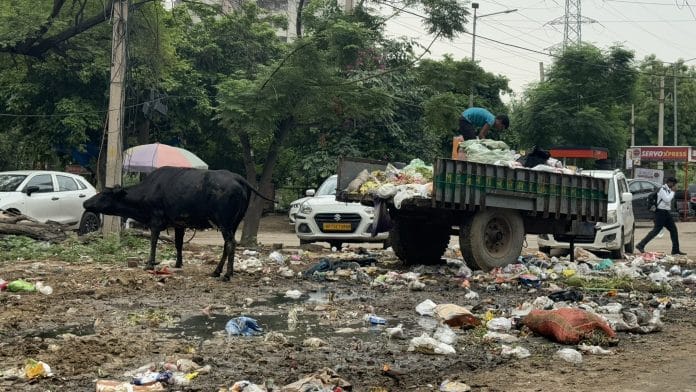
Public transport illustrates the problem plainly. Despite significant investments in metro networks, there remains an unmet opportunity to address last-mile connectivity issues, which currently limit public transit’s potential to reduce urban congestion. Waste management poses a significant structural challenge that requires transitioning from disposal-centric models to circular-economy practices. The sheer scale of refuse generated by India’s expanding urban centres has reached staggering proportions, yet the infrastructure for segregation and processing remains fundamentally inadequate. The system is still oriented toward disposal rather than reduction and recycling, with landfill dependence unabated. Water supply, though relatively better rated, is far from uniform. Intermittent access, leakages, and inequities persist, forcing many households to rely on private arrangements. The apparent adequacy often masks everyday vulnerability.
These deficits carry tangible costs. Long commutes erode productivity and quality of life. Private spending on basic services increases household burdens. Environmental and public health risks accumulate. The increasing reliance on private alternatives highlights an urgent need to revitalise public services to ensure they remain the inclusive, primary choice for all urban residents.
The explanation lies as much in governance design as in capacity constraints. Urban local bodies remain financially and administratively limited. However, an equally critical, often underemphasised layer is that of street-level bureaucrats — the citizen-facing functionaries who mediate between policy and practice. For most citizens, the state is encountered not in institutions but in these everyday interfaces. To bridge the gap between policy and reality, cities can implement performance-linked incentives for frontline staff while establishing “loop–closing” grievance systems to ensure accountability.
Additionally, real-time monitoring and research on the actual service delivery experience will turn basic services into reliable, inclusive options for residents. Probably, the single biggest challenge in urban public services is the gap between rapid urbanisation and the capacity of infrastructure systems to keep up. This is compounded by fragmented governance with multiple agencies and overlapping responsibilities.
Also read: What the last decade reveals about India’s economic path
Need for a renewed social contract
A bottom-up orientation is an operational necessity for reforms that systematically integrate citizen feedback into service delivery. This is beyond participatory rhetoric; systems that respond to local realities are more likely to sustain performance over time. There are, nonetheless, grounds for cautious optimism. Citizens’ willingness to pay indicates a readiness to support improved systems.
Urban India today needs a renewed social contract, one that prioritises reliability, transparency, and responsiveness, and aligns governance structures with everyday needs. This institutional change will entail empowering urban local bodies with predictable fiscal transfers, embedding real-time service monitoring, and, critically, building accountability mechanisms at the frontline through performance-linked incentives, grievance redress systems that actually close the loop, and clear consequences for service failure. The overhauling of service delivery on the ground must be a prerequisite before additional funding or new schemes can be introduced. This demands a shift in focus: from announcing large projects to ensuring that foundational services function predictably and equitably.
There is also an urgent need to redesign urban public services to address risks emanating from climate change by prioritising low-carbon, resource-efficient systems. A shift toward electrification, renewable energy, and circular-economy practices can reduce emissions in public transport and waste management. Cities must invest in climate-resilient infrastructure, including flood-resistant drainage systems, heat-mitigating urban design, expanded green spaces, improved air quality, and sustainable water management. Besides environmental benefits, this also yields positive externalities for public health, investment, productivity, and social cohesion.
Ultimately, effective governance, data-driven planning, and active citizen participation will determine whether cities can transition into resilient and sustainable urban centres. The trajectory of urban India will not be decided in policy documents. India’s development goals will acquire meaning only when repeated everyday interactions in the neighbourhoods translate into consistent improvements in daily life.
Bidisha Banerji is Director of Research at Vedica for Women and a public policy educator. Pallavi Maitra is an advocate. Views are personal.
(Edited by Aamaan Alam Khan)