






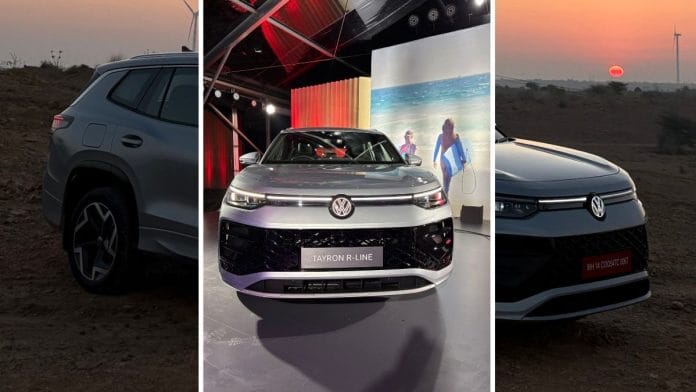



There is an old idiom, “same, same but different”, or in Hindi, “unees-bees ka farak”, and the three German SUVs that I have driven over the past few weeks exemplified that. Make no mistakes, they were different, but when you realise they’re all going for the same customer, they’re really not.
So, let’s take a look at these three SUVs. Well, there was the Mercedes-Benz GLC 300 4MATiC, which has been around since mid-2023. Then it was the newly launched BMW X3 30 XDrive M-Sport Pro, which, aside from being a mouthful, is the latest engine option on BMW’s mid-sized SUV, which launched its latest generation last year. And finally, the brand-new Volkswagen Tayron R-Line 4MOTION.
Beyond the fact that they’re all German SUVs, all three are assembled in India, so the upcoming Free Trade Agreement (FTA) with the European Union (EU) will not make them any cheaper. The Tayron is a seven-seater with a third row of seats essentially for little humans. It is actually the new name of what used to be called the ‘Tiguan All-Space’ in the previous generation and is essentially similar to the Skoda Kodiaq, although believing that ‘Tayron’ is a portmanteau of ‘Tiger’ and ‘Iron’ might be stretching things a bit. Only the GLC 300 is officially on sale with an ex-showroom price of Rs 74 lakh.
As of now, the Tayron and X3 are on pre-bookings with deliveries expected to start in a couple of months. While the X3 is likely to be priced on par with the GLC, the Bimmer is physically larger, with the Tayron expected to arrive at around the Rs 50 lakh mark.
There are a couple of reasons for this. Quite obviously, there is a ‘badge’ value for the two luxury carmakers and the fact that they churn out around 50 horsepower more, making them both ever so slightly more fun when you depress the accelerator.
Designed to manoeuvre on tough roads
All three vehicles featured the signature all-wheel drive systems of their respective manufacturers. However, these are not four-wheel drive systems. Essentially, they allow some power transfer between the front and rear axles when any of the wheels loses traction. And while you might not want to go off-roading in an 85-lakh Mercedes-Benz or BMW, these systems do make these vehicles rather capable in tough road conditions. Keep in mind that they will not protect the vehicle from scratches or dents.
What puzzled me about these three vehicles, though, was the feature sets of all three cars. I was surprised that the BMW did not have blind-spot warnings. No matter what your thoughts on Advanced Driver Assistance Systems (ADAS) are, this warning system is extremely useful, and I find it strange that a system available on a 15-lakh vehicle like the Hyundai Venue is not available on a BMW. Mercedes-Benz, on the other hand, has even integrated blind-spot warnings onto their ambient lights, and these are also operational when the vehicle is parked.
That said, you do get a very detailed heads-up display (HUD) on the BMW, and the iDrive system is fantastic, but all said and done, for the first time in a while, I genuinely felt this BMW was too big. I guess some folks like the extra size, but I don’t. Sure, modern suspension systems and computers negate the impact of size on the driving experience with next to no body roll, but I do believe that vehicles are getting too big these days.
Also read: India-EU FTA doesn’t mean cars will get cheaper. Read the fine print
Major gap in price point
This brings me to the Volkswagen Tayron. Yeah, it is big too, but at least you get a third row out of it—making it a seven-seater on paper. And there is a major gap in the market around the 50-lakh price-point and this slots in very nicely. It also comes pretty well featured, like a huge 15-inch infotainment display with the ability to set your own colour scheme inside the vehicle. Sure, it has a few gimmicks, such as the headlight animations, but they work. Okay, one can have strong opinions on the lit-up VW logos on the front and rear, but I guess all carmakers are going through a phase right now.
And yes, the two-litre engine only produces 204PS, but that is more than enough power for most Indian road conditions. The Tayron loses the ‘Dynamic Chassis Control’ (DCC) feature that one has on the Tiguan R-Line and the extremely sharp handling as a result, but it still handles well, and the ride is far better. In fact, because the Tayron R-Line gets front seats with a heated massage function, a godsend on a winter morning, which neither of the other SUVs has, I think it is excellent value.
I do understand that badges matter, I know people who lust after brands because ‘naak ka sawal hai’, but after driving all three of these and despite really liking some aspects of the Mercedes-Benz, whose multicolour animated ambient lights are a particular favourite of my son, and even the BMW who road presence is unmatched, I have to say that I really, really liked the Tayron R-Line. It just ticks all boxes for me in terms of performance, features and build quality.
Kushan Mitra is an automotive journalist based in New Delhi. He tweets @kushanmitra. Views are personal.
(Edited by Saptak Datta)