







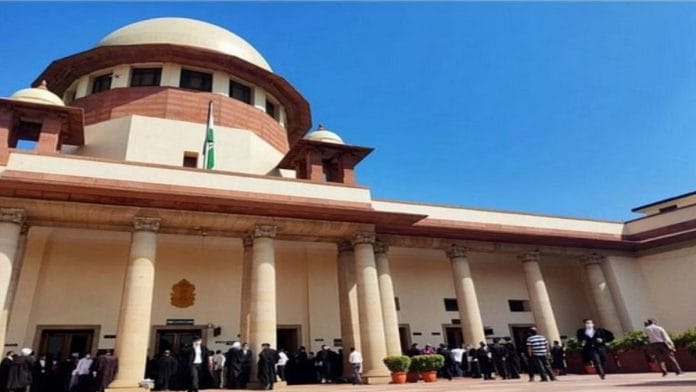



India’s long-troubled tribunal system has returned to national attention following the Supreme Court’s recent decision in Madras Bar Association vs Union of India. The case marks the latest chapter in a long-running contest over the Tribunal Reforms Act 2021, testing whether the government’s restructuring efforts conform to earlier judicial directions on composition, independence, and service conditions.
The ruling is an important development in India’s tribunal story, reaffirming its wider economic and institutional relevance even though the top court confined itself to the legal merits placed before it. Crucially, it directed the Centre to establish a National Tribunals Commission within four months and revisit key parameters such as age limits, tenure, and the appointment process.
This should act as a wake-up call to address one of the least examined constraints on India’s economic aspirations: adjudication. A Viksit Bharat cannot function on outdated adjudicatory machinery. Yet DAKSH’s State of Tribunals Report 2025 shows that company law matters take an average of 752 days to conclude, a statistic that exposes just how far the current system is from meeting the demands of a dynamic market economy. The gap between India’s growth ambitions and its dispute-resolution capacity is widening, and businesses feel that drag every day.
The Supreme Court’s judgment pushes the conversation in the right direction, but it does not, and could not, resolve the full range of structural issues that determine how tribunals work on the ground. DAKSH’s report makes this plain: the problems go beyond appointments and independence. Lasting reform requires modern processes, robust technology integration, unified and transparent data systems, and a contemporary institutional design that matches the scale and complexity of India’s economic transformation.
A system losing its purpose
Tribunals were conceived as agile, expert-led institutions meant to complement economic liberalisation by ensuring speed, technical competence, and consistency. Yet many have drifted far from that vision. Overlapping jurisdictions, uneven staffing, and chronic delays plague key bodies such as the National Company Law Tribunal (NCLT), and the Debt Recovery Tribunals (DRTs). Businesses often find themselves entangled in parallel proceedings or waiting months for clarity on jurisdictional overlaps.
Digital modernisation remains patchy. Despite the spread of e-filing, physical submissions continue to be mandatory in several tribunals, and no unified case management system exists. Data on pendency and disposals are fragmented across ministries, often outdated or incomplete. Nearly nine in ten employees at the NCLT work on short-term contracts, resulting in high turnover and weak institutional memory.
The absence of performance metrics has created a governance vacuum. Tribunals operate outside the accountability frameworks that define modern administration. The consequences are significant: DAKSH estimates unresolved disputes at the tribunal level amount to ₹24.72 lakh crore, about 7.5 per cent of India’s GDP. Insolvency cases take more than twice the statutory time to conclude, and 18 states still lack a local debt recovery tribunal. This structural friction erodes the gains of deregulation. Businesses may start faster, but they struggle to operate or exit efficiently. For an economy aspiring to global competitiveness, a fragmented and sluggish tribunal system has become a hidden tax on growth.
Also read: Holding judges to account can’t be about collective conscience. It must fix a broken system
Rebuilding tribunals for efficiency and trust
Many advanced economies have faced similar challenges but responded through institutional redesign. The United Kingdom unified its dispersed tribunals under His Majesty’s Courts and Tribunals Service, creating a central framework that balances administrative efficiency with subject expertise. Large-scale digital transformation now allows parties to file, track, and attend hearings online, while public dashboards display clearance rates and timelines.
In the United States, independent bodies such as the Government Accountability Office and the Administrative Office of the courts regularly audit tribunal performance, publishing data on efficiency, staffing, and user experience. Singapore’s e-Litigation platform goes a step further by integrating verification, payments, and remote hearings into one seamless system. These models show that efficiency and accountability can reinforce, rather than restrict, autonomy and due process.
DAKSH’s report offers a similar blueprint for India. While it calls for structural coherence, it also recommends building tribunals that are natively digital with physical presence – this will enable a single e-filing and case-tracking system built as digital public infrastructure, with public dashboards showing pendency and disposal trends to make performance visible and comparable.
Additionally, restoring technical expertise must be a priority. Tribunals were created to bring domain knowledge into adjudication, yet appointments often favour generalists and retirees. A dedicated judicial service cadre, supported by lateral recruitment from finance, competition, and technology backgrounds, can help rebuild competence and credibility.
Completing the reform cycle
The Madras Bar Association judgment is therefore not just a constitutional marker but a reminder that India’s economic ambitions rely on credible adjudication. Deregulation may simplify how businesses start, yet the real test of reform lies in how predictably and efficiently disputes are resolved. Without that backbone, the promise of an improved business environment remains incomplete.
For Viksit Bharat, adjudication must receive the same urgency as regulation. Efficient tribunals are an economic necessity, not an administrative afterthought. The Supreme Court has set the direction; the next phase must focus on building a tribunal system capable of matching the scale and complexity of India’s growth.
Surya is the Programme Director, and Ritima is a Senior Research Associate at the leading legal think-tank DAKSH.
(Edited by Saptak Datta)