









What would modern dating be like if every Pooja, Rahul, and Bhondu Naresh didn’t pretend to have a diploma in behavioural psychology? It’s a rhetorical question. We have watched enough reels to figure out that the silly heart is just a second fiddle to the ever-complex brain that decides our romantic patterns. Enter attachment styles — synching them is as sacred to us as kundli matching is for our uncles and aunties.
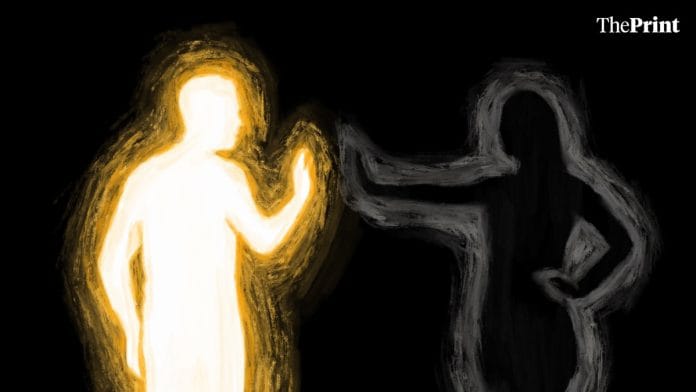
Think of it like a spectrum of intimacy tolerance. People with anxious attachment are on the far left end, craving closeness like it was oxygen. You could say that they act like Gollum, obsessed with “the precious”. Leave them on read by mistake and brace yourself for 34 missed calls.
On the far right are avoidant attachment ghouls who will get mad at you for loving them. These “emotionally unavailable” people don’t need anyone, and run away when things get real. Stuck somewhere in the middle are the secure ones, paying for therapy because they inevitably catch feelings for someone from either extreme.
Diagnosing the devil
If you’re looking for the most unhinged romance the apps can produce, it’s an anxious person falling for an avoidant. One is chasing, the other is looking for an exit strategy. Emotional casualties are guaranteed.
The ones who spice up this mix are the disorganised attachment folks like me. Push and pull is our game. We crave love like the anxious, yet recoil like the avoidant. Love us or leave us — you’ll never find us at peace.
Our dating pool is a messy cocktail of these attachment styles. No wonder heartbreak is inevitable, and situationships run rampant. Few emerge from it all unscathed. According to self-styled dating experts of Instagram — certified doctors and conspiracy theorists alike — you must figure out both your own and your Hinge match’s attachment style to minimise emotional damage. It’s all about diagnosing the devil you’re dealing with.
Like any other clueless romantic, I was swiping for love on Hinge in 2023. What I actually found was a tatted, jaded artist who’d spam my DMs one day and ghost the moment I replied. Things couldn’t get more exciting for my disorganised attachment style. Every ‘date’ — 2 am indoor meetings — was like the first act of an Imtiaz Ali film. And the next two weeks a pure tragic climax. After two years of reading listicles on ‘How to love an avoidant’ and 10 therapy sessions, trying to unpack my anxious-avoidant self, I was slapped with the ultimate knowledge — he doesn’t want me.
What really added salt to my wound was a reel with 50k views — it labelled me as an ‘avoidant discard’. Translation: the pathetic loser abandoned by someone who was always going to run away when things got real. How am I supposed to write the script of my romantic tragedy when the algorithm gives it all away in such cold, clinical terms?
Also read: Indian couples keep lying about how they met. Dating app stigma is real
‘Accept, don’t fix’
Equally frustrated is an engineer in Delhi. All he wants is to go on dates, have fun, and go on some more dates. But like clockwork, he ends up matching with women on Bumble whose main hobby is latching onto someone forever. After two chill dates with a research assistant, he found her literally kneeling on the floor, begging him not to book an Uber home. It was haunting for an avoidant like him to see how someone could get so attached to just a few meme exchanges and a bucket of popcorn at the PVR. Sadly, I can’t joke about it because I can totally get attached to a tree branch if I lean on it twice.
If every anxious girlie knew from the get-go that her attachment style — definitely not her — is the reason she’s not finding ‘the one’, she’d stop taking all rejections personally. “Don’t take it personally” was the exact same advice given to my ‘manglik’ mother when her kundli was rejected three times in a row.
If avoidants are to be left alone and anxious people are not to be encouraged, does that mean we all have to achieve secure attachment before we’re allowed to fall in love? That doesn’t seem right to me because the way most of us have been raised by our parents — either smothered with too much attention or not at all — ‘fixing’ the lifelong emotional damage will take another lifetime.
My therapist, for one, has been very clear: attachment styles are not to be fixed but to be accepted. She didn’t approve when I said that I would find a hot, anxious boy and teach him to play hard-to-get so that he doesn’t trigger me. What does she know, she’s not on Hinge.
This article is part of a series of columns on modern dating in India—the good, the bad and the cuddly.
Views are personal. The author tweets @ratanpriya4.
(Edited by Aamaan Alam Khan)