






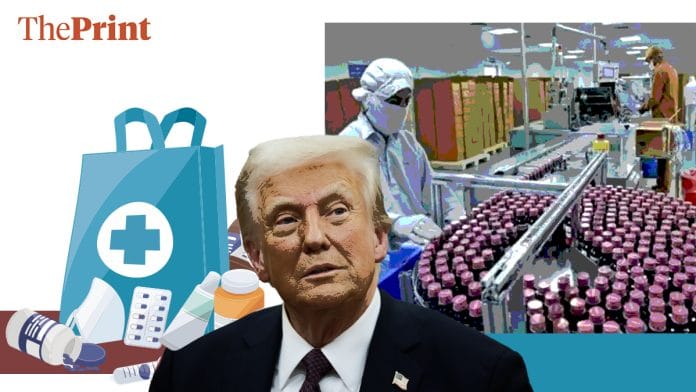



While speaking at the World Economic Forum last week, US President Donald Trump reiterated his interest in “acquiring” Greenland — not through force, but through tariff policies. Threatening to impose additional tariffs on eight European nations over their support for Greenland’s status as an autonomous territory of Denmark, Trump’s speech cast uncertainty over the robustness of economic interdependence. By reviving arguments on US dependence on global supply chains for medicines and alleged unfair drug pricing, the Greenland crisis illustrates how medicines are increasingly being positioned as instruments of geopolitical leverage, highlighting the vulnerability of supply chains. With the EU and India having inked a Free Trade Agreement (FTA) this week, and with the threat of tariffs still looming, pharmaceuticals will undoubtedly become a major focal point of deliberation. India’s own linkage with the US in the pharmaceutical space — where India is one of the largest suppliers of generics to the US — underscores how tariff threats carry considerable risk for health security.
Pharmaceuticals Under Section 232
The pharmaceutical sector faced a great deal of uncertainty last year when Trump threatened to impose tariffs on pharmaceuticals, citing national security concerns. A Section 232 investigation, which assesses national security risks arising from the import of pharmaceuticals, was initiated in April 2025 by the administration. The outcome of the investigation will likely be disclosed in March this year after Trump reviews the investigation’s recommendations and determines whether tariffs will be applied to the sector. Despite an impending outcome, the administration repeatedly signalled its intention to apply pharmaceutical sector-specific tariffs, framing them as necessary to ensure drug manufacturing and reduce drug costs for Americans. Initially suggesting tariffs of up to 250 percent, the administration later announced it would impose 100 percent tariffs on patented and branded drugs unless a company had committed to building manufacturing plants in the US. Subsequently, in October 2025, the administration stated that it was delaying this rollout as it began talks with countries and major drugmakers over measures to reduce drug pricing in the US.
Fragility of Transatlantic Pharma Trade
Consequently, trade deals were negotiated with countries including South Korea, Switzerland, and Japan to minimise levies on pharmaceuticals. The United Kingdom (UK) landed a landmark zero-tariff deal with the US on pharmaceuticals in exchange for the UK’s National Health Service (NHS) paying approximately 25 percent more for medicines. This deal was catalysed after leading pharmaceutical firms – MSD, AstraZeneca, and Eli Lilly – halted or cancelled expansion of their businesses in the UK, while following through on expansion plans in the US. While these deals offered a respite, deeper structural vulnerabilities in transatlantic pharmaceutical trade surfaced.
For Ireland, the US is its largest export market, and the US-EU trade deal – signed by Trump and European Commission President Ursula von der Leyen in August 2025 and yet to be ratified – placed a cap of 15 percent on pharmaceuticals exported by the European Union, placating its pharmaceutical industry. Under the deal, the EU is protected from additional tariffs that may result from the Section 232 review. In Davos last week, the pharmaceutical industry braced for impact as Trump reignited the tariff debate by threatening to levy an additional 10 percent – bringing total tariffs to 25 percent – on European countries that contributed to troop deployment to Greenland. This called into question the sanctity of the transatlantic trade deal that was negotiated in August 2025, prompting EU lawmakers to pause ratification. In turn, the EU conveyed the possibility of rolling out a trade ‘bazooka’ or an Anti-Coercion Instrument, which comprises punitive measures that restrict the economic activity of trade competitors – in this case, the US. Although the prospect of “acquiring” Greenland appears to have been put on hold by Trump after a meeting with NATO Secretary General Mark Rutte, the crisis reinforced the notion that pharmaceuticals can become a focal point in geopolitical rows.
Denmark, Novo Nordisk, and Strategic Exposure
Trump’s proposed acquisition of Greenland is not new. During his first term as president, he stated his intentions, which were rebuked by Danish Prime Minister Mette Frederiksen, leading to the cancellation of a scheduled visit to Denmark. Last year, the administration restated its intent to acquire Greenland, and, in response, CEOs of major Danish firms – including the CEO of pharma major Novo Nordisk – met with state officials to discuss the crisis.
Recognising the significant reliance of the US market on Novo Nordisk for insulin products and weight loss drugs, including Wegovy, which is a direct competitor to America’s Eli Lilly, it came as no surprise when, in addition to the threat of tariffs, another coercive economic strategy emerged. Seventeen pharmaceutical firms were sent letters in July last year, outlining steps to reduce drug costs for Americans. The drug pricing policy – most-favoured nation (MFN) – places the cost of select innovative drugs at the lowest price available in a basket of developed countries. Major pharmaceutical firms began scaling up investments in the US by acquiring smaller firms, expanding their existing footprint, and entering into MFN agreements. As a consequence, in November 2025, the US government entered into an MFN agreement with Novo Nordisk to reduce drug expenditure for Americans. Under this agreement, the firm is exempt from tariffs for the next three years, contingent on adherence to the terms by all parties. Collectively, these developments reflect a weaponisation of economic dependence, undermining trust and faith in international trade.
Tariff uncertainties highlight the overdependence Denmark has on Novo Nordisk. The company’s market value in April 2024 was US$570 billion – larger than Denmark’s GDP – and it is a vital driver of the country’s economy. Sixty percent of Novo Nordisk’s sales are generated in North America, and its major competitor in weight loss drugs is the American drugmaker Eli Lilly. Economic concentration around a single company, heavily dependent on US markets, heightens economic vulnerability — particularly to external shocks such as tariffs — drawing parallels with Finland’s experience following Nokia’s setbacks in the 2000s and 2010s. While Novo’s MFN agreement with the US takes cognisance of this vulnerability, the European Parliament supported the Critical Medicines Act earlier this month as a means to insulate the bloc’s supply of medicines from geopolitical tensions. This Act takes into consideration the region’s dependence on active pharmaceutical ingredients (APIs) from China and India, and anticipates that a similar dependence on the US for innovative medicines could emerge in the future. As the Act takes shape, a key pillar – international cooperation through strategic partnerships – will need considerable deliberation. As India is a critical supplier of APIs to the EU and shares the common goal of driving innovation in the pharma space, this would be an ideal avenue for deliberation.
India-EU Pharma Cooperation in an Era of Uncertainty
Against this backdrop, the new India-EU FTA has taken on a more strategic role. While pharmaceuticals have historically been kept outside the purview of punitive trade measures, developments over the past year underscore the growing importance of supply chain resilience and innovation partnerships. In the context of India-US pharma trade, generic medicines were spared from tariff measures, reflecting a recognition of their role in US health security. However, India lags in high-value innovation, an area of increasing strategic significance in global trade dynamics. India is home to several multinational pharmaceutical companies, and an increasing number of firms are incorporating AI-enabled drug discovery into their portfolios. AstraZeneca expanded its Global Innovation and Technology Centre (GITC) in Chennai to support its infrastructure and capabilities in this sector. Similarly, the Start-up Incubation and Innovation Centre (SIIC) of the Indian Institute of Technology-Kanpur (IIT-K) partnered with Boehringer Ingelheim India to foster healthcare innovation.
Further, the European Medicines Agency (EMA) and the US Food and Drug Administration (FDA) recently released guiding principles on the use of AI in drug development, which could serve as a reference point for international collaboration. Institutional partnerships that focus on joint research and development, innovation-based partnerships, and the harmonisation of AI regulations can serve as stabilising platforms to weather tariff uncertainties while ensuring the supply of critical medicines.
Conclusion
The Greenland episode illustrates how rapidly tariffs can be repurposed as geopolitical instruments. The evolving tariff landscape and rapid technological shifts in pharmaceutical innovation highlight the limits of visualising trade and industrial policy in silos. From an Indian and European vantage point, the challenge is not only to insulate pharmaceuticals from periodic trade disruptions but also to harness this moment to facilitate institutional cooperation around supply chain resilience, regulatory alignment, and innovation.
As AI-enabled drug development becomes more central to health security, convergence in standards across regulators, research organisations, and industry will become all the more relevant, as much as tariffs. A more strategic India-EU partnership in pharmaceuticals, premised on joint research and development, interoperable regulatory pathways, and shared innovation spaces, offers a durable avenue to manage uncertainty while strengthening access to critical medicines.
Lakshmy Ramakrishnan is an Associate Fellow with the Centre for New Economic Diplomacy at the Observer Research Foundation.
This article was originally published on the Observer Research Foundation website.