







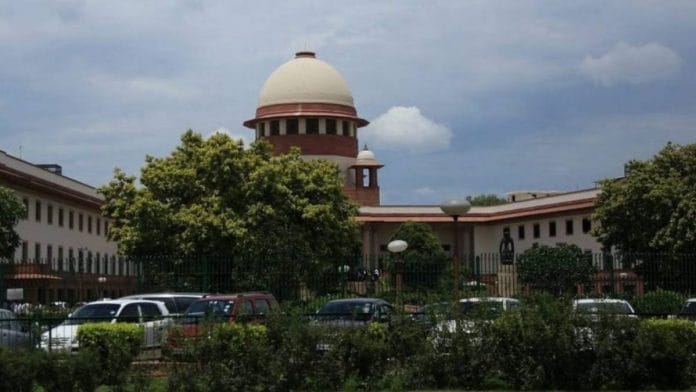



The Supreme Court’s advisory opinion in Special Reference No. 1 of 2025, concerning the powers of the Governor and the President under Articles 200 and 201, has been widely received as a quiet constitutional correction of the Court’s earlier ruling in State of Tamil Nadu v. Governor of Tamil Nadu. That perception stems largely from paragraph 114 of the opinion, where the Court characterises parts of the Tamil Nadu judgment as “erroneous” and recasts some of its key conclusions, particularly those concerning timelines under Article 201, as mere obiter. In effect, the Court has signalled that the State of Tamil Nadu decision rested, at least partly, on a shaky doctrinal footing. For many observers, this looks like a discreet judicial overruling. They are not wrong to detect that impulse.
Yet constitutionally, the Supreme Court cannot overrule a binding judgment through an advisory opinion. To accept such a possibility would fundamentally distort Article 143, collapse the architecture of precedent, and turn advisory jurisdiction into an appellate mechanism in disguise. Article 143 is intentionally crafted as a consultative power: the President may seek the Court’s opinion on questions of law or fact of public importance, and the Court may respond, but the opinion remains advisory. The wording and structure of the provision, especially the use of “may”, emphasise that its purpose is to assist governance in moments of uncertainty, not to reopen judicial pronouncements that have already acquired finality.
This structural separation was affirmed in the Cauvery Water Disputes Tribunal Reference (1991), where the Court cautioned that advisory jurisdiction cannot be used to revisit disputes that have been settled through the adjudicatory process. Allowing otherwise, the Court noted, would undermine judicial finality and blur the boundaries between the Court’s binding and non-binding roles. That reasoning applies with full force to the present reference.
Also read: Why the Chinese are celebrating the conviction of media tycoon Jimmy Lai
‘Questions of law’
The 2025 opinion does rely on passages from In Re, Special Courts Bill 1978, where the Court mused that advisory opinions may bind lower courts. But even there, the Court, speaking through Justice YV Chandrachud, acknowledged scholarly criticism that opinions under Article 143 do not fall within Article 141. The Court explicitly recognised the distinction between constitutional exposition and constitutional determination, and noted that “these questions may have to be considered more fully on a future occasion”.
Even when speaking expansively about advisory power, the justices did not erase that line; they only complicated it. Nothing in the jurisprudence transforms an advisory opinion into a binding precedent. Therefore, the Court is mistaken—largely on account of a selective reading of the decision in the Special Courts Bill—in holding that precedents support the overruling of a previous decision by way of an advisory opinion.
This is reinforced by the explicit text of Article 141, which applies only to the Supreme Court’s adjudicatory pronouncements. Advisory opinions offer constitutional reasoning, but they do not carry the coercive authority of precedent. Treating them as such would allow the executive to use the reference process to selectively unsettle judgments it dislikes, without meeting the demanding thresholds required for review or curative petitions. Such a move would hand the executive a constitutional shortcut to influence judicial outcomes.
Yet the strategic brilliance of the Court’s approach in this presidential reference lies precisely in what it cannot do as a matter of law but has managed to do as a matter of effect. While the Court could not overrule the State of Tamil Nadu judgment, it has effectively stripped it of precedential value. The opinion states that it does not intend to disturb the “substantial orders” passed in that case, but nevertheless proceeds to reconsider the underlying “questions of law”. By doing so, the Court has created a doctrinal pathway for future benches to disregard the State of Tamil Nadu ruling entirely. The relief granted in that case stands, but the legal reasoning that supported it has been hollowed out.
This manoeuvre significantly alters the constitutional landscape. The automatic judicial check on gubernatorial inaction that State of Tamil Nadu appeared to establish is no longer a guaranteed remedy. Whether intervention occurs in future cases of gubernatorial delay will depend on the discretion of the bench hearing the matter rather than on any binding rule of law. This marks a substantial retreat from the Court’s recent attempts to reinforce Indian federalism and discipline constitutional politics.
The lasting significance of this advisory opinion is thus not merely doctrinal but structural. Without formally reviewing or overruling its earlier judgment, the Court has effectively sanctioned a Union veto in state lawmaking, subject only to the uncertain contours of discretionary judicial review. An advisory reference has been transformed into an instrument of quiet, prospective overruling.
The State of Tamil Nadu judgment survives, but as a diminished precedent. The advisory opinion, though not binding, unmistakably signals the direction in which the Court now intends to steer the law.
Shashank Maheshwari is an assistant professor at Jindal Global Law School.
Anmol Jain is an assistant professor at Jindal Global Law School. He tweets @AnmolJain_law.
Views are personal.
(Edited by Prasanna Bachchhav)