









The NDA landslide in Bihar defies the expectations of all but the most optimistic exit polls. That the alliance would win was almost a given. It wasn’t just the exit polls that predicted an NDA victory, but so did most journalists who toured the state. Even the Congress leadership had written off Bihar, which may be why so few top Congress leaders expressed much hope as the results began streaming in.
But a landslide of this magnitude? That was never on the cards.
So what happened? There will be no shortage of explanations now that the verdict is in. But it’s worth remembering that most of the people who will now tell you how the NDA pulled it off had no clue that anything like this would happen.
Key features of the election
There are several extraordinary features to this election. The first is the record turnout. In most democratic societies (including India), a large turnout is a symptom of voter anger. People come out to vote in larger numbers than usual when they are disappointed by the performance of governments and want to vote them out. In this case, many more voters than normal seem to have lined up at the booths to endorse what the government has done. This is virtually unprecedented.
The second is the women’s vote. All surveys have always suggested that Nitish Kumar is the preferred choice of female voters. This time, the Election Commission revealed that more women had voted than ever before (and in most constituencies, female voters outnumbered men), and exit polls suggested that most of them had voted for Kumar as always.
But why has female support for Kumar—always high—increased so dramatically this time? One answer is that the handouts that began just before the election delighted women voters. But is this enough of an explanation?
The third extraordinary thing about this result is that it has turned all the rules about voter behaviour on their head. The conventional wisdom is that if a government fails to improve the lot of the voters, it will be punished.
Bihar is India’s poorest state. Despite some developmental initiatives in recent years, it has the lowest per capita income in all of India. In Maharashtra, for instance, the per capita income in 2024 was Rs 2.78 lakh. In Bihar, on the other hand, it was Rs 69,321. And the per capita income at constant prices was as low as Rs 33,966.
Unemployment is a huge problem. There is clear discontent among unemployed young Biharis, and many are forced to migrate to other states for work. Given this economic gloom, you would expect voters to turn against the government. However, Kumar, who has presided over this economic disaster for 20 years, has been re-elected by a landslide.
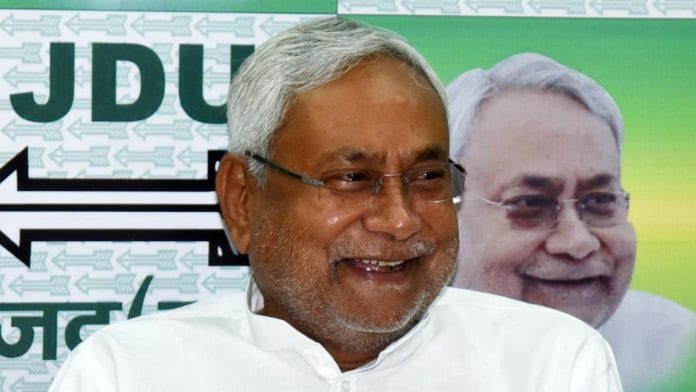
And the fourth astonishing feature is the success of Kumar himself. I don’t want to be unkind about his mental and physical health, but it is probably fair to say he seems less energetic and healthy than Joe Biden was when he was forced out of the American presidential race.
And yet, none of this seems to worry the voters of Bihar, who have re–elected Kumar by a landslide.
Also read: Bihar to finally have the first BJP CM. It’s just a matter of time
What worries the youth
The most popular explanation for the results is that Bihar still votes on the basis of caste. The NDA got its caste arithmetic right and won. The MGB was seen as being so Yadav–dominated that it put other castes off.
All of this is possible. But what does it tell us about the future of Bihar? If its voters are prepared to put aside every other factor and vote only on the basis of identity politics, then can it ever progress economically? Or will it remain India’s poorest state?
There are some signs that this could change. An exit poll by Axis, which predicted an NDA victory, also discovered that younger voters were more concerned about prosperity and jobs (or the lack of both) than middle-aged and older voters. At the next election, as younger voters grow in number, this may alter the results.
Another change is also inevitable. The two parties that dominate Bihar politics grew out of the Mandal phenomenon of the 1990s. Of the two leaders who have dominated caste–based politics in Bihar since, Lalu Prasad Yadav has effectively retired. Kumar will probably follow suit by the next election.
So, Bihar will enter a new era of politics. Will the post–Lalu-Nitish era see a change in emphasis? Will a new generation of voters focus on the state’s economic problems? And will the BJP, already such a major force in Bihar politics, be able to play its own kind of identity politics, substituting caste with religion?
It bears watching.
Vir Sanghvi is a print and television journalist, and talk show host. He tweets @virsanghvi. Views are personal.
(Edited by Prasanna Bachchhav)
Nitish Kumar has always been an unpredictable force in Indian politics, but this time he’s completely flipped conventional voter-behavior logic.
Such a senior journalist should not be so shameless and biased. Comparing Bihar with Maharashtra was absurd. He could have compared with nearby states . India being a democratic country it is very difficult to achieve dramatic results. But on the whole there have been significant improvement in law and order as well as infrastructure such roads. Bridges and power. Again sorry’ for your shameless journalism.