







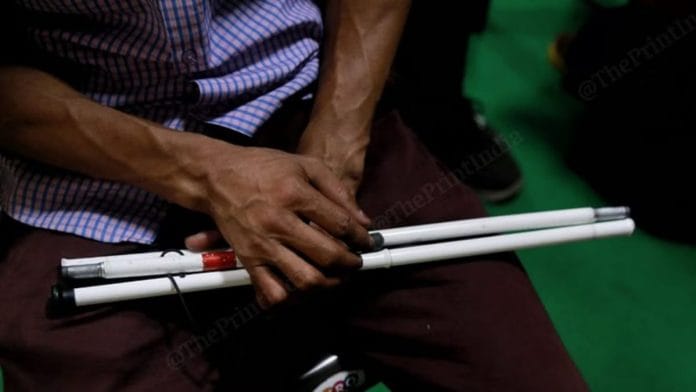



Decadal anniversaries are often marked by an array of discussions, debates and provocations from all stakeholders—what has been, what could have been, and where we are amiss. These are healthy discussions and do not represent the failure of the legislation itself, but rather a shifting of the start line. The legislators of the RPwD Act, in fact, represent the enviable lot whose enactment has aged rather well. Progressive and paradigm-changing, the RPwD Act unfurled a new decade of transition from a welfare-dominated approach to supporting persons with disabilities to a rights-based framework, redefining and expanding the language of citizenship for nearly 16 per cent of India’s population that had long struggled to find voice and institutional support.
The RPwD Act represents a decisive break from the Persons with Disabilities Act of 1995. The earlier legislation emerged in the context of India’s commitment to the “Proclamation on the Full Participation and Equality of People with Disabilities in the Asian and Pacific Region”. Two decades later, India’s ratification of the United Nations Convention on the Rights of Persons with Disabilities (UNCRPD) in 2007 necessitated a more expansive and aligned legal framework, culminating in the 2016 Act. This newer legislation was transformative in at least three ways. First, it moved beyond a narrow, medicalised understanding of disability to adopt a socio-medical model, recognising that exclusion is produced as much by social and environmental barriers as by individual impairments. Second, it substantially expanded the scope of protection, increasing the recognised categories of disability from seven to 21. Third, it embedded a rights-based vocabulary consistent with the UNCRPD, replacing welfare-oriented language with enforceable guarantees of equality, dignity, and full participation.
However, as with any legislation, we find ourselves asking more of legislators and government officials in a bid to democratise “dignity, individual autonomy, non-discrimination and accessibility” for all persons with disabilities. One place to begin is Chapter VIII of the Act, which outlines the “Duties and Responsibilities of Appropriate Governments.” These duties include awareness generation and accessibility across transportation, information and communication technologies, and consumer goods. The legislators were forward-looking in making several of these duties time-bound, recognising that translating intent into action requires governance ecosystems where time sensitivity is embedded in implementation.
Yet while the Act envisaged clear timelines following the notification of rules, much of this architecture has remained underdeveloped because several rules have not been notified by the Central Government, inadvertently allowing states the space to defer action. Nonetheless, even within these constraints, elements of the accessibility architecture are beginning to take shape. Collaboration between the Ministry of Road Transport and Highways and State Transport Undertakings across multiple states and Union Territories has led to gradual improvements in accessible public transport. As of August 2025, roughly 35 per cent of the total bus fleet and 53 per cent of intracity buses meet basic accessibility standards.
Movement is also visible in the digital sphere. The Ministry of Electronics and Information Technology reports that a growing number of government websites now comply with accessibility standards under the Guidelines for Indian Government Websites, with certifications issued through the Standardisation Testing and Quality Certification process. However, an overwhelming majority of these accessible websites belong to the Central Government, with only a handful from State Governments, revealing a persistent gap in state-level compliance. More recently, in 2025, the SEBI issued a circular mandating digital accessibility compliance under the RPwD Act for all regulated entities. Meanwhile, DEPwD initiated public consultations on draft accessibility standards for the built environment sector, signalling a renewed push to translate the Act’s provisions into operational standards.
Taken together, these developments suggest that the conversation around accessibility continues to evolve. Yet they also underscore a persistent imbalance: While we can track certain forms of progress at the level of the Central Government, equivalent visibility and accountability from State Governments remain limited. Given that relief to persons with disabilities falls within the State List under Entry 9 of the Constitution, states have both the authority and the opportunity to lead on disability governance. As examples from Karnataka, Goa, and Tamil Nadu demonstrate, states can and have developed models of accountability.
Also read: DPDP Act offers no special protection for disability data. It leaves PwDs vulnerable
Last mile implementation
What does it take to push the envelope on the duties and responsibilities of appropriate governments? For starters, the Central Government must operationalise the Act’s commitments on accessibility by issuing the necessary rules that enable accessibility across consumer goods as well as digital and physical environments. However, for these rights to translate into everyday realities, effective institutional mechanisms must exist at the last mile.
Current implementation gaps illustrate the challenge. As of February 2025, more than 10 per cent of states have not appointed a State Commissioner for Persons with Disabilities. Institutional capacity at the state level has also historically been uneven. A 2018 Parliamentary Standing Committee report found that only six out of the country’s 36 states and Union Territories had dedicated departments and district-level social welfare officers responsible for disability-related issues—Andhra Pradesh, Madhya Pradesh, Odisha, Rajasthan, Tamil Nadu, and Uttar Pradesh.
There has been some improvement since then. Maharashtra and Karnataka have joined this list, and the 2025 Standing Committee noted that several state governments are beginning to establish independent departments and appoint dedicated ministers for disability. States such as Maharashtra, Odisha, Bihar, and Rajasthan have also significantly expanded their allocations, with budgets rising from negligible levels to roughly Rs 1,000–1,500 crore—an indication that disability governance is beginning to receive greater fiscal attention.
Yet implementation gaps remain stark. Three years after the passage of the RPwD Act, only 12 states had begun implementing the law. As per the report, of the 24 responses received at the time, only 10 states (41.7 per cent) had notified their State Rules, while several others reported that rules had been drafted but not formally notified. This is despite the Act’s clear mandate under Section 101(1), which requires state governments to notify these rules within six months of the law’s commencement.
The ultimate vision of the RPwD Act will be fulfilled when models such as the Karnataka system—which operationalises the Act at the grassroots through a network of nearly 7,000 village-level disability workers serving roughly 30,000 villages over the past decade—are strengthened and replicated across states.
Also read: Govt incompetence erases disabled from census count. 13 steps to fix it
Cross-cutting agenda
While vertical governance structures are essential for securing citizenship rights for persons with disabilities at the last mile, horizontal governance mechanisms are equally critical for embedding disability sensitivity across government systems. The RPwD Act, in its mandate, cuts across a wide administrative architecture—spanning over 20 departments nested within roughly 18 ministries—reflecting its inherently cross-sectoral design rather than a single-ministry responsibility.
Yet, this horizontal diffusion remains limited. The Central Advisory Board on Disability, constituted under Section 60 as a national-level consultative body, has not fully translated this distributed mandate into coordinated action. A recent report found that 60 per cent of all parliamentary questions on disability were directed to the Ministry of Social Justice and Empowerment (MoSJE). This concentration suggests a persistent framing of disability as a welfare issue, rather than a cross-cutting rights agenda.
Notably, twelve ministries with clear obligations under the Act—including Agriculture, Rural Development, Housing, and Tribal Affairs—did not receive a single disability-related question through 2025. This points not only to limited political salience, but also to the absence of institutionalised pathways for mainstreaming disability across sectors.
Addressing this requires moving beyond intent to institutional design. Designating nodal officers within each mandated ministry could enable internal ownership and accountability, while a cabinet-level committee on disability could provide the necessary coordination across departments. At the same time, targeted capacity-building for parliamentarians remains critical to deepen engagement with disability as a systemic governance issue rather than a sectoral concern.
Furthermore, tools of inclusion, such as the adoption of a Disability Budget Statement—akin to Statement 13 of the Union Budget (Gender Budget Statement)—can play a dual role. On the one hand, it functions as an introspective exercise for ministries, enabling them to assess the extent to which disability considerations are embedded in policy design and programme implementation. On the other hand, it serves as a public accountability mechanism, making visible both the quantum and distribution of expenditure on disability across sectors. Such an instrument can help shift disability from the margins of welfare accounting to the core of fiscal and policy planning.
A decade on, the task before governments is not to revisit the ambition of the RPwD Act, but to ensure that its promise of dignity, autonomy and accessibility translates from legislative intent into lived reality.
Nipun Malhotra is Founder, Nipman Foundation & Director, The Quantum Hub (TQH). He is on Instagram @nipunmalhotra1
Harshita Kumari is Analyst, The Quantum Hub (TQH) . She is on Instagram @memoirs_of_a_bookaffair
Views are personal.
This is the first in a three-part series on 10 years of the RPwD Act.
(Edited by Theres Sudeep)