






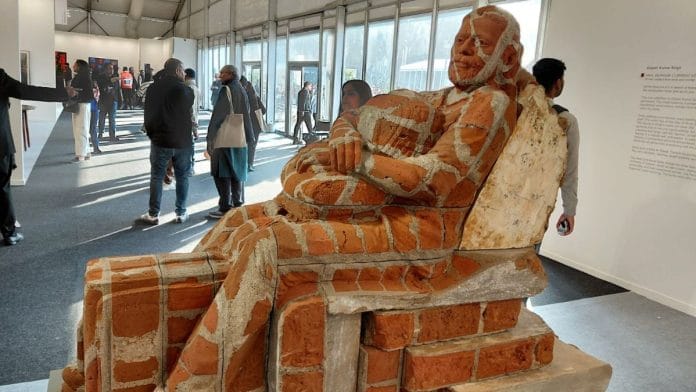



A powerful art installation, mounted entirely on red bricks pulled out of rubble, is a buzzy conversation point at this year’s India Art Fair in New Delhi.
It is artist Girjesh Kumar Singh’s edgy but subtle commentary about the anxious times we live in that makes us leave our homes behind or evicts us. The exhibition is called Haal Mukaam (or Current Location).
Questions swirl in the exhibition space among visitors about the brick sculptures. Is it a critique of the immigration crisis around the world and the political anxiety that accompanies it? Is it about the homelessness and destruction in Gaza? Or is it about bulldozer demolitions in India?
Every person sculpted in the exhibition is resting, leaning, sitting on bricks, between bricks, or is inside. bricks. The men and women are clutching onto, cradling or leaning on their backpacks, bundles, belongings and suitcases. Each work exudes a touch of desperation, an uncertainty of arrival and a sense of loss that sudden, perilous journeys and displacement bring. The bags are so entangled with the bodies that they are sculpted as a physical extension of human beings in transit.
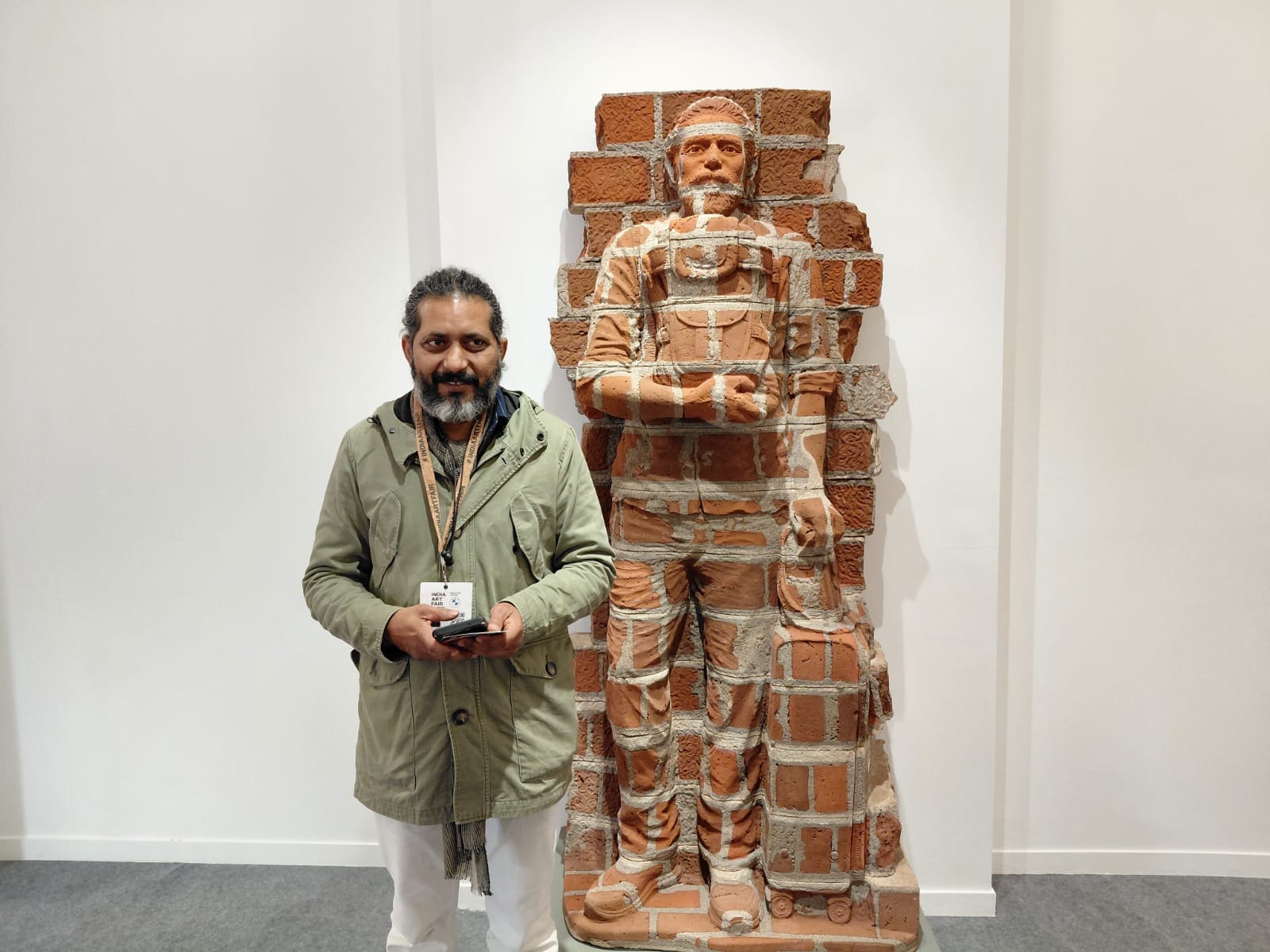
One exhibit, called In Transit, shows a bearded man reclining on a pile of bricks embracing his backpack, with a suitcase locked between his legs. Another brick man stands impaled against a brick wall, with his baby bag glued to his chest. There is a large pile of different kinds of bags and baggage, all made of red bricks. And a series of figurines confined in a tiny space on a brick, attached to their bags.
“These bricks are all from demolished homes and structures I find in the city,” explained Singh, who was born in Uttar Pradesh and now works out of a studio in Vadodara. The bricks are an enduring medium and leitmotif of all his sculptures for some time now.
“The bricks were once part of a lived space; they constituted a life, an identity. But after demolition, they are scattered. I go and collect them. It’s a lot like people who are forced to move. They once had a full life, too. During travel, they are carrying both their old life and loss with them. So, in a sense, they never really leave, you know. People like to read multiple meanings into my work.”
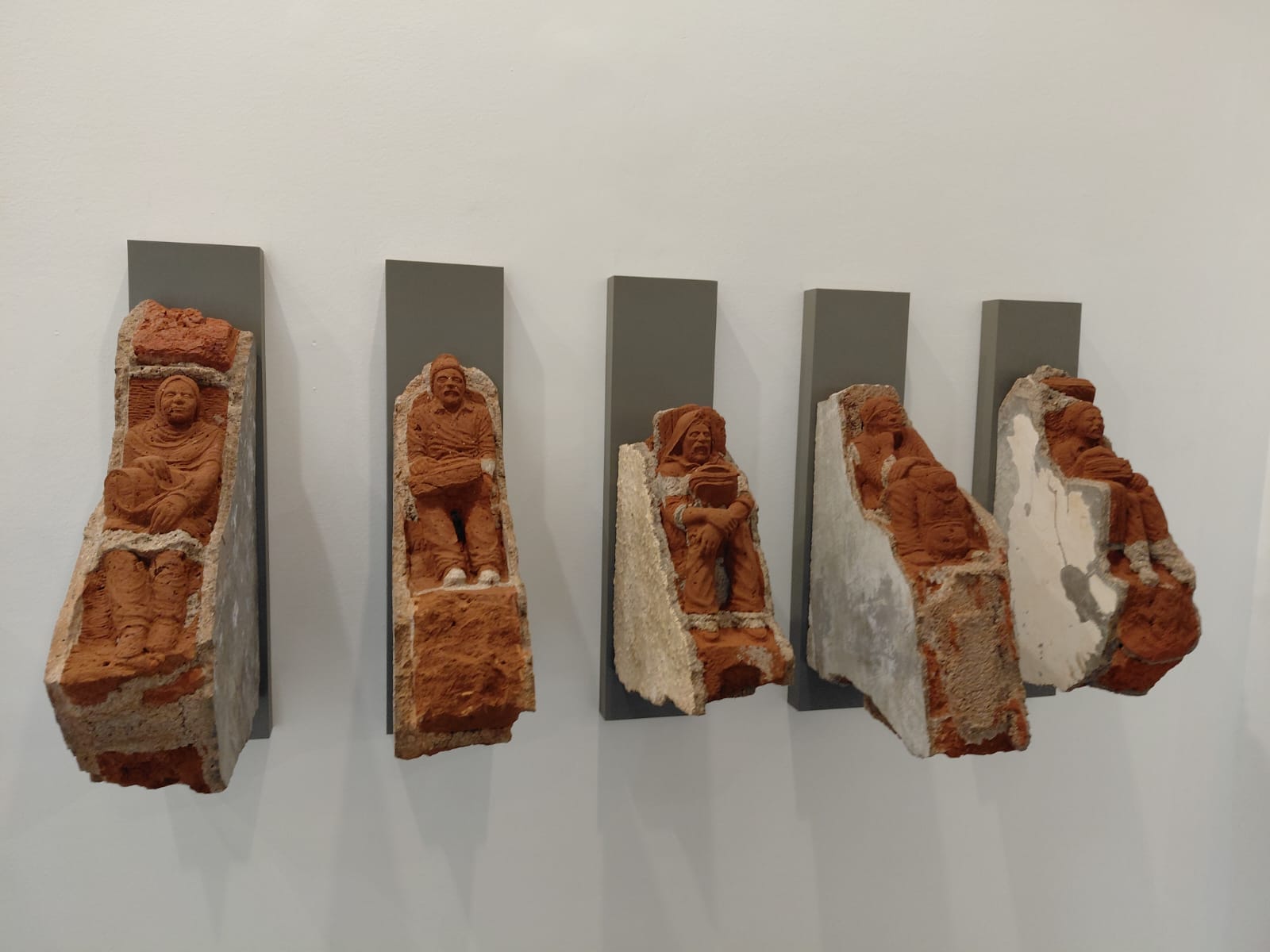
The bricks for all the artwork in Haal Mukaam were taken from the remains of demolished walls found at an old Vadodara railway station built by then Maharaja Gaekwad. “I have been working with the concerns of identity and migration,” he had said at that time.
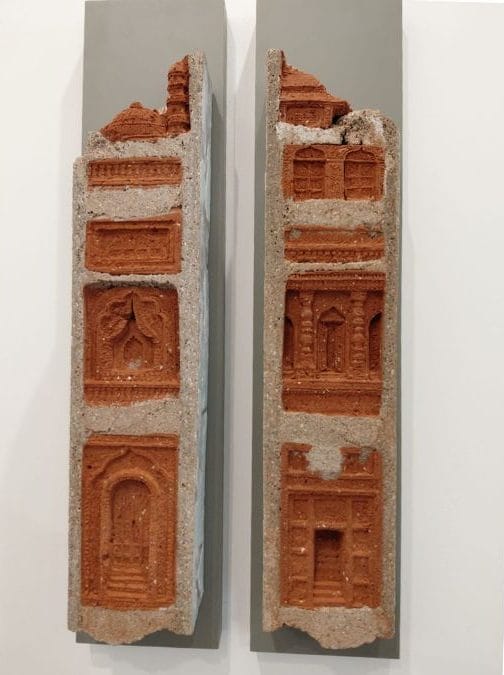
The exhibition at the India Art Fair also features a series of tiny arched doorways made of red bricks. “These are the doors that let you leave,” he said.
Also read: My top 10 hot picks from India Art Fair 2026—Rohit Chawla
Purposely undefined
Singh’s visually stark and arresting sculptures are represented at the art fair by Mumbai’s Rukshaan Art Gallery and are a reel magnet for the young audience. Many plumb him for definitive answers and clues.
He patiently walked visitors through the artworks but resisted defining his artistic strategy and locating them in a particular time or politics. He said he wants them to be an insight into human movement, by choice or not. Even so-called choice is, after all, a negotiation, according to him.
The works are a sort of a layover—moments between arriving and leaving. The bricks and the people in the sculptures scream impermanence.
“There is no journey without baggage, whether literal or metaphorical. We carry identities, histories, belief systems and memories,” reads the curatorial text panel. “Even in moments of rupture—when we are broken, displaced, cast out—the baggage endures…Like fractured walls still holding the weight of the past, fragments retain meaning. The works reflect this resilience.”
It brought back the memory of another artwork for me.
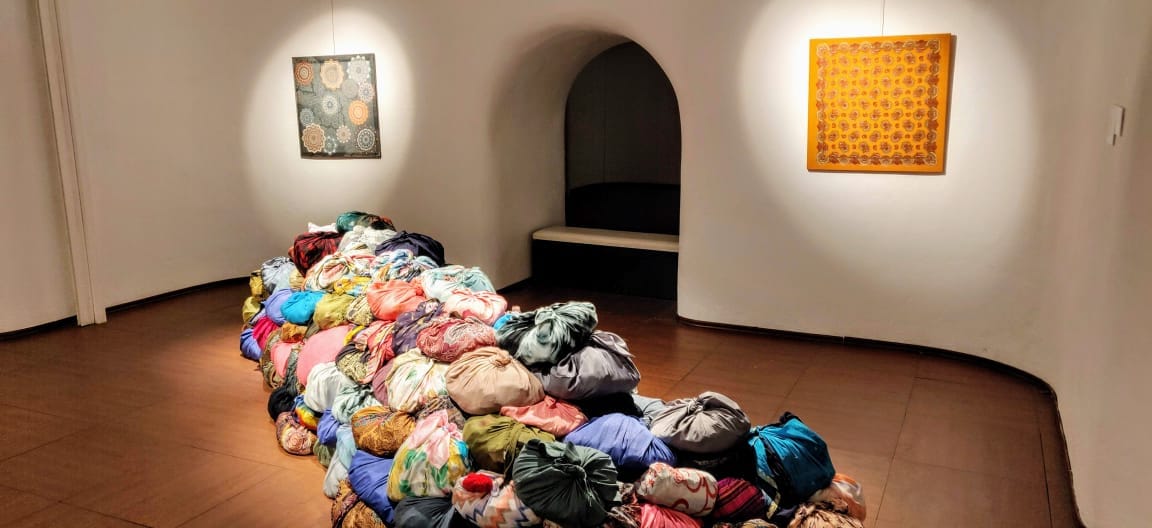
Some years ago, when the refugee crisis in Europe was bubbling over, coupled with widespread anxiety over Muslim immigrants and Islamophobia, I stumbled upon a stunning art installation by Lizzy Mayrl in Istanbul’s Taksim Cumhuriyet Sanat Galerisi . It was a giant pile of travelling cloth bundles made of colourful head scarves.
It was called ‘Bundle’.
Rama Lakshmi, a museologist and oral historian, is ThePrint’s Opinion and Ground Reports Editor. After working with the Smithsonian Institution and the Missouri History Museum, she set up the ‘Remember Bhopal Museum’ commemorating the Bhopal gas tragedy. She did her graduate program in museum studies and African American civil rights movement at University of Missouri, St Louis. Views are personal.
(Edited by Theres Sudeep)