










Hello, Fashion Police? I’d like to report a theft — Jhumka gira re Paris mein
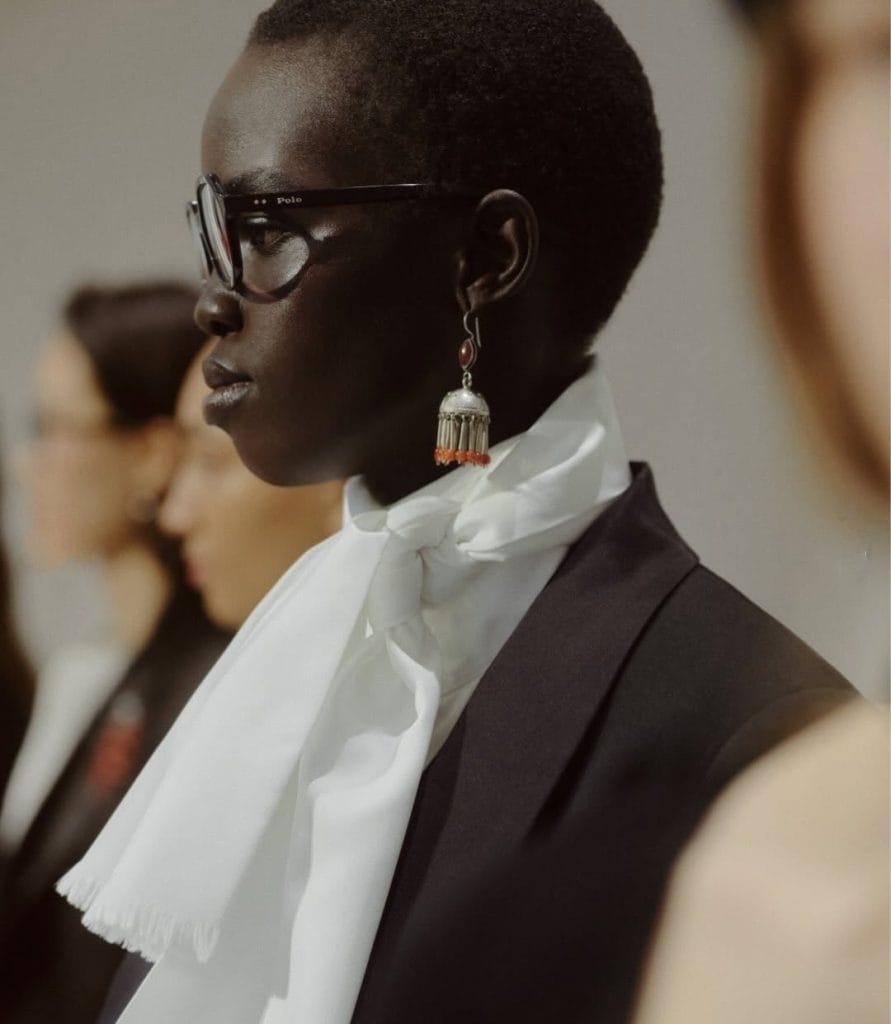
What is “vintage” if not one of the oldest civilisations on the planet? Ralph Lauren’s latest collection, which debuted at Paris Fashion Week, featured some gorgeous “vintage” earrings. In case it slipped your notice, they were jhumkas. Say it with me: J-H-U-M-K-A. It is a traditional Indian accessory worn throughout the subcontinent.
Jhumkas are so much more than just earrings; they are part of our cultural identity. Heroines have long been shown in Bollywood putting on their jhumkas as admirers watch. From the iconic song ‘Jhumka Gira Re’ from the 1966 film Mera Saaya to its modern revival in ‘Jhumka’ in Rocky Aur Rani Kii Prem Kahaani (2023), the earring is everywhere.
Well before they were “vintage earrings” on a Paris catwalk, jhumkas were being sold in roadside stalls and worn by our mothers and teachers. Figures in the temple sculptures of Thanjavur and Khajuraho sport bell-shaped ear accessories; Indian deities have been depicted wearing them for centuries. From Kathak to Bharatanatyam to Kuchipudi, traditional Indian dancers wear them too.
The problem, dear culturally inept fashion house, is not your use of the design, but your dismissal of its history. Those of us who belong to rich cultures learnt a long time ago that the list of stolen items is too vast to ever truly be justified, so we stopped trying. But what we have not yet given up on is the acknowledgement that it is, in fact, stolen.
On any college campus across the country, young women can be seen wearing jhumkas, kurtis and Kolhapuris (No, I’m not looking at you, Prada. I’m looking at the bhaiyas in Janpath and Sarojini Nagar who sell them for Rs 100). The trio is the unofficial uniform of the Indian college girl. The jhumka is often the first earring many of us buy in those early years.
Also Read: Prada’s Milan misstep can bring Kolhapuris back on their feet. Chappal Gali has new hope
Can the ‘Humara culture’ people please stand up?
The dupatta, which doubled as a cape, a magic blanket, and even a saree when we were kids, is now a “Scandinavian scarf.” The mukaish fabric that my grandmother saved for her daughters’ weddings is now “ivory houndstooth”, sold by Dior for $200,000. And the cherry on top: the haldi ka doodh that every child hated and every groom in a bad Hindi film was offered on his wedding night is now a “golden latte”.
The truly sad bit, though, is not that it has been stolen but that it has been attributed to cultures and countries it does not in any way, shape, or form belong to.
Slowly but surely, our cultural identity has been chipped away and stolen, much like the jewels of our past. Yet most sections of the Indian media are not nearly as upset about this as they are about things that happened 50 or even 500 years ago.
No loud, Thar-driving “alpha” males are getting upset over cultural appropriation. Not even the “woke” youth of the day. I see barely a post about this symbol of Indian culture drifting in a sea of banal violence online.
Much like Prada with its “leather sandals”, the American luxury fashion house Ralph Lauren has also lifted generations of history, work, and culture from craftspersons across the country.
What Indian artisans spent their lives learning and perfecting is now mass-produced and sold for twice the amount they will probably ever see in their lives. And let’s not kid ourselves: anything A-list designers show during Vogue’s most important week of the year will soon turn up in the collections of Shein, Zara, and other fast-fashion brands.
Inspiration can be drawn from anywhere and anyone. But if you can acknowledge your parents, friends, and family, then you can also acknowledge where your inspiration comes from.
Even if belatedly, Prada acknowledged the inspiration for its chappals from Kolhapuri artisans and even signed a deal with them for a line of limited-edition $939 sandals last December. Credit cannot only flow upwards. It must travel back to the communities that shaped these designs long before fashion houses spotted a trend.
Views are personal.
(Edited by Asavari Singh)