






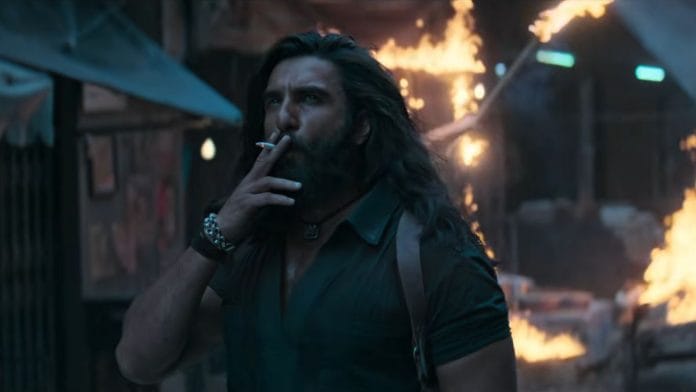



Dear Mr Dhar, are women mere plot devices for you?
Every morning I wake up, and right alongside the latest updates on the conflict in Iran are updates about Dhurandhar: The Revenge. March was a month to honour women. But this Women’s History Month, all we have done is talk about a film that has exactly one female character—all other women are glorified extras.
In both the Dhurandhars combined, there are approximately four women characters. And they all bear some relation to Hamza Ali Mazari/Jaskirat Singh Rangi (Ranveer Singh), whether as a wife, mother, or sister. They have no agency of their own and are only relevant so long as they serve the purpose of being the “victim”. Because how else will our morally grey hero save the day?
We have nepotism to thank for the one woman in Dhurandhar 2 who isn’t a total pushover. Dhar’s wife, Yami Gautam, makes a brief but pivotal appearance as Shazia Bano, an undercover Indian operative. The tiny cameo is offered all the strength the whimpering women’s quartet lacks.
Dhurandhar’s women serve as mere plot devices for Hamza’s rage or origin story. Sara Arjun’s Yalina Jamali is a mere pawn in her husband and father’s grand scheme to overthrow the enemy. The poor child does not even know her father is Indian or that he is a Hindu. And she forgives Hamza for lying to her in a record-breaking two-minute conversation that is so powerful that it erases all her own thoughts. Has Aditya Dhar ever met an actual woman scorned?
Sure, Hamza and Yalina’s relationship is politically charged, but why is she shown as a doormat?
You don’t have to be a behavioural psychologist to know that the stories we watch shape how we see ourselves. Perhaps that is why gritty coming-of-age stories and underdog narratives resonate so heavily with us; we, too, want to believe we can conquer anything.
If a film takes advantage of its platform by talking and commenting on Indian politics and culture, it cannot erase half of its population as mere victims and plot devices. Do better, Dhar.
Also read: Almaty dog rescue episode now has a statue. Internet can’t stop gushing
How did we go from Mrs to Dhurandhar?
This time last year, the country was obsessed with another Hindi film: Mrs. Sanya Malhotra’s drama about a married middle-class woman told the story of thousands across the country, and it resonated with the general public. We saw our mothers, grandmothers, and perhaps, even our future selves in Mrs.
In 2024, too, Bollywood chose to show strong women characters. A modern Indian woman could still see herself in Alia Bhatt’s Jigra and Jahnvi Kapoor’s Ulajh. Kiran Rao’s Laapataa Ladies was the talk of the town, bringing the country a story from its grassroots and showing the everyday realities of women.
One does not need to make “women-centric” films to show women as human beings. But do we really need to show them in such a regressive and patriarchal sense as Dhar’s Dhurandhar does?
The impact of Dhurandhar on the box office has a slew of filmmakers holding their releases—a phenomenon unseen in the longest time in Bollywood. It has flooded people’s social media feeds and dominated the chatter—but it doesn’t have enough to start a serious conversation. It has only the hype. The biggest let-down? It reaffirms the myth that women are “weak” in popular imagination.
Views are personal.
(Edited by Prasanna Bachchhav)