






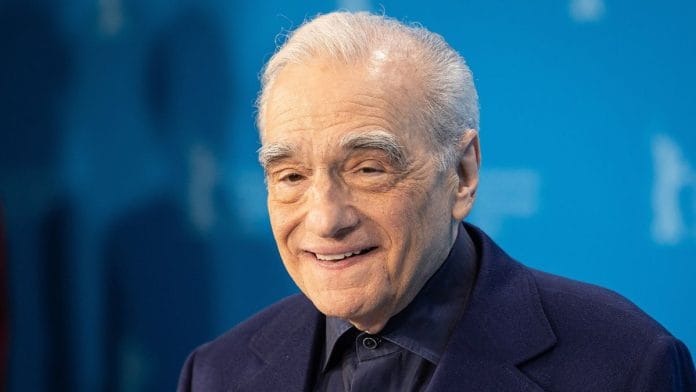



There is one Hollywood director at the centre of India’s Oscar moment in 1992 and 2026. His name is Martin Scorsese. He played a big role in Satyajit Ray’s Academy Award, and now he is the mover and shaker behind Neeraj Ghaywan’s shot at the Oscar for Homebound.
In 1992, Hollywood bigwig Martin Scorsese incited and aggressively nudged a movement across the film industry to get Satyajit Ray an honorary Academy Award.
Scorsese, along with Ismail Merchant, wrote letters to the Academy and encouraged other Hollywood celebrities to do the same, endorsing Ray. Within months, a wave of support and admiration rose for Ray in the American film industry. Even those who weren’t familiar with his body of work were suddenly in awe of Ray’s mastery of cinema, while others were in awe of how influential his works were across the Indian subcontinent. Scorsese knew Ray, but he pushed for the award among those who might have never heard of it. He used his influence in the film fraternity to lobby for Ray receiving the award.
While a lot of the praise for Ray among the Hollywood elite was genuine, some were just puff pieces typed up by secretaries with “CC: Martin Scorsese” beneath the signature, as a Washington Post article suggests.
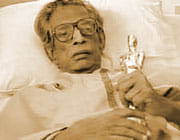
For Ray, the award was almost a full-circle moment; he said that he learned the art of filmmaking from Hollywood films. “It means the end of prizes. I think there is nothing more after this.”
Ray was, by any measure, an obscure choice for the award; he had rarely received praise earlier from Western audiences since his pictures were never released in the United States. Scorsese urged Academy President Karl Malden to award Ray, saying that he “has enriched our lives and careers, as he has done for many others.”
In fact, there is an urban myth that Scorsese had his own fanboy moment with Ray. Way back when Scorsese was studying in New York, he called up the Indian legend and told him how much he admired his work; the alleged incident even inspired a scene in the film Aparajito.
A similar pattern
Cut to some 30-odd years later, and we are witnessing a very similar pattern emerge. Scorsese is once again moving mountains for an Oscar for a brilliant Indian film.
Neeraj Ghaywan’s Homebound is gritty, real, and entertainment is at its finest, but with Scorsese at its back, the film has managed to make its way to the prestigious inner circle of the promised land. According to Forbes, Scorsese’s input helped Ghaywan toe the line between appealing to mainstream Indian audiences and also the Cannes audience.
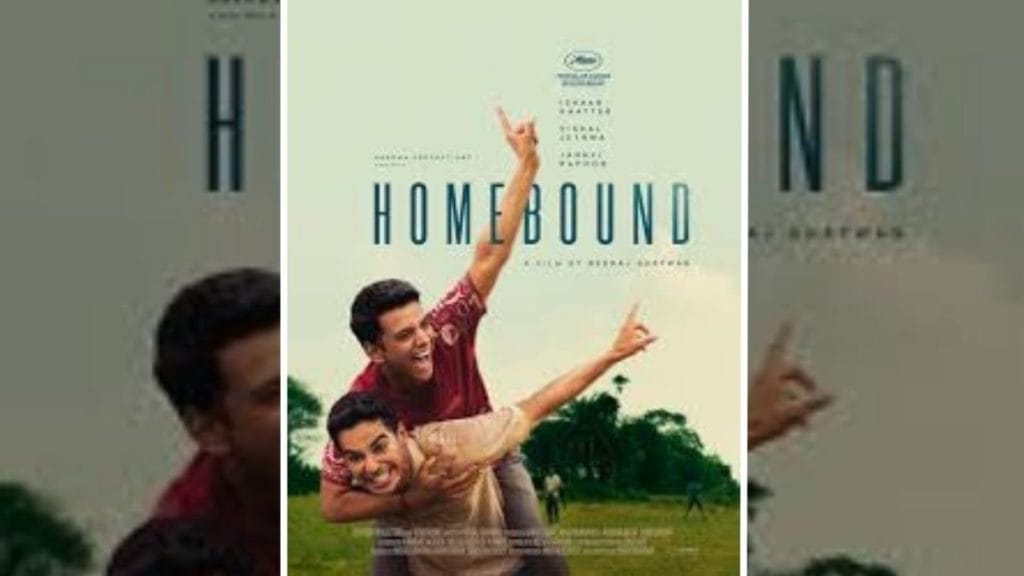
The 2025 film starring Ishaan Khatter, Vishal Jethwa, and Janhvi Kapoor is India’s official entry for the 98th Academy Awards (Oscars 2026) and has been shortlisted in the Best International Feature Film category. As an executive producer, Scorsese reportedly mentored the editing and screenplay and has been singing the film’s praises to all who will hear. During a New York event for the film where Ghaywan and Scorsese competed, it was revealed that the executive producer also mentored the editing and screenplay.
Over the past few weeks, Scorsese has, in press interviews following the film’s release, revealed how the story of Homebound, originally an op-ed in The New York Times, stayed with him and expressed his satisfaction with the final product. He added, “It is quite satisfying that it is here. I love that audiences in America get to see this picture.”
Also read: How Shillong men behaved around a woman tourist is a model rest of India desperately needs
Scorsese’s love for Indian filmmakers
Scorsese has been vocal about his love for Ray ever since he first saw Pather Panchali (1955), which he said helped him see India without the colonial lens. He once said that Ray’s artistry and filmmaking “took his breath away.” “It was poetic, immediate, sweeping and intimate, all at the same time,” Scorsese added. In fact, he even won the 2021 Satyajit Ray Lifetime Achievement Award at the 52nd International Film Festival of India (IFFI).
As Audrey Hepburn very eloquently put it while presenting the lifetime achievement award, Ray captures both “what is unique in the Indian experience and that which is universal.” Scorsese once said that he views Ray as the “filmic voice of India”; perhaps that is what he sees in Ghaywan now, who, much like Ray, is a relatively sensitive and eloquent artist.
The story of Homebound, originally an op-ed in The New York Times, stayed with Scorsese, as revealed in recent interviews. “It is quite satisfying that it is here. I love that audiences in America get to see this picture,” he said.
But maybe that is what the Goodfellas director is on the look for. The next voice of India. Maybe that is why he is ready to play the patron saint of Indian filmmakers in America once again.
Although Scorsese has not publicly talked particularly about Ghaywan’s previous works like Masaan (2015), he did say that Ghaywan’s work was “extraordinary”. Perhaps, the Hollywood A-listers are finally cashing in on their chance to collaborate with the next great Indian filmmaker after Ray in 1992.
(Edited by Saptak Datta)