









New Delhi: On a simmering April afternoon in 2018, an 18-year-old woman from Unnao tried to set herself ablaze outside the heavily guarded residence of Uttar Pradesh Chief Minister Yogi Adityanath in Lucknow. It was a desperate act aimed at forcing the state to acknowledge what it had repeatedly refused to act on — her allegation that a powerful BJP MLA, Kuldeep Singh Sengar, had raped her the previous year, and that the system was shielding him.
The woman’s accusation was met by stonewalling by the administration and political mudslinging. An FIR was eventually filed, but it was just the beginning of a long road to justice. While in jail, Sengar hatched a conspiracy to kill the victim’s father, who later died in judicial custody. The woman then narrowly escaped death in a truck collision on a national highway and has since lived under Central Reserve Police Force protection.
Six years later, it is not the crime, the intimidation, or even the conviction that has pushed the Unnao rape case back into public focus. It is a judicial order. On Tuesday, the Delhi High Court suspended the life sentence of former BJP MLA Sengar, awarded to him by a Special CBI court in Delhi. The case had reached the capital only on the directions of the Supreme Court, which transferred it from Lucknow citing grave threats to the victim’s life.
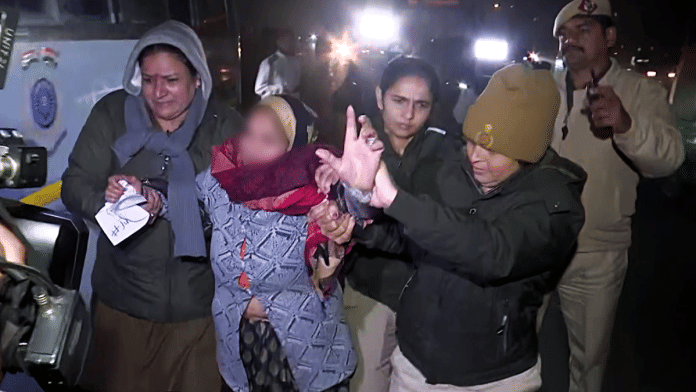
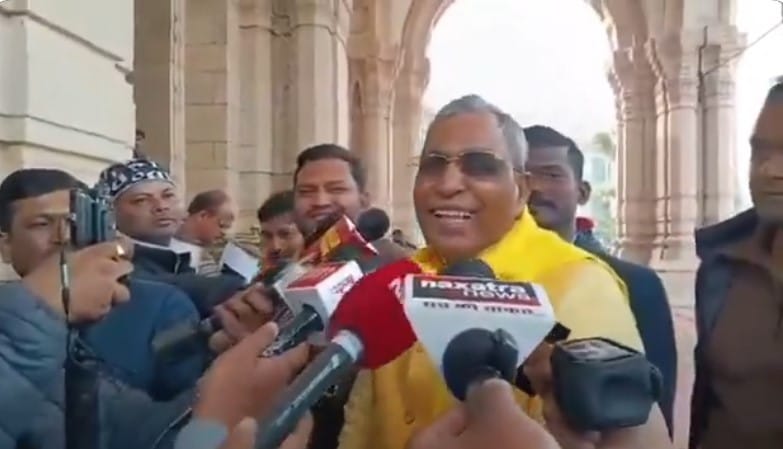
Aghast at the High Court order that effectively put his sentence on hold, the survivor and her mother protested at India Gate earlier this week, only to be hauled away by police. A video of UP minister OP Rajbhar laughing about the incident was circulated widely. On Friday, another protest by activists outside Delhi High Court was also stopped by police. The CBI has challenged Sengar’s bail in the Supreme Court, but the victim’s renewed cries for injustice are once again impossible to ignore.
This is why Sengar, along with the Unnao rape case, is ThePrint’s Newsmaker of the Week.
Also Read: Welcome to justice in India. Rules are different for Sengar, Asaram, Akhlaq’s killers
A chilling release route—‘right to liberty’
The Delhi High Court’s order hinged on a legal technicality raised by Sengar’s lawyers: whether the former legislator qualified as a “public servant” or not.
The argument pertained to a provision the trial court had used to sentence Sengar to life in December 2019: Section 5(c) of the POCSO Act, which allows a life sentence for “penetrative sexual assault on a child” by a public servant.
The High Court observed that since the POCSO Act itself does not define a “public servant”, the term had to be read through Section 21 of the Indian Penal Code, which lists various categories of public servants but does not explicitly include MPs or MLAs.
On that basis, the court held that the aggravated offence under Section 5(c), which led to his life sentence for the rape, did not apply to Sengar. This contrasted with the stance of the CBI Special Court, which had held that a public servant is anyone who holds an official position and is mandated to perform specific duties under the Constitution, and that Sengar came under that category.
Once it settled the question that Sengar was not a public servant, the court prima facie held that he was nonetheless guilty under Section 3 of the POCSO Act, which deals with penetrative sexual assault. This section currently carries a minimum jail term of 10 years.
But the relief to Sengar did not end there. The court noted that since the offence predated the 2019 amendment to the POCSO Act, which raised the minimum punishment from seven years to 10, the older sentencing framework applied. By that measure, the court said that Sengar had already served the minimum term.
The counsel for the victim argued that Sengar’s appeal against conviction should have been heard before a decision was taken to suspend his sentence. The High Court described the argument as “attractive” but also observed that accepting it would violate Article 21 of the Constitution, which guarantees the right to life and personal liberty.
While Sengar’s lawyers relied on lacunae in the law, the court’s emphasis on protecting the fundamental rights of a convicted offender struck a discordant note in a case where the survivor and her family have faced repeated intimidation, violence, and loss.
The court did not question the rape or Sengar’s culpability in the crimes for which he is convicted, making the suspension of his sentence even more chilling.
If there is any cold comfort, it is that Sengar will not walk free yet due to his conviction for culpable homicide in the custodial death of the victim’s father, for which he was sentenced to 10 years’ imprisonment in March 2020.
‘Disturbing feature of the case’
The odds were stacked against the victim from the very beginning.
The brazenness of the Uttar Pradesh police’s inaction on her complaint did not go unnoticed by the Allahabad High Court.
“The disturbing feature of the case is that the law and order machinery and the government officials were directly in league and under the influence of Kuldeep Sengar,” it noted in April 2018. “The Doctor did not examine the prosecutrix, nor did the Circle Officer, Shafipur, register the crime, though hand written complaint of the prosecutrix was sent from the office of the Chief Minister.”
Instead, observed the court, the victim’s father was beaten up by Sengar’s brother and his men. Her uncle, meanwhile, was booked in a petty case. Despite being grievously injured, the father was declared “fit” by the Chief Medical Officer and sent to jail. He died in judicial custody soon after.
Two years later, a Special CBI court convicted Sengar for culpable homicide in the custodial death of the survivor’s father, along with the then SHO and a sub-inspector of Makhi police station. It is this conviction that has kept Sengar behind bars even after the suspension of his life sentence in the rape case.
As for the victim, her ordeal did not end with Sengar’s arrest either. In July 2019, she, her lawyer, and family members were travelling back after meeting her uncle—by then lodged in Rae Bareli jail—when a speeding truck rammed into their car. Two of her aunts were killed. The survivor and her lawyer were critically injured.
Thereafter, the Supreme Court transferred all Unnao rape-related cases to Delhi and directed that the victim be given central security in view of the continuing threat to her life. In March this year, the court maintained that CRPF security arrangements for the victim should continue.
Also Read: Ankita Bhandari murder case rocks Uttarakhand again: 2 new FIRs, video clips & a senior BJP leader
Not tall, but a towering figure in Unnao
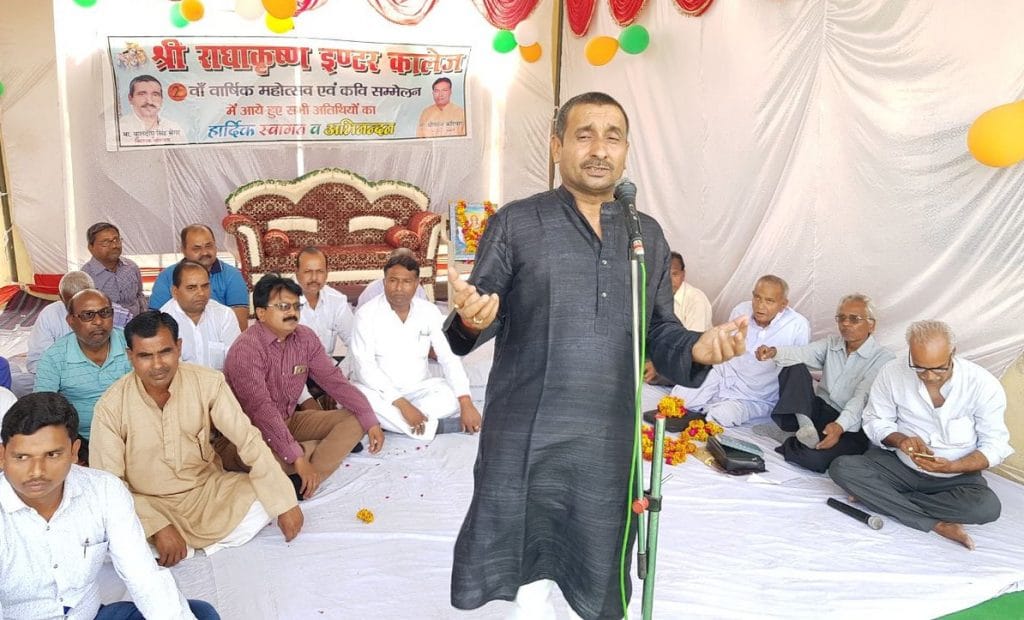
The eldest of his parents’ four sons, Kuldeep Sengar first entered politics when he won a Gram Pradhan election in 1996. He soon made his debut on the big stage, winning the 2002 assembly elections from the Unnao assembly constituency on a Bahujan Samaj Party ticket.
Over the years, he switched party loyalties several times. The first move was to the Samajwadi Party during the 2007 assembly elections, when he contested and won from Bangarmau constituency, repeating the feat from Bhagwantnagar in 2012. A decade later, he moved to the BJP and won the March 2017 assembly election from Bangarmau.
Months later, in June, the victim accused him of raping her at his office in his ancestral village.
With a sizeable population of upper castes and Thakurs across the district, Sengar, a Thakur, was seen as an electoral asset across parties. His clout was reinforced by his brothers, Manoj and Atul, who acted as bahubalis and helped him call the shots in Unnao.
Such has been the audacity of the Sengar brothers in the district that Manoj was once accused of shooting at an Additional Superintendent of Police-rank officer. Instead of launching a crackdown, the state police in 2004 reportedly chose to reach a compromise.
Sengar’s clout—and the audacity to pull off the unthinkable, including conspiring to kill the victim’s father while he was in judicial custody—cannot be overlooked, irrespective of the legal technicalities that support the suspension of his sentence.
And then there’s the question posed by the victim: “If the convict gets bail in cases like this, how will the country’s daughters remain safe? For us, this decision is no less than kaal (death).”
Views are personal.
(Edited by Asavari Singh)