






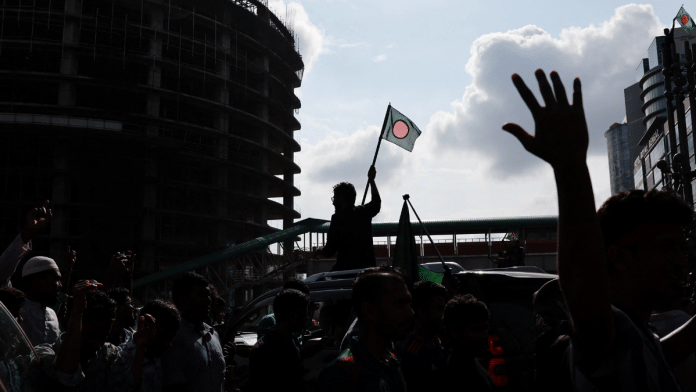



Bangladesh is set to deliver a verdict on whether the nation can finally shatter a pathological cycle of corruption and dynastic entitlement through the 13th parliamentary election on 12 February.
It will also be a referendum on whether the “promise of July”—the uprising that liquidated fear and exposed the moral rot of the old guard—will be institutionalised or quietly strangled in its sleep.
It is within this crucible that the National Citizen Party (NCP) made a choice many found jarring, but history may well vindicate this decision as a cold necessity. An electoral alliance with Jamaat-e-Islami, Bangladesh’s largest Islamist party.
This wasn’t a marriage of ideological passion; rather, it was born of the brutal arithmetic of power as it actually exists in Dhaka. The NCP faced a stark binary. Remain in isolation and risk political extinction, or enter Parliament to shield the July mandate—and force structural reform from within.
Practical coalition
In a country and a culture where exclusion from the halls of power has historically meant state-sponsored erasure, “neutrality” is just a polite word for surrender.
The incoming Parliament will dictate the survival of the July Charter and decide whether stolen billions are recovered or laundered back into respectability. To remain outside that chamber would leave the foot soldiers of the revolution voiceless.
With less than a year to organise and no inherited machine, the NCP could not responsibly gamble a mass movement on empty symbolism. Power abhors a vacuum, and in Bangladesh, that vacuum is invariably filled by oligarchs.
The alternative—a coalition with the Bangladesh Nationalist Party (BNP)—was weighed and rejected for precisely that reason. The BNP is not a reformed entity seeking a second act.
The Tarique Rahman-led party is an unreformed machine waiting for revenge and renewed access. Its DNA is inseparable from institutional sabotage. In the 1990s, the BNP and the Awami League perfected a system of competitive looting.
In 2006, the BNP’s ham-fisted manipulation of the caretaker system triggered a national crisis, paved the way for military intervention, and ultimately gave the nation 15 years of Awami League autocracy. Bangladesh is still bleeding from that wound.
Seventeen years in the wilderness have changed nothing. Since August 2024, the BNP’s extortion networks have already begun to resurface. The party has been humiliated in university elections where students—secular ones and women included—voted for Jamaat-backed candidates out of a bone-deep exhaustion with the BNP’s predatory habits.
Their candidate lists are a “who’s who” of loan defaulters. Their sudden influx of cash tells the real story: the same oligarchs who financed the previous regime are now hedging their bets, confident that a BNP government will be “open for business” once more.
Most damningly, the BNP has signaled a willingness to rehabilitate the Awami League and reassure New Delhi that the status quo remains intact. This is a restoration of the old duopoly. A party funded by the very networks that must be dismantled cannot be trusted to hold the sledgehammer.
The NCP-Jamaat alliance offers a genuinely disruptive alternative. Neither party is tethered to captured bureaucrats or corrupt titans of industry. This independence is visible in their funding and their candidate profiles.
Dignity first
The alliance’s pledges to recover assets and tear up inflated infrastructure contracts are credible for one simple reason: they have no thieves to protect.
Critics whine about a lack of “governing experience,” but they miss the point entirely. Bangladesh has no shortage of experience in running corrupt governments; it lacks the will to stop.
Inexperience in looting is a national asset. It invites transparency. Even within the current administration, officials aligned with this coalition are recognised as the least compromised—a reputation that carries immense weight in a broken system.
Foreign policy brings the stakes into even sharper relief. India is not a neutral neighbour; it is an actor that bankrolled the Awami League’s tyranny and now shelters its fugitive leadership. Where the BNP is speaking of “national interest” while signaling submission, the NCP-Jamaat alliance insists on a different sequence: dignity first, dialogue second.
India fences Bangladesh with barbed wire and normalises the murder of civilians at the border, all while demanding transit rights. Negotiating under these terms without demanding respect is akin to complicity.
As the martyred student leader Osman Hadi noted, what was lost under the old regime was dignity. Without it, “interests” are a myth.
Also read: A day in poll-bound Bangladesh: Mobile phone ban, then a U-turn & Jamaat’s ‘cockpit’ offer for Nahid
Not another false dawn
Anxiety regarding religion and minority rights is real and cannot be dismissed. But suppressing Muslim political expression for 15 years didn’t secularise Bangladesh—it radicalised its grievances.
Jamaat represents the most disciplined, modernist current of Islamic politics in the country. This is a coalition for a national reset. Ironically, the Awami League courted fringe, regressive elements while banning Jamaat, the one party capable of internal discipline.
Vigilance is mandatory. But let us be honest: assaults on rights occurred under both previous regimes. Rights are protected by the rule of law and the end of extortion, not by the rhetoric of those who profit from chaos.
A disciplined government, constrained by the NCP’s youth base and the energy of the July movement, is far more likely to enforce the red lines of a modern state.
This election offers no perfect choices, but it offers a real one. On one side stands a family-run, oligarch-funded relic ready to resurrect a discredited system. On the other stands a coalition of the disciplined and the new, bound by a commitment to justice and sovereignty.
The NCP did not choose this path lightly. It chose it because the revolution cannot survive from the sidelines, and because Bangladesh cannot afford another false dawn.
Nahid Islam is the convenor of the National Citizen Party (NCP) of Bangladesh. Views are personal.
(Edited by Ratan Priya)
Seriously? Why is this vehement India hater getting a platform in India? They cur the throats of anyone who dares say anything in support of India. Their victim mentality will never change. All this drama against India and they will go and lick the boots of China and west. India did nothing more than dealing with the govt in power. Quit the whining already