







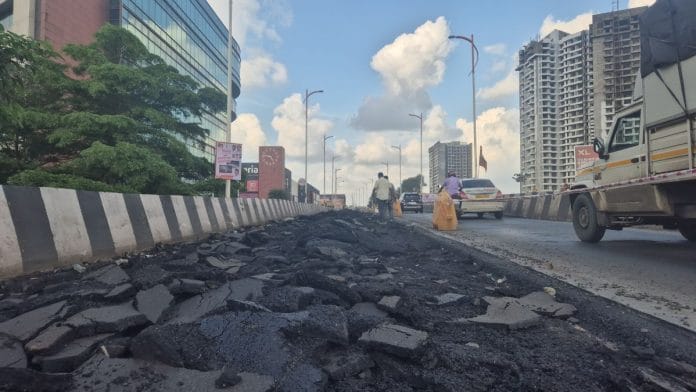



As pressure from urbanisation continues to mount, it is encouraging to note that this year has seen the largest number and volume of municipal bond issues in India since the Securities and Exchange Board of India released its municipal bond guidelines in 2015. These instruments are a relatively straightforward and transparent mechanism to finance much-needed infrastructure while providing capital markets with a measure of investment diversification. Municipal bonds remain a relatively new asset class in India.
Domestically placed bonds also mitigate the need for external borrowing, thereby eliminating foreign exchange risk, and create a better match between assets (infrastructure supported by local taxes and fees) and liabilities (debt-service payments on the bonds).
In 2025, nine municipal corporations completed bond issues, with issuance volumes surpassing the 2018 peak of around Rs 780 crore and around Rs 1,000 crore invested in water, sewerage, solid waste, transportation and other vital municipal services. Despite this progress, only 19 out of 269 municipal corporations have issued bonds since SEBI guidelines were released. This represents just 7 per cent of India’s municipal corporations and less than 1 per cent (Rs 3,784 crore) of total outstanding public-sector debt of around Rs 181 lakh crore.
Also read: ‘India’s urban local bodies among weakest globally’: RBI decries reliance on state, central grants
Why municipal bonds in India remain underused
So what drives the modest number of municipal borrowers? Are internal capacity constraints the primary culprit, or is it the absence of incentives from higher levels of government — or both?
Decentralisation in India remains a work in progress, with support varying from state to state. Numerous studies have documented the municipal sector’s internal capacity constraints, including the mismatch between responsibilities and revenues, the relatively small contribution of municipal finance to GDP, and the deficient processes for municipal tax and user-fee assessment, billing, and collection.
A 2022 report on municipal finances by the Reserve Bank of India noted that the rapid growth of urbanisation across India has not been matched by a “corresponding increase in urban infrastructure”, and that the “size of municipal budgets in India is much smaller than [those of] peers in other countries.” The report also called on municipal corporations to adopt sound and transparent accounting practices. Yet, despite the existence of a National Municipal Accounting Manual for almost two decades, municipal financial accounting remains inconsistent from state to state, and even from city to city within the same state.
While internal capacity constraints at the local level are real, the absence of incentives from higher levels of government also contributes to these limitations. The Fifteenth Finance Commission, in its 2019 study on the state of municipal finances in India, observed many of the same constraints but also reported that urban local governments “need to be empowered by their state governments to operate and maintain the infrastructure with good governance practices to ensure…better delivery of public services.” It concluded that the Government of India and state governments “will have to build the capacity for urban planning and management at the local government level” so that municipalities can “rise to the challenges of rapid…urbanisation.”
Also read: India needs a new decentralisation—let politicians manage people, experts handle policies
Decentralisation is the key to help municipal bodies
So what kinds of government incentives can be responsibly decentralised to help local governments leverage existing resources, generate additional budgetary appropriations, and expand responsible borrowing to support municipal infrastructure? Below are a few relatively straightforward suggestions.
First, what if states allowed municipal corporations to hire more professional urban and infrastructure planners, operating and capital-budget experts, additional engineering staff to implement capital projects in line with the municipality’s capital plans, and debt managers to ensure that debt remains affordable and that the municipality’s credit quality is preserved? These professionals would better equip municipal governments to plan, execute and manage their long-term operating and capital needs. Empowering municipalities to manage long-term planning would also allow them to move beyond the current practice of annual budgeting and planning cycles. Importantly, these changes could be achieved by reprioritising existing staffing allocations while maintaining a fixed percentage budgetary allocation for personnel expenditures.
Second, what if central and state governments allowed municipal corporations to leverage existing capital grants to fund infrastructure project engineering and feasibility studies, conduct legal and environmental reviews, pay for independent financial advisory services, and act as a supplemental form of security for municipal debt? This reform would help overcome project-preparation costs that currently limit investing in essential infrastructure. It would also place municipalities in the driver’s seat to optimise their capital grants, improve state and central government utilisation of grant funding, and create new opportunities to tap capital markets by responsibly enabling grant monies to be used as an intercept or supplemental form of security for municipal debt. This would likely expand the pool of eligible municipal debt issuers, thereby widening access to finance for municipal infrastructure investment.
By improving and incentivising local governments, while maintaining the required checks and balances, municipal corporations would be unleashed to drive and manage their infrastructure needs, improve the livelihood of their constituents and taxpayers, and enhance the diversification of India’s capital markets.
William Streeter is an international infrastructure finance specialist, currently advising sovereign development funds and municipalities in Asia.
Joel Kolker is Senior Associate (Non-resident) for the Chair on India and Emerging Asia Economics at the Center for Strategic and International Studies in Washington D.C.
Views are personal.
(Edited by Prashant Dixit)
Indian municipal bonds are as good as waste paper. Only fools of a lower order would buy corrupt and bankrupt municipal bonds.