






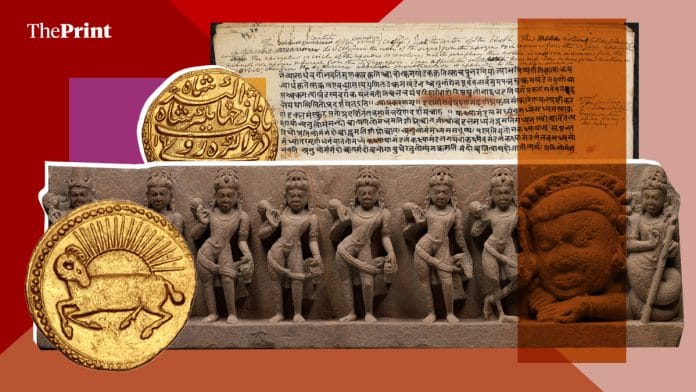



In the course of my work in cultural diplomacy, I have visited departments dedicated to the study of Indian history, literature, and culture in Germany’s leading universities. The settings are familiar: quiet corridors, book-lined offices, scholars whose commitment to the field is deep and undiminished. And yet, across institutions, the same concern surfaces — not just about falling enrolments, but about something more final. Long-established Indology departments are being downsized, merged, or shut down altogether.
This is happening at a moment when global interest in India is at an all-time high. India sits at the centre of geopolitical conversations on trade, security, technology, climate, culture, and migration. Its economic weight is growing, and its political relevance is undeniable. But academic engagement with our civilisation in European universities is receding.
This matters beyond the university.
Yes, Indology is the academic study of Indian civilisation — its classical languages, philosophy, literature, history and knowledge systems – but the impact of this study goes far beyond academics. Universities shape how future diplomats, policymakers and journalists come to understand the world. When India is absent or flattened in these classrooms, that distortion eventually surfaces in policy, media narratives and international relations.
Competing with K-pop
The challenges facing Indology are often attributed to funding pressures. That explanation is intuitive — and incomplete. The Indian and European governments continue to fund these departments. And relevance is definitely not the problem. Indology is intellectually serious and geopolitically significant.
The true challenge lies elsewhere and is harder to admit: magnetism. Indology has lost its coolness.
Students today are drawn to disciplines that feel alive, participatory and emotionally accessible.
In many universities where Indology departments are being closed, Korean studies programmes just a floor or two away are expanding — drawing students, institutional attention, and fresh investment.
This shift is not accidental. South Korea’s cultural rise is the result of deliberate long-term policy. After the Asian Financial Crisis of the late 1990s, culture was identified as a serious economic and soft-power asset, and policy was designed to align popular culture, education and diplomacy. Public investment flowed first into music, film, television, fashion and beauty, followed by language promotion, overseas cultural centres, scholarships and university partnerships.
K-pop, K-drama and Korean cinema created desire, which translated into language study. It pulled students into Korean history, philosophy and traditional culture. Universities scaled up to meet demand, and sustained state support locked the cycle in place. Popular culture was not treated as a distraction from scholarship, but as its entry point.
The sequencing was intentional: attraction first, seriousness later.
By contrast, Indology has traditionally worked in reverse. Students are often asked to begin with ancient texts, philology and abstraction. Modern India appears only at the margins, if at all. India is presented as rich and complete — a civilisation to be approached with reverence, rather than curiosity and playfulness.
Indian popular culture — contemporary literature, cinema, music and digital creativity — is rarely integrated into academic narratives or into the overall cultural strategy, despite being precisely where global audiences already engage with India. The result is not a lack of interest in India per se, but a lack of accessible pathways into deeper study.
The consequences are increasingly visible: across Germany and Europe, once-prominent Indology and South Asian studies programmes have been scaled back or closed, even as India’s strategic relevance continues to rise.
To be clear, this is not an argument for trivialising Indian civilisation or turning Sanskrit texts into social-media content. Nor is it a call to abandon philology, rigour or depth. Ancient knowledge systems are India’s great strength. But every serious intellectual journey begins with attraction. No one falls in love with a civilisation because they are told it is important. They fall in love because something first draws them in.
As a country, we are uniquely positioned to address this. Few nations combine tradition with modernity in the way that we do. The question is whether we are willing to bring the same qualities that define India today — modern, dynamic, globally engaged yet deeply rooted in tradition — to the way we project our culture abroad and to how Indology itself is framed.
Also read: Indians and their cultural inferiority complex, explains Romila Thapar
Open the cultural gateway
Recently, at the end of a meeting with the head of the Institute of Indology at Ludwig Maximilian University in Munich, I asked what we could realistically do to make Indology more popular. He smiled and said, only half-jokingly, “Invent I-pop.”
Then he added something telling. Twenty-five years ago, Indology was among the most popular subjects in European universities. It is hard to ignore the coincidence that this was also the period when Bollywood had its strongest presence in the West— when Indian cinema circulated widely, and audiences encountered India through stories, music and emotion. It was when movies like Lagaan, Monsoon Wedding, and Kabhi Khushi Kabhie Gham were released. As that visibility faded, so did a key cultural gateway.
The lesson is not that India needs a replica of K-pop, nor that it should
chase trends. It is that attraction is not the enemy of seriousness — it is often the condition for it.
Universities are not neutral spaces. They shape how countries are understood long before policy is made or alliances are negotiated. When Indology loses presence in these classrooms, we lose more than students — we lose influence over how India is interpreted, contextualised and debated.
Indian civilisation has always evolved through dialogue — between the ancient and the contemporary, the scholarly and the popular, the sacred and the playful. The question now is whether we are willing to allow that same dialogue to shape how India is presented abroad today.
If we do, Indology will not need rescuing. It will find new readers, new students and renewed life — not as a relic of the past, but as a living intellectual tradition with something urgent to say.
Trisha Sakhlecha is an internationally bestselling author and diplomat, currently posted as Director, The Tagore Centre at the Embassy of India, Berlin. Her latest psychological thriller, The Inheritance, is published by Penguin Random House. Her X handle is @TrishaSakhlecha.
(Edited by Ratan Priya)