









Imagine a huge residential complex in a city with thousands of apartments. Several months after these apartments have been built and residents have moved in, the municipal authorities of the area wake up to the reality that these flats do not have an adequate number of security guards to ensure residents’ safety.
So, the municipal authorities ask the real estate company that had built those apartments to put the required number of security guards in place within a given time frame. The real estate company requests for an extension of the deadline for fulfilling the condition and the municipal authorities agree to it initially. However, they later enforce the guidelines once the extended deadline comes to an end.
Left with no option, the real estate company decides that till such time as it can fulfil the condition imposed by the municipal authorities, it will ask some of the families to move out of the residential complex. The selective approach is adopted because the real estate company has to maintain a minimum ratio of security guards to the number of families that stay in the complex. Hiring security guards could take some time. So, it decides to evict many families residing in those apartments. Chaos ensues.
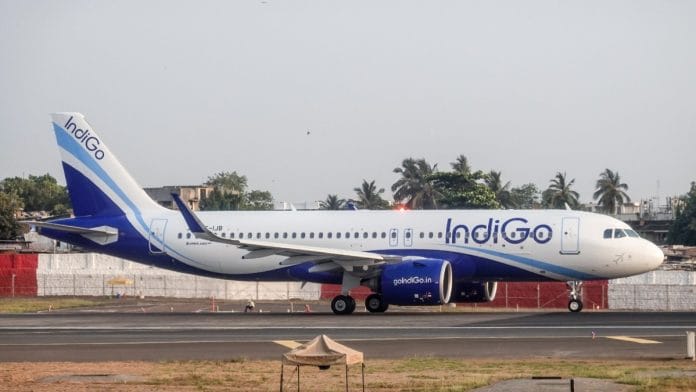
For most Indians, this story must be ringing a bell. Yes, we are talking about thousands of flights that were cancelled last week by India’s largest airline, IndiGo. The comparison between an airline and a real estate company is not proper. Yet, the comparison helps us understand what exactly hit IndiGo and, by implication, what is ailing the regulatory system for India’s civil aviation sector.
There is nothing wrong per se about a company’s desire to grow fast. But that pace has to be sustainable. When the Directorate General of Civil Aviation (DGCA), the regulator, decided to increase the minimum mandatory weekly resting hours for pilots by 33 per cent, all airlines, including IndiGo, should have realised that they had no option but to increase their pilot headcount significantly, even if they were to keep their daily flight schedules unchanged.
The DGCA announced its new guidelines in January 2024 to be enforced from June 2024. But as the airlines were not ready, the regulator deferred the implementation of the new norms in two phases, enforcing them partially from July 2025 and fully by November 2025. Air India managed this situation with less turbulence probably because it had quite a few of its aircraft already grounded, resulting in greater pilot availability, and also because it is a much less lean organisation compared to IndiGo.
In contrast, IndiGo, which had a daily schedule of 2,000 flights in January 2024, increased it to 2,200 a year later. For a real estate company, hiring security guards is relatively easy. But for an airline, employing pilots is significantly more difficult. Apart from strict rules that prohibit poaching of pilots from rival airlines (12 months’ notice for a commander and six months’ notice for a co-pilot), the pool of available pilots is very limited and the certification procedures to be followed before a pilot is qualified to fly an aircraft are time-consuming and not easy. Even hiring foreign pilots means a wait of several months.
It should, therefore, have become clear to IndiGo that its problem of pilot shortage was not likely to be solved easily. The deferment of these guidelines by DGCA to February next year will be of little help unless IndiGo decides to reduce its daily number of flights. So what was the top management of IndiGo doing in the last 23 months? Perhaps, the IndiGo management was supremely confident of its ability to persuade the regulator to defer the norms for Flight Duty Time Limitations (FDTL) and continue to operate its flights without reducing their frequency.
That is where the role of the regulators becomes extremely critical, perhaps as critical as that of the airline. If the airline failed to act responsibly in light of the new guidelines, the regulators did not cover themselves with glory either. It was not just the aviation regulator that was found wanting in discharging its regulatory functions. Even the competition regulator paid little heed to the market dominance of an airline that by this year had acquired a share of 65 per cent of total flights in the country.
Did the Competition Commission of India examine if IndiGo was abusing its market dominance to exploit consumers under Section 4 of the Competition Act? Did it notice that in spite of the looming pilot shortage after the enforcement of the new FDTL norms, IndiGo was merrily increasing its flights and was not ready with a credible plan for hiring more pilots to service its flights under the new guidelines? Would not have such negligence been tantamount to abusing its market dominance to exploit consumers? Eventually, consumers did get exploited with the large-scale cancellation of flights. If only the competition regulator had been a little more alert and aware of its responsibilities!
A bigger problem was caused by DGCA, the aviation regulator. In 1994, the Air Corporations Act, which was passed in 1953 to nationalise civil aviation in India, was repealed to facilitate the entry of the private sector to run scheduled airlines in the country. The DGCA, which has been in existence even prior to the nationalisation, continued to function as an attached office of the Ministry of Civil Aviation.
Strangely, it was only in 2020 that the DGCA was given statutory powers to regulate the civil aviation sector along with carrying out the safety oversight. What were the reformist governments of P V Narasimha Rao, Atal Bihari Vajpayee, Manmohan Singh and even Narendra Modi in his first term doing? The decision in 2020 by the Modi government in its second term, however, made little difference. The DGCA website continues to describe the organisation as an attached office of the civil aviation ministry, run mostly by serving government officers. Not only that, the DGCA suffers from an acute staff shortage, with half its approved posts remaining vacant.
Isn’t it time to empower the DGCA as an independent statutorily-approved regulator and not just as an attached office of the civil aviation ministry? With the DGCA’s statutory status remaining only on paper, the civil aviation ministry is making a bigger noise about what action should be taken against IndiGo. The most problematic aspect of the IndiGo controversy is how the regulators have acted weakly and ineffectively, without proper monitoring, while the civil aviation ministry has become more active and voluble in threatening to impose punitive costs on IndiGo and a fare cap on all other airlines.
The government and Parliament are within their rights to address the concerns of air travellers, but their primary job is to frame the right policies, ensure that the regulators are empowered to implement them, and that they don’t go scot-free for not having anticipated such problems and taken advance remedial measures.
It is, therefore, time that the government undertook the much-delayed regulatory fix by adequately empowering the DGCA so that such chaos in civil aviation did not recur. IndiGo was irresponsible, but equally irresponsible and ineffective was the regulatory system. The current crisis in the aviation sector is an opportunity to reform that regulatory architecture in the country.
AK Bhattacharya is the Editorial Director, Business Standard. He tweets @AshokAkaybee. Views are personal.