







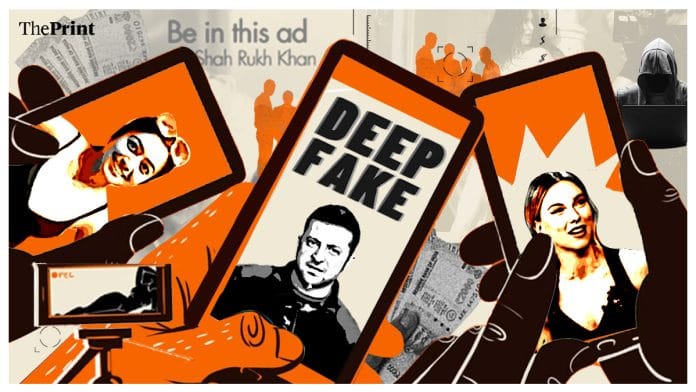



Imagine you’re about to share a viral clip of human-like cats starring in soap operas on social media. Under India’s new AI-labeling Rules, you need to now declare that the content is AI-generated, following which the social media company will label it accordingly, before it goes live.
In the run up to the India AI Impact Summit, the government released an ambitious set of rules, requiring social media companies to label all synthetically or AI generated information (SGI), and users to declare such content before posting. Companies have nine days from the date of release to introduce product-level changes to comply with the law. This will change how users interact with modern-day public squares.
What do these Rules get right?
For one, the Rules do away with the detailed, prescriptive labeling requirements for AI-generated content that an earlier draft had mandated. These would have required labels to cover at least 10 percent of the screen area, littering social media feeds with ever-present labels, ultimately making user experience clunky. The Rules now only require labels that are prominent, noticeable and perceivable, a promising sign that industry feedback on the draft was heeded.
Flexibility in labeling obligations will allow for tailored, non-intrusive labelling, suited to the specific content hosted on a service. The Rules also mandate social media companies to periodically inform users about the consequences of violating laws and platform rules in relation to synthetic content.
It is a given that as our digital scapes become more artificial, users will have to become vigilant, since research shows that AI labels in itself do not change the persuasiveness of the content itself. This is where the complementary safeguard of media or platform literacy for users also becomes imperative. The Rules now recognise this.
Also read: Labelling AI content alone won’t solve misinformation. India needs smarter regulation
Looking beyond the good
The positives largely end here. The Rules dilute the long-standing immunity, or safe harbour, shielding social media companies from liability for user-generated content. This protection hinges on meeting certain due diligence obligations, such as formulating and publishing platform policies and complying with takedown orders received from courts or government agencies.
Now, social media companies with more than 50 lakh users must act against illegal content based on court or government agency orders, user complaints and even awareness borne out of proactive monitoring of content. Failure to do so could cost them their safe harbour protections. This expectation will sit uneasily with the scale at which larger companies operate. More than 20 million videos are uploaded daily on YouTube alone.
When the scale of content intertwines with the obligation to determine illegality of content and the risk of losing immunity, platforms are unlikely to split hairs. They may err on the side of caution and take down content without pausing to weigh nuance. Germany’s Network Enforcement Act offers a cautionary tale. Due to the risk of fines up to €50 million, platforms removed vast swathes of lawful speech to avoid penalty. Studies show that 99.7 per cent and 98.9 per cent of comments deleted on Facebook (now Meta) and YouTube, in compliance with this law, were lawful. This suggests the threat of liability, rather than illegality drives takedown decisions.
Also read: Himanta Sarma gun image is now considered acceptable aggression among some Indians
Does the risk of censorship end here?
Alongside the labelling changes, the government has cut the takedown window for all illegal (not just synthetic) content from 36 hours to just three. This major change didn’t feature in the draft put out for consultation late last year.
India’s Pre-legislative Consultation Policy 2014, requires the publication of draft Rules and the collection and release of stakeholder comments. The new AI rules are delegated legislation, framed by the executive without parliamentary debate, which makes public consultation a non-negotiable safeguard.
The regulatory intent to shorten the timeline for content takedowns is, in one sense, understandable. Requiring expedited action against SGI would curb virality and prevent cascading harms. The European Union (EU) requires online terrorist content to be taken down within an hour of an order to limit virality. But even with its omnibus and hawkish Digital Services Act, the EU does not impose blanket timelines across all categories of illegal content. India is an outlier in extending a three-hour deadline to every category of illegal speech.
Overall, the new AI-labelling regime reflects the Indian government’s intention to address harms emanating from SGI. The Rules champion user literacy and encourage innovative labelling, which is a welcome shift. On the other hand, the expanded compliance burdens on social media companies, compressed takedown timelines and sidestepping of meaningful consultation risk chilling lawful speech and curbing information sharing.
The authors work at Koan Advisory Group, a technology policy consulting firm. Views are personal.
This article is part of ThePrint-Koan Advisory series that analyses emerging policies, laws and regulations in India’s technology sector. Read all the articles here.
(Edited by Theres Sudeep)
You are concerned about speech when it comes to this while they are trying to pass draconian “hate speech” laws in Karnataka and telengana.
Just an article for the sake of being contrarian.