









India has debated labour reform for decades. What has changed in recent years is not the recognition of the problem, but the willingness to address it through structural consolidation. The four new Labour Codes, expected to be rolled out in April, represent an attempt to move away from a patchwork of laws toward a single framework that governs wages, social security, industrial relations, and working conditions.
This shift matters because development outcomes are shaped not only by economic policy, but by how a country organises work and values those who contribute to growth.
For much of independent India’s history, labour regulation evolved through incremental additions. Each law addressed a specific issue, often arising from a particular industrial conflict or social concern. Over time, this produced more than 300 central and state laws with differing definitions, thresholds, and compliance requirements. The cumulative effect was complexity rather than protection. Employers faced uncertainty and discretion. Workers faced uneven coverage and weak enforcement. Reform became unavoidable.
The Labour Codes seek to address this fragmented approach by bringing together multiple statutes into four comprehensive codes. This is both an administrative reform and a future-looking governance reform. The simplification brought in reduces ambiguity. Clear rules reduce discretion and promote transparency. Predictability strengthens trust between the state, enterprises, and workers. For an economy that aims to expand manufacturing, formal employment, and global integration, this coherence is essential.
Also Read: New labour codes make India’s workforce competitive with global market & build Viksit Bharat
What are the new Labour Codes?
The reforms cover four broad areas.
The Code on Wages is foundational. Wages determine not only monthly income, but long-term security through provident fund, gratuity, and other benefits. Under the earlier regime, wage structures often fragmented compensation into multiple allowances. This practice was legal, but it weakened social security contributions and created disputes at the time of separation or retirement. The new wage definition seeks to correct this by ensuring that wages reflect the real value of work performed. It does not mandate wage levels. It mandates transparency in structure.
This change has been viewed by some as increasing compliance costs. A more balanced view is that it reduces hidden risk. Clear wage structures reduce future liabilities, litigation, and interpretive disputes. They also create a basis for trust within the organisation. In a labour market that will increasingly value skill retention and productivity, such trust has economic value.
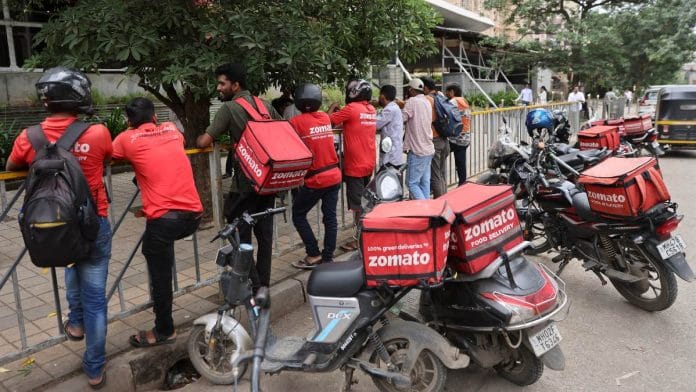
The Code on Social Security extends the idea of protection beyond the traditional employer-employee relationship. India’s workforce includes large numbers of informal workers, gig workers, and platform-linked workers. Their exclusion from formal protection has been a persistent gap in India’s development story. The recognition of these categories within the legal framework is a step toward portability of benefits and continuity of protection. Implementation will determine outcomes, but the direction is clear.
Then there is the question of industrial relations, which have long been framed through the lens of job protection rather than worker protection. This has often produced rigidities that neither improved productivity nor ensured security. The Industrial Relations Code attempts to rebalance this relationship. It recognises the need for enterprises to adapt while providing defined processes for dispute resolution and worker representation. Stability in industrial relations is not achieved through control alone, but through clarity and process.
The Occupational Safety, Health, and Working Conditions Code addresses another long-standing issue. Workplace safety and conditions have often been regulated through fragmented rules that varied across sectors. Consolidation provides an opportunity to standardise norms and improve enforcement. Safe working conditions are not a welfare measure. They are a productivity measure. Healthy workers contribute to sustained output and reduced public health burdens.
A step toward Viksit Bharat
These reforms must also be seen in the context of governance reform. Older labour laws were framed in a climate of low trust, with an emphasis on inspection and penalties. This often resulted in discretionary enforcement and rent seeking. The move towards digital compliance, unified returns, and risk-based inspections aligns labour regulation with broader administrative reform. Transparency benefits all stakeholders.
A frequent argument against labour reform is that it weakens worker protection in the name of growth. Evidence does not support a simple trade-off. Countries that have achieved sustained growth have done so with clear labour standards and stable industrial relations. Investment responds to predictability, infrastructure, and governance quality. Labour costs in India have remained competitive for decades. The challenge has been informality and low productivity, not excessive protection.
Viksit Bharat is an aspiration that goes beyond income targets. It implies an economy where growth is supported by institutions that are fair, predictable, and inclusive. Labour reform matters to this vision because labour connects economic policy to lived experience. When workers experience security and clarity, social stability improves. When enterprises operate within clear rules, investment decisions improve. When the state enforces laws consistently, trust in institutions strengthens.
Also Read: Viksit Bharat goal needs more than GDP growth. Shift policy from entitlement to empowerment
A work in progress
The Labour Codes are not a finished product. Their impact will depend on subordinate legislation, state-level adoption, administrative capacity, and judicial interpretation. Capacity-building within labour departments, awareness among employers, and dialogue with worker organisations will matter. Reform is a process, not an event.
It is also important to recognise what the Labour Codes do not claim to do. They do not promise immediate job creation. Employment growth depends on broader economic conditions, demand, and investment. What the Codes offer is a framework within which employment can grow without recurring conflict and uncertainty.
India’s demographic trajectory adds urgency to this reform. A young workforce entering a changing labour market needs rules that recognise mobility, skill transitions, and new forms of work. A legal framework rooted in past industrial models cannot serve this future. The Labour Codes attempt to align regulation with emerging realities.
Development is ultimately about choices. The choice to move from fragmentation to coherence. The choice to replace discretion with rules. The choice to see labour not as a cost but as a participant in growth. The recent labour reforms represent such a choice. They may not resolve all tensions, but they provide a base on which further progress can be built.
If India is to reach the Viksit Bharat goalpost, economic ambition must be matched by institutional reform. Labour Codes are part of that institutional foundation. Their value will be judged not by intent alone but by consistent implementation. As a beginning, they move India closer to a labour regime that supports growth with fairness and order.
Dr R Balasubramaniam is a development scholar and public policy advocate. He is currently the Member-HR of the Capacity Building Commission, Govt of India. Views are personal.
(Edited by Asavari Singh)