






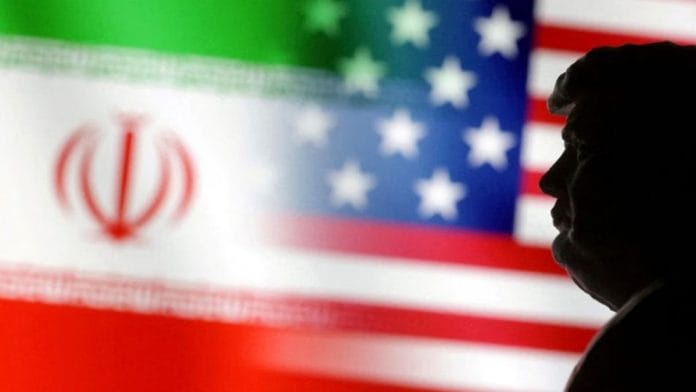



The US-Israeli attack on Iran is likely to lead to a more chaotic region, at least in the short run. Though both countries had good reasons to launch this attack, considering decades of Iranian terrorism targeting Israel and the US, and the potential existential threat that the regime in Tehran posed to Israel, it is not clear that US President Donald Trump, in particular, thought through the endgame.
That could mean he leaves behind a weakened regime that is still in charge of the country, which would likely produce further chaos. Trump has called on the Iranian people to rise up, but this is a foolish strategy, if it is a strategy at all. Indeed, it appears to be the opposite — a way of avoiding the difficult decision about deploying ground forces, because air attacks alone are unlikely to resolve the Iran regime problem. Authoritarian regimes are, of course, brittle, but it is difficult to know when exactly they will break.
For India, how the war will play out matters, but it has little to do with Iran itself.
Also Read: Marco Rubio at Munich was wrong. Civilisations don’t determine foreign policies
A war that could backfire on US
The reported reasons for the US attack keep changing, almost by the hour. It was first about Iran’s nuclear programme (though Trump had claimed last year that it had been obliterated in the attacks then). Later, it was Iran’s missile programme, and then its support for terrorists, and somewhere in between, to promote Iranian democracy. On Monday, US Secretary of State Marco Rubio made the astounding claim that it was because the US anticipated an Iranian attack on the US in response to an Israeli attack on Iran.
It is likely that a combination of these reasons led to the attack, but it is even more likely that Trump launched it without thinking through all the consequences. This was always the danger with Trump — that his ignorance, stupidity, extreme self-confidence, and short attention span would lead to some strategic disaster. The US military appears to have warned him of the dangers of a military operation, but he appears not to have listened.
Of course, Trump could simply declare victory after a few weeks and take his forces home, but that would leave a region in even greater chaos than it is in currently. It will likely at least partly serve Israeli interests because, understandably, Israel will want to weaken a regime that has been and remains a continuing danger to it. But a region in chaos will not necessarily help US interests.
Moreover, Iran has demonstrated that it has the capacity to hit back at US forces and allies, even as Israel and the US pick apart the top leadership of the regime. Trump might very well find himself in a much longer war than he intended because of incompetent decision-making. Even overwhelming American power might not suffice to overcome the disadvantages of Trump’s foolishness.
None of this is to suggest any sympathy for the brutal, medieval, theocratic government that rules Iran. They have had little compunction about engaging in terrorism either domestically or abroad. Just in the last few weeks, this blood-thirsty regime mowed down tens of thousands of its own citizens, mostly youngsters, who dared to protest against them. Their blood-curdling brutality toward women in particular is the stuff of nightmares. It is little wonder that large sections of Iranians, especially women, are openly celebrating the killing of the Ayatollah.
And as far as the killing of a state leader is concerned, Iranian hands aren’t exactly clean, considering the assassination of former Lebanese Prime Minister Rafic Hariri by operatives of Iran-backed Hezbollah. There is little chance that Iranian leadership did not at the least approve this assassination, even if they did not order it.
Also Read: Khamenei’s assassination—what did US achieve by ripping up international law
Iran war, and India’s China problem
As far as Indian interests are concerned, the picture is somewhat confused. Of course, India is in no position to do much about it in any case. For all the silly talk of multipolarity, India and the rest of the world can only watch from the sidelines and have little capacity to affect the outcome, directly or indirectly. The ‘Global South’, BRICS, or even the ‘Middle Power Coalition’ are all empty calories, not useful muscle to move international politics. They help foreign ministries and leaders by giving them something high-sounding to declare and sign at wasteful summits, but are meaningless in practical terms.
This is, of course, neither new nor peculiar to Iran. India’s own experience is no different. India’s post-colonial compatriots were a disappointment when India actually needed them, over and over again. Whether in 1962 or in 1971 or even more recently — think of the Parliament terror attack or Mumbai in 2008 — they have been either absent or worse.
Iran itself, for all the talk, is not particularly important for India either. Yes, India’s bilateral ties with Iran are useful, but not any more so than its ties with Arab states in the region, especially in the Gulf. And Israel matters to India in much more practical ways. Despite Trump, the US matters even more to India in dealing with the very real threat that it faces from China.
Moreover, India’s Iran ties have always been more about promise than reality, a promise that remained just that. Oil, of course, matters, but it is hardly a rare commodity. India had anyway reduced its import of Iranian oil, and it is now a negligible amount, worth only about a billion US dollars, against a total oil import bill that runs to over US$ 137 billion.
Iran as a bridge to Central Asia is an even more absurd notion. Central Asia is no El Dorado that is vital for India. And the problem is not physical access to the region but India’s incompetence in building such linkages. Think of Southeast Asia, a region far more important to India, with no such physical obstacles. India has not succeeded there either in its Look East/Act East effort that spans decades.
Nevertheless, there is one very real concern that India needs to worry about in Trump’s war against Iran.
This is the possibility that an America that again becomes embroiled in the Middle East will fail to focus on the Indo-Pacific and China.
It was always unclear whether Trump had it in him to think consistently about China. His venality and short-sightedness always carried the risk that he would cut a personally profitable deal with Beijing, leaving Washington’s partners adrift. Now, Iran becomes an added concern because he could have one more reason to lose focus. This should matter to India because, despite all the difficulties of dealing with Trump, the US remains the only real hope India has to successfully balance China.
Rajesh Rajagopalan is a professor of International Politics at Jawaharlal Nehru University, New Delhi. He tweets @RRajagopalanJNU. Views are personal.
(Edited by Asavari Singh)
This was a pretty poorly thought out analysis full of misleading information, especially about Iran and very weak justification for India’s recent foreign policy decisions.
The Middle East will never be the same and neither will Israel. The world has also seen how weak and unreliable India is. This wasn’t realpolitik, it was just plain opportunism with no regards for long term repercussions to India.
The US has already abandoned its Arab allies and has openly stated they can only protect Israel. I’m not sure in what world India and the author thinks the US will be able to help it balance China.