









The implications of “white collar terrorism”, which manifested in the form of the Red Fort suicide car bombing, were well analysed by the media and defence analysts. However, it is the same module’s aborted attempt at “techno terrorism” using drones and improvised rockets, as done by Hamas on 7 October 2023, which poses a far more serious threat.
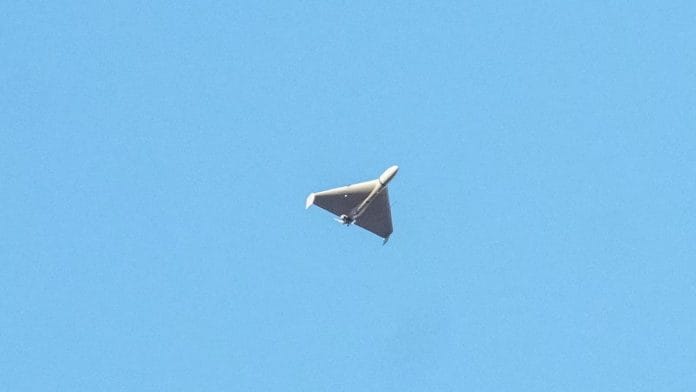
Terrorism in India has generally been seen as a ground-based threat, involving terrorists armed with small arms and grenades, planted improvised explosive devices and—more rarely—suicide bombers. This paradigm is now shifting. The proliferation of low-cost, assembled or commercial Unmanned Aerial Systems (UAS) armed with explosives is likely to become the preferred weapon of choice, transforming terrorism into a more potent threat. Sponsors can also supply military-grade drones.
From novelty to proxy weapon
Globally, drones have been weaponised by non-State actors— ISIS in West Asia, Houthis in Yemen, Hamas in Gaza and Hezbollah in Lebanon and proxies or agents of Israel and Ukraine in Iran and Russia. In the Indian context, drones have been systematically and extensively used by Pakistan-associated terrorist networks and smugglers since 2019 for transporting narcotics, weapons and explosives across the western border, with a focus on Punjab and Jammu and Kashmir.
The first-ever offensive use of drones in India occurred at Jammu Air Force station on the night of 27-28 June 2021. This attack achieved complete surprise, with the Indian Air Force unable to detect and neutralise the drones. Such was the alarm that Prime Minister Narendra Modi held a meeting with Home Minister Amit Shah, Defence Minister Rajnath Singh and National Security Advisor Ajit Doval to discuss the emerging threat. What stood out was the fact that it caught the system unprepared. I had predicted the advent of drone terrorism two years earlier.
Drones were extensively used in Operation Sindoor. The focus remained on military targets but in future conflict situations, the adversary is also likely to use its terrorist proxies/agents and Special Forces to target both military and civilian targets with drones. This has been demonstrated by Israel and Ukraine in Operation Rising Lion and Operation Spider’s Web.
Why drones favour terrorists
Drones are the ideal asymmetric weapon—cheap, widely available, easy to modify and difficult to attribute. A UAV costing $ 250 – 500 can kill a large number of people in a crowded environment—common in India—or destroy assets worth crores. In real terms, it is cheaper than an AK-47 rifle, the preferred weapon so far, and allows the terrorists to strike remotely, reducing the risk of getting caught or being killed.
Drones can be easily assembled using commercial components and 3D printing. Even commercial, civilian drones can be easily modified. Advances in technology now allow even nano drones to be weaponised, and deployed individually or in small numbers for assassinations. Swarms of nano drones targeting crowds at political rallies, religious gatherings or any other dense public spaces can cause mass casualties directly and due to resultant stampedes.
For State sponsors, drones offer even more strategic utility as they reduce political and military risk, provide plausible deniability in grey-zone conflicts, enable intelligence gathering without crossing overt thresholds and allow rehearsal of tactics for future high-intensity warfare. Drone terrorism must, therefore, be understood not only as a tool for episodic violence but as an element of broader proxy warfare.
India’s evolving threat profile
Let there be no doubt that drone terrorism will be India’s biggest internal security threat, increasingly intersecting with conventional conflicts such as Operation Sindoor.
Along the western border, drones will continue to be used to transport drugs, weapons, explosives and other contraband from Pakistan into India. In Jammu and Kashmir, a greater exploitation is likely to sustain the proxy war, avoiding the risk of interception during ground infiltration.
In the hinterland, there are targets galore for drone terrorism in form of —assassinations of political leaders, military or police personnel; attacks on commercial and military aircraft on the ground or during take-off and landing; strikes on crowds at political rallies, religious gatherings, markets and sports stadiums to cause casualties; attacks on industrial and petrochemical complexes; biological and chemical attacks; disruption of electricity grids; and triggering of train or bus accidents.
During Operation Sindoor, Pakistani missiles and drones were intercepted close to the border due to dense, integrated air-defence deployments. In a future conflict, however, terrorists, enemy agents or Special Forces may target civilian and military targets in the hinterland. Recall the psychological impact of 600 drones used by Pakistan over three nights, even though only military targets were engaged. Now imagine a situation if even 100 drones were deployed in the hinterland, where air defence protection is non-existent.
Anti-drone challenge
India’s challenge in countering drone terrorism is not primarily technological; it is conceptual and institutional. At its core is the failure to recognise drone terrorism as a fully-fledged air defence challenge.
Traditional air defence strategy remains focused on low, medium, high-altitude and high-speed aerial threats such as aircraft, missiles and military drones. The very low altitude (VLA) layer, below 300-400 feet, has largely remained a blind spot. This is precisely where terrorist-operated drones enjoy a tactical advantage. Kinetic anti-drone weapon systems are still in the evolutionary stage. Currently, the primary reliance is on electronic and laser-based jammers.
Conceptually, air defence has been the responsibility of the armed forces. It relies on sophisticated and expensive systems designed to intercept aircraft, missiles and military-grade drones through kinetic and electronic means, with the focus on protecting only military installations and critical civilian infrastructure due to limited resources. It does not adequately address very low-altitude and clandestinely operated terrorist drones—whether launched across borders or in the hinterland. In recent years, the Border Security Force (BSF), state police and other Central Armed Police forces have also invested in anti-drone systems.
Integrated approach
Drone terrorism straddles the divide between external defence and internal security. Addressing it requires doctrinal convergence, institutional clarity and shared operational frameworks between the Ministry of Defence (MoD) and the Ministry of Home Affairs (MHA). The need of the hour is to integrate the counter-drone resources of the armed forces: the BSF, state police and other Central Armed Police Forces (CAPF) through an Integrated Air Defence Command and Control System.
The armed forces must include the very low-altitude (below 300- 400 feet) airspace as an operational domain in air defence doctrine, force structuring and budget planning. All counter-drone sensors and weapon systems of armed forces, CAPF and state police must feed into the Integrated Air Command and Control System (IACCS) to generate a common low-altitude air picture.
Ideally, a nationwide network as envisaged in the Sudarshan Chakra vision needs to be created. However, it is a factor of cost and priorities will have to be set. Limited air-defence resources can barely cover the military installations and very high-value targets. For the foreseeable future, the burden of countering drone terrorism will rest with state police and CAPFs.
Role of state police and CAPF
MHA needs to elevate counter-drone defence as a core internal security priority. CAPFs and state police must have dedicated counter-drone units with mobile detection and neutralisation capability. The anti-drone capability of the state police must be funded by the central government. Depending upon the threat, even corporate or industrial entities may have to be allowed to operate non-kinetic anti-drone systems with limits on altitude and range for exploitation.
Pending establishment of a national network, need based standalone low-altitude airspace management networks must be created in the hinterland with real-time airspace sharing between civil aviation, internal security and military stakeholders. Standardise rules of engagement. Clear legal and operational guidelines for counter-drone action in civilian environments are required to remove ambiguity and hesitation.
All vulnerable locations must be locally declared as “red zones”, where no civilian drone can fly and also provided with anti-drone cover. Crowded areas of cities, religious places of worship and major festivals or public gatherings should, as a rule, be “red zones” protected by state police anti-drone systems, supplemented by CAPF when required.
Defence against drone terrorism covers the entire gamut of ‘defence in depth’ response, which includes prevention, deterrence, denial, detection, interception and destruction. Drone terrorism must be given special attention by intelligence agencies.
With regard to prevention, Drone Rules 2021 are in place and are being further refined through the Civil Drone (Promotion And Regulation) Bill, 2025, which is at the draft stage. A cursory reading indicates lack of attention to the threat of drone terrorism. At present, most drones operate in standalone mode, with flight plans filed in advance. In practice, a “no permission, no take off” system is nowhere on the horizon. This makes identification of hostile drones very difficult.
It is pertinent to mention that drones are becoming insulated against conventional jamming, thus necessitating a combination of electronic and kinetic anti-drone measures.
Also read: China is world leader in drones, Pakistan a peer. India must prioritise UAS to keep up
The strategic imperative
Drone terrorism represents the democratisation of airpower for hostile non-State actors. It allows terrorists and their sponsors to observe, intimidate and strike from the air—which was once the exclusive domain of air forces.
The choice before India is stark: either drones continue to be treated as an adjunct to terrorism and addressed incident by incident, or they are recognised as a central element of proxy warfare, requiring doctrinal reform, institutional alignment and operational integration.
For India, drone terrorism is no longer a hypothetical future; it is a present and persistent reality. A major drone attack by terrorists is waiting to happen and our security forces must be prepared to prevent and neutralise it.
Lt Gen H S Panag PVSM, AVSM (R) served in the Indian Army for 40 years. He was GOC in C Northern Command and Central Command. Post retirement, he was Member of Armed Forces Tribunal. Views are personal.
(Edited by Ratan Priya)
Why not just destroy that country once for all?