






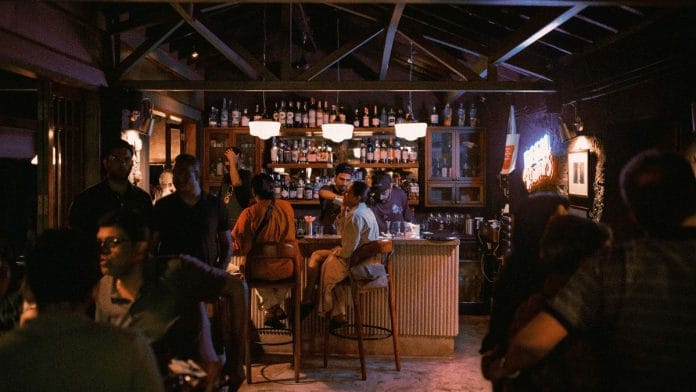



It’s a dry day in Goa. Zilla Panchayat elections mean no alcohol can be served at restaurants and establishments in the state, and most bars brace for empty rooms. But spirits are high at Grumps, a “neighbourhood bar” and restaurant tucked into the backyard of a Goan house in Sangolda. By 7.30 pm, the garden is packed. The long table under the chikoo tree is lively. Mocktails and plates of beef croquettes are doing the rounds, and the regulars have settled in for an evening as if nothing has changed.
A little over a year into operation, after opening in early 2024, Grumps has become one of Goa’s most coveted dining destinations. Local residents, “settlers”, and tourists alike make their way to the bar – despite its location at the dead end of a dark street – for the Asian-inspired menu and cocktails that take themselves seriously without being precious about it. Grumps is at least 20 minutes from the Assagao-Anjuna-Vagator tourist corridor, far from the coastal strip where Goa’s buzziest openings stake their claim.
Still, it has drawn glowing reviews from food writers and generated the kind of word-of-mouth buzz that no amount of money – or influencer marketing – can buy. Buoyed by that, it has landed on all the right lists. Earlier this year, Eater put Goa on its “Where To Eat Around the World in 2025” list. Grumps was one of the newer entrants on the line-up, alongside award-winning heavyweights such as Cavatina and the beloved Panaji café Larder & Folk. Other tastemakers have followed suit. It is pegged at #15 on Condé Nast Traveller’s best Indian restaurant list and was labelled by the magazine as “Goa’s most unlikely neighbourhood institution”.
Everyone is a little shocked by Grumps’ success – and that includes the bar’s young owners, Agrini Satyarthi and Kartik Vasudeva. The couple look faintly bewildered when they talk about how the bar has accomplished all this in a relatively short period, as if they’re still waiting for the other shoe to drop.
“We have sat in our car and asked ourselves, ‘What is it? What are people resonating with?’” Satyarthi told me. “Is it the food, the drinks, the vibe? I think it must be a combination of it all,” she said, gesturing around the welcoming space.
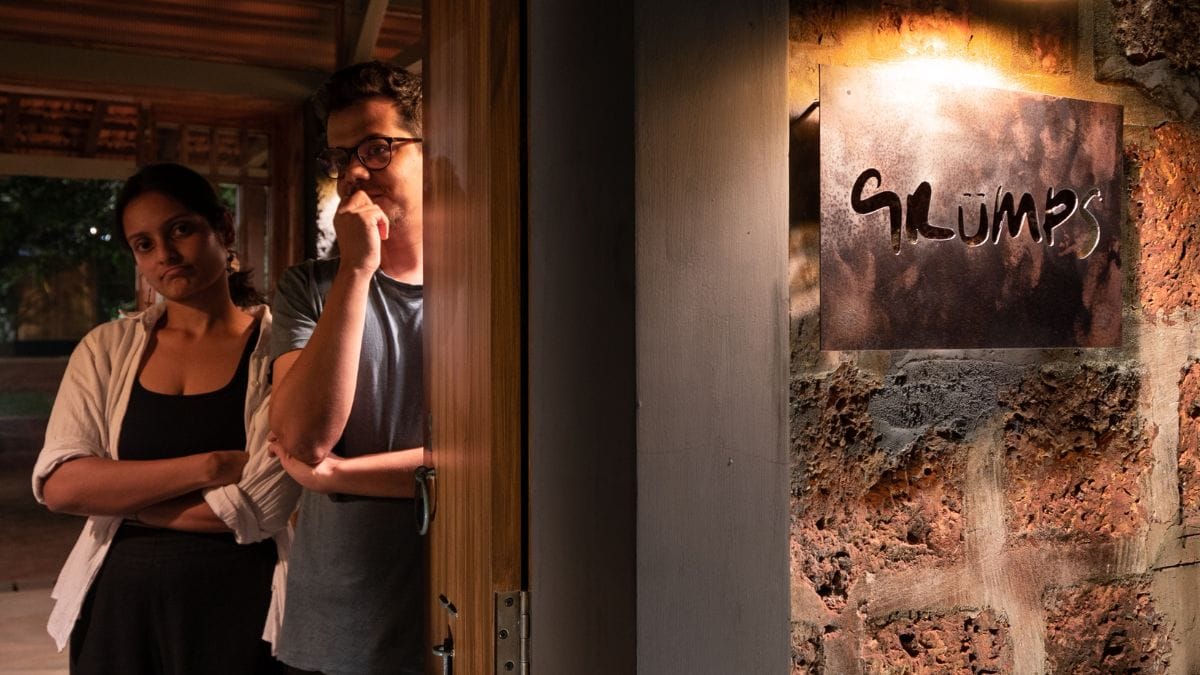
A neighbourhood bar in Goa, built for locals
The setting is part of the charm. Grumps is built around a restored outhouse in the backyard of a Goan home, using the laterite stone walls to its advantage. There is as much warmth in the bar’s decor – the cane chairs and fairy lights strung across the garden’s fruit trees – as there is in the young, friendly staff. Satyarthi and Vasudeva are on the floor every night, chatting with guests and ready with a recommendation if you need one, but without a fuss. The word I keep reaching for is “unassuming”, but food writer Joanna Lobo described it best as “a garden party at someone’s impossibly well-curated home”.
Both Satyarthi and Vasudeva cut their teeth at the extremely popular Bombay Canteen. Like several other Covid migrants, the pandemic pushed them to reassess the kind of life they wanted, and they moved to Goa in 2020. “We could come home for a swim,” Satyarthi recalled. “That was a completely new idea for people working in hospitality.” The balance was intoxicating.
The couple worked out their next move over a five-month trip through Europe and Asia. In Spain, they noticed how naturally eating and drinking folded into each other – tapas with wine, small plates meant for lingering. They also discovered that the flavours they craved most were Asian.
“We went to a Chinese restaurant in Dubrovnik because we were starving,” Satyarthi laughed. That led them to Thailand and Vietnam, which helped crystallise Grumps’ future menu, centred on Asian flavours tweaked for the Indian palate.
So you have garlic prawns and beef croquettes, shrimp wafers with Indian masala, and salmon tartare in a coconut curry base, all rendered through an Asian lens. It is a mix of what is familiar and relevant to Goa, made a little Asian.
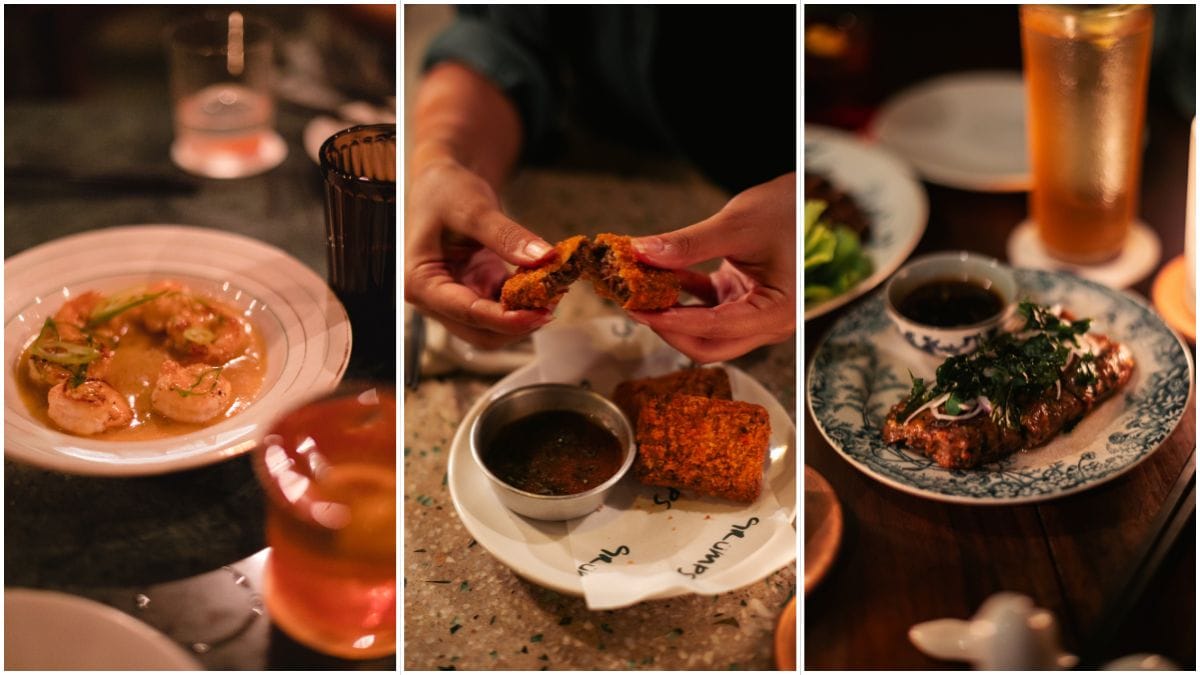
“A Goan should never feel disappointed eating the beef croquette here, even if it feels different,” Satyarthi said. “There should never be any complicated things or words on the menu. We’re just a casual place to come eat and drink at; we’re not giving you any lessons.”
Vasudeva and Satyarthi used this understanding to adapt the menu with agility. A messy steak sandwich inspired by Lisbon became the beef croquette. Oily lamb spring rolls turned into kebabs. The bar menu was adjusted to Goa’s outdoor heat, with refreshing drinks and “balanced martinis” that work even when nothing stays properly cold. The menu is deliberately tight.
“We don’t ever want to be the sort of place that puts 40 dishes on the menu,” Vasudeva said. “It leads to too much wastage and the kitchen gets overwhelmed. We will do specials here and there, but this is a way for us to stay true to ourselves.”
The striking thing about Grumps’ success is how organic it feels. This was a conscious departure from everything Satyarthi had learned at Bombay Canteen, where she handled part of the marketing.
“I realised no matter what I’d picked up about email marketing or using your database, in Goa, nothing worked,” she said. So the couple bet on building something strong enough for Goa’s residents and let them do the talking. It worked. I heard about the bar through friends, and that’s how everyone seems to have discovered it.
When Grumps opened, the split was 80-20 residents to tourists. It’s closer to 50-50 now, but the core remains fiercely local. Last Christmas, 80 per cent of their guests were regulars.

“We are very fortunate that we’ve been able to get that strong base of supporters and regulars,” Vasudeva said. “This might be common in cities, but it becomes very hard in a place like Goa. It really motivates us to do different things and gives people a reason to keep coming back.” This loyalty sustains them through Goa’s unpredictable rhythms. There are nights with 15 people and nights with 90, and you can never quite predict which will be which.
A partnership of like-minded bars
This model also works because of a fundamental shift in North Goa’s demography. The wave of pandemic migrants – young professionals, entrepreneurs, and remote workers – has created density in neighbourhoods that were once too residential to support this kind of establishment. Grumps might be a “neighbourhood bar” in so far as it is in the neighbourhood, but its Rs 2,000 cover isn’t cheap. However, thanks to the disposable incomes of the settler economy, there is a stable customer base willing to return to places they trust. Grumps has tapped into a market of longing: for consistent establishments that are staples of urban life.
This understanding of themselves as part of an ecosystem rather than isolated competitors has also shaped the collaborations they pursue: a joint event with Larder & Folk, a takeover at O Pedro in Mumbai, a taco stand with OTRA — each drawing in regulars.
“We’re very conscious of what we put out in our own space,” Vasudeva said.
Lobo has a theory that unites Goa’s best restaurants: cater to the local population and stay consistent. “I’m 90% sure the food [at Grumps] will be the same even if I go back after months,” she said. “You feel like you’re at an upscale restaurant version of a mom-and-pop store, with people who genuinely care about you and your experience.”
This is what Grumps has accomplished: a place that feels simultaneously unpretentious and finessed. Even the name and its frowning-smiling logo embrace levity.
“We’re serious about the product,” Vasudeva said, “but we don’t want to take ourselves too seriously.” The seriousness is in the daily work of showing up and building for the people who live here. The tourists will find you anyway.
This article is part of the Goa Life series, which explores the new and the old of Goan culture.
Karanjeet Kaur is a journalist, former editor of Arré, and a partner at TWO Design. She tweets @Kaju_Katri. Views are personal.
(Edited by Prashant Dixit)