









The United States and Israel’s war on Iran in the Middle East is now on its 24th day. Operation Epic Fury, which began as a “surgical strike” against Iran by US military forces, has now escalated into a full-blown crisis that has affected the entire world, directly impacting the United Arab Emirates, Qatar, Saudi Arabia, and Lebanon.
US President Donald Trump, in an eight-minute video posted on his Truth Social account, said, “Our objective is to defend the American people by eliminating imminent threats from the Iranian regime. A vicious group of very hard, terrible people. Its menacing activities directly endanger the United States, our troops, our bases overseas, and our allies throughout the world.“
The alleged “menacing activities” being Iran’s supposed nuclear armament cache, and intercontinental long-range missiles which, for some reason, Trump perceived as a threat to the US. “The goal of the strikes is to eliminate the Iranian nuclear programme once and for all,” Trump said, whilst unleashing the first salvo on the last day of February.
काम एष क्रोध एष रजोगुणसमुद्भव: ||
महाशनो महापाप्मा विद्ध्येनमिह वैरिणम् ||
kama esha krodha esha rajo-guna-samudbhavah
mahashano maha-papma viddhyenam iha vairinam
Verse 3:37 of the Bhagavad Gita is loosely translated to mean, “It is desire — born of passion — which later transforms into anger. It is insatiable, deeply destructive — recognise this as the true enemy within.”
In the context of the current conflict, we can interpret the above verse as meaning that insatiable greed and lust for power, or oil, or world dominance, when obstructed, lead to rage. This, Krishna says, needs to be contained and controlled. The strikes on Iran are yet to receive sanction from the US Congress. Prior to the US strikes, negotiations between the US and Iran, refereed by Qatar were reported going positively. War is always a painful, difficult and expensive affair. Cost to human life and well-being along with damages to culture is immeasurable but what can be measured are the material and economic costs, which is precisely what this piece attempts to do. Apart from the most obvious fallout, the skyrocketing oil prices, let us discuss the other economic costs of the Iran-US conflict.
Direct military costs
According to a Bloomberg report, a five-week war could cost US taxpayers upwards of $175 billion. If the war extends to eight-weeks, the economic ramifications would be over $250 billion.
“War costs will increase by about half a billion dollars a day, unless one side significantly changes its activities or an outside event alters the war substantially,” says a report by the Centre for Strategic and International Studies.
The Pentagon has asked Congress for an additional $200 billion to support the ongoing military operation against Iran. So far however, it seems there is no end in sight to Operation Epic Fury (still not designated officially as a war). But what about the world at large, which has been dragged into a conflict not of their making or in their interest? However, what started as an ideological war has shaped itself into an economic war.
Also Read: SC decision on menstrual leave is feminist. Rani of Jhansi didn’t use period as an excuse
Disruption of global supply chains
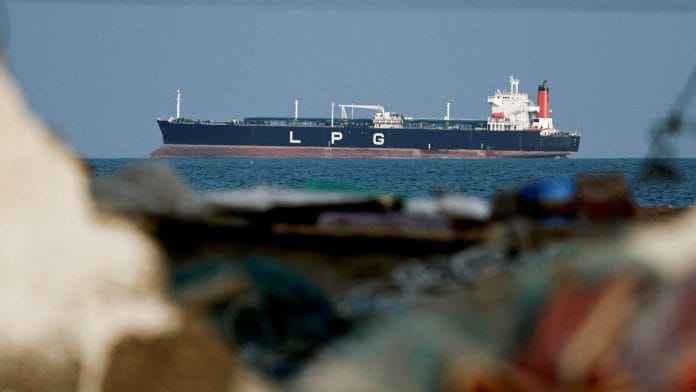
Operation Epic Fury has disrupted and broken global supply chains, with the tremors being felt worldwide due to a systemic breakdown in trade, logistics and input flows. Since 80 per cent of global trade moves by sea, even partial disruptions have a cascading effect, and the Strait of Hormuz is a critical route for east-west maritime traffic. From 130-240 ships per day, container traffic is down to less than five ships per day with over 1,000 ships stranded and severely constraining global shipping capacity.
Freight costs have surged exponentially, with container rates rising up to fourfold. War risk insurance premiums are increasing from 0.25 per cent to nearly 7.5 per cent of vessel value. Rerouting sea traffic to avoid the conflict-ridden Middle East will cost freight forwarders four times the charge of shipping, driving inflation across industries. Non-energy supply chains such as the fertiliser industry, which originates in the Middle East, have caused ripples in agricultural production; shortages of helium, which is essential in the semiconductor industry and medical use, have reduced supplies by over five million cubic tonnes and naturally, prices have doubled. Temperature sensitive products such as medicines and pharmaceuticals, along with perishable goods, have caused a heightened risk to public health and also food security. So far, India’s Alphonso exports have already crashed due to over 1,000 containers stranded at Mumbai port and the disruption of Gulf shipping routes.
There are close to ten million Indians in the Middle East, close to 40 per cent of our fuel needs are met from this region, and 44 per cent of our foreign remittances come from this region, in addition to our long-term strategic partnership with all the GCC countries, including Iran, Israel and US alike.
Disruption in tourism
The World Travel and Tourism Council (WTTC) suggests that this “operation” is costing the global tourism industry a whopping $600 million a day. Airlines such as Emirates, Qatar and Etihad, which had a combined peak passenger volume of roughly 300,000 passengers transiting the Gulf daily, face an uncertain season with airport closures and flight cancellations across Dubai, Doha, and Abu Dhabi. These flight cancellations are likely to have far-reaching repercussions on the economies of small tourism-dependant countries like Egypt, Turkey, Lesotho, Maldives, Sri Lanka, Nepal and even Thailand and Cambodia. Airspace closures have compelled European airlines such as KLM & Lufthansa to reroute long-haul flights, increasing journey times by 2-6 hours, pushing up ticket prices by 15-25 per cent; higher fuel and insurance prices, however, have held constant. Pre-conflict estimates of the Middle East’s $207 Billion target for tourism inflows in 2026 stand in jeopardy as of today. Religious tourism traffic to Mecca and Medina has also been affected. More than 80,000 reservations were cancelled in Dubai itself in the first week of the conflict.
Also Read: India leads in women empowerment—gender budgeting, legal protections, Panchayati Raj
Global recession
Our friend Rahul Gandhi loves giving us a blinding glimpse of the obvious. He is warning us that “inflation is coming”.
“War always forces analysts to make unreliable macroeconomic forecasts on top of unknowable geopolitical gyrations,” says the Harvard Business Review (HBR). But RaGa is no economist, nor does he have a soothsayer like insight into the future. It’s a mere matter of common sense; not just India, but the entire world is likely to reel under the aftermath of Operation Epic Fury as inflationary forces due to escalating fuel costs and regional blockages are going to hit like an epic fury. Energy prices have an inverse effect on real wages, and purchasing power goes down.
The war has also made the investment atmosphere bearish, and the stock market is down. “A longer duration to elevated prices could rob the economy of the baseline strength it needs to cling on,” reads the HBR.
So yes, inflation is coming if the conflict sees no end in sight.
What India can do
India must take a balanced and principled diplomatic response, keeping in mind India’s own economic and strategic interests. On 21 March, Prime Minister Narendra Modi had a call with Iranian President Masoud Pezeshikian, where India is expected to follow a calibrated approach by positioning itself as a credible, de-escalatory bridge, rather than a partisan role player.
By condemning attacks on critical infrastructure and emphasising the need to keep shipping lanes open, Modi has already foregrounded India’s core concerns, which are energy, security, stability of global trade and protection of Indian nationals.
Further, India can leverage her individual relationships with Iran, Israel and the US to quietly facilitate discussions and broker peace through back channels, whilst activating multilateral platforms like BRICS, of which India is president, to push for global peace.
Also Read: Pakistan must give up claims to Indian territories to justify Operation Ghazab Lil-Haq
Selfish interests at heart
This acute energy crisis is also a time to introspect and take stock of the situation. LPG prices are up by at least Rs 60 per cylinder and there has been an acute shortage in the last week, even in Delhi. My favourite chat wala has increased his prices by 20 per cent, citing LPG shortage; my chauffeur has been absconding as he has been running from pillar to post arranging a cylinder, as the imagined LPG shortage has triggered a panic wave of hoarding and perceived scarcity. India’s crude BRENT prices have risen to $120 per barrel. This is the time for India to sustain and direct a push towards renewable energy sources such as solar power, hydel power and continue the transition towards EVs like China has done to reduce the dependence on fossil fuels. This is India’s once-in-a-lifetime moment to seize the strategic opportunity to accelerate the transition towards indigenous, ecological fuels. Initiatives like gobar gas (biogas from cattle waste) under schemes like Gobar Dhan Yojana will also help curb methane emissions. During my tenure as a member of parliament in New Delhi, decomposers were introduced to compost organic waste at prominent temples in the constituency, and this was an organic way to manage offerings and kitchen waste. India generates thousands of tonnes of plastic waste per annum. Instead of creating mountains of landfills, this would be an opportunity to utilise technologies rooted in plastic-to-fuel processes to reduce the burden on landfills and prevent toxic leakages into rivers and soils. This would be more than an environmental pivot; it would be a strategic recalibration where sustainability becomes synonymous with national resilience.
As PM Modi said, “Aatmanirbharta is the need of the times. Self-reliance is the cornerstone of building a Viksit Bharat [Developed India].”
This is a most opportune moment for India to shift its gears and work on both plastics and organic waste management in a sustainable manner, and work on net-zero off-grid data centres and cold storages on a war footing. No matter how the new world order is shaped, India will be central to all the committees, i.e., BRICS, USIR, EU, Africa, etc. India and its philosophy have the responsibility to become an agent of global good.
It’s time to lead the world on the path of collaborative and sustainable solutions rather than the competitive politics of fossil fuels.
Meenakashi Lekhi is a BJP leader, lawyer and social activist. Her X handle is @M_Lekhi. Views are personal.
(Edited by Insha Jalil Waziri)