





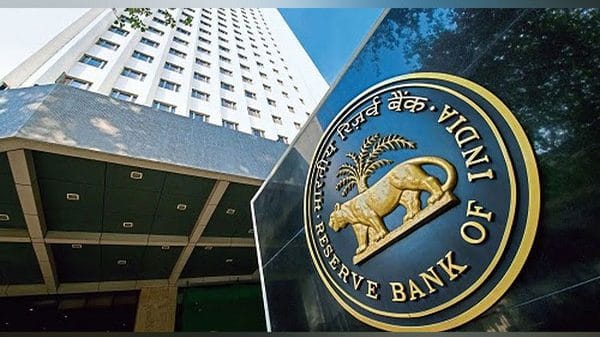



On 5 December 2025, the Reserve Bank of India reduced its policy repo rate by 25 basis points to 5.25 per cent. While most headlines characterised this as a welcome break for homebuyers and businesses—resulting in reduced EMIs, increased credit availability, and a more optimistic year-end outlook, this action warrants a broader perspective.
It represents more than a mere adjustment in monetary policy; it may signify the initiation of a very different kind of macroeconomic strategy—one that I call the Liquidity-for-Resilience Cycle. The LRC is a straightforward concept: It posits that India can leverage liquidity not solely to stimulate short-term demand but to cultivate long-term economic resilience. Rather than rate cuts serving as reactions to economic frailty, they function as a pre-emptive buffer—a way to pre-load the economy with strength before the global weather turns rough. And that is exactly what makes this particular rate cut so important.
The rate cut beyond the headlines
The repo rate, which influences the cost at which banks can borrow, significantly impacts the pricing of nearly all major loans within the country. With the recent reduction, banks are expected to increasingly transfer these lower rates to borrowers, thereby reducing the equated monthly instalments (EMIs) for home loans, as well as the costs associated with auto loans and business credit. Current reports indicate that home-loan rates may soon reach multi-year lows.
The timing of this rate cut is particularly noteworthy. The RBI lowered rates not during periods of high inflation or economic weakness, but during what the central bank has itself described as a “rare Goldilocks period,” characterised by robust economic growth alongside low and stable inflation. This suggests that the central bank is acting from a position of strength, rather than reacting to crisis signals. The objective is to prepare for potential future challenges, such as global rate uncertainty, commodity-price volatility, unpredictable capital flows, and the recent depreciation of the rupee, which has attracted global attention.
In this context, the repo rate cut should be interpreted as a pre-emptive measure to create a buffer, ensuring that the economy enters the forthcoming year with adequate liquidity. This strategic shift in intent is central to what is termed the Liquidity-for-Resilience Cycle.
Also read: Why RBI’s liquidity push matters more than the rate cut
What is the Liquidity-for-Resilience Cycle?
The Liquidity-for-Resilience Cycle (LRC) represents a departure from the conventional monetary easing cycle, which primarily focuses on reducing interest rates to stimulate consumption. Instead, the LRC conceptualises liquidity as a strategic instrument designed to enhance the economy’s capacity to withstand global shocks. The RBI proactively implements measures to strengthen domestic credit conditions, thereby equipping the economy with early shock absorbers to mitigate the impact of external disturbances.
A more liquid banking system is better positioned to manage stress in currency and bond markets, ensuring that India’s credit channels remain operational even in the face of sudden foreign capital withdrawals or tightening global conditions. This is particularly significant in a global context characterised by geopolitical tensions and supply-chain disruptions that frequently threaten financial stability.
Equally important, the LRC facilitates an environment conducive to productive investment. Reduced borrowing costs provide firms with opportunities to invest in manufacturing, technology advancements, export capabilities and capacity building. If this liquidity is directed toward strengthening India’s long-term competitiveness, the benefits will extend beyond the duration of the rate cycle itself. The challenge lies in ensuring that liquidity is not diverted towards speculative assets or short-term consumption surges but rather serves as a foundation for economic capability.
If managed judiciously, the LRC could serve as a new monetary framework for emerging economies, where liquidity is employed not as a temporary stimulus but as a structural mechanism for resilience.
Also read: RBI must minimise the micro-managing of banks. The clean-up exercise is only a start
India, the world, and the road ahead
For India, the immediate advantages are evident. Reduced EMIs enhance household sentiment, stimulate purchases and bolster consumption. For businesses, particularly Micro, Small, and Medium Enterprises (MSMEs), more accessible borrowing conditions alleviate financial stress, promote hiring and support investment. Collectively, these factors strengthen the domestic economy at a time when the external environment remains precarious.
However, the broader narrative is global. India has grown too large and interconnected to be perceived solely as a domestic economy. When India stabilises itself through strategies such as the LRC, it bolsters investor sentiment across emerging markets. Global capital increasingly perceives India as a demand anchor rather than a vulnerability source. A more resilient India reassures global supply chains, supports regional demand in Asia, and provides multinational corporations with a more secure long-term base in a world where many economies appear increasingly fragile.
Thus, the rate cut is not solely about India. It signifies India’s intention to navigate global uncertainty with confidence rather than caution, building domestic resilience at home in order to reduce volatility abroad.
For the LRC to be truly effective, however, policy coordination is imperative. Liquidity must be directed toward productive sectors rather than distorting asset markets. Banking supervision must remain strong to prevent risky lending. Furthermore, the RBI’s communication must be clear, ensuring that markets interpret the strategy as deliberate and forward-looking rather than reactive.
If these conditions are met, India could emerge from this cycle with a more robust growth engine, enhanced financial stability and increased global credibility.
The recent reduction in the RBI’s repo-rate may initially appear modest. However, when considered as the start of a Liquidity-for-Resilience Cycle, it has the potential to represent one of the most significant monetary policy shifts India has undertaken in recent years. This initiative is designed to prepare the economy not for past conditions but for a future characterised by uncertainty, volatility and global fragmentation. If managed well, this cycle will be remembered not merely as an isolated rate adjustment but as the pivotal moment when India began to quietly strengthen its macroeconomic foundations for the decade to come.
Bidisha Bhattacharya is an Associate Fellow, Chintan Research Foundation. She tweets @Bidishabh. Views are personal.
(Edited by Theres Sudeep)