






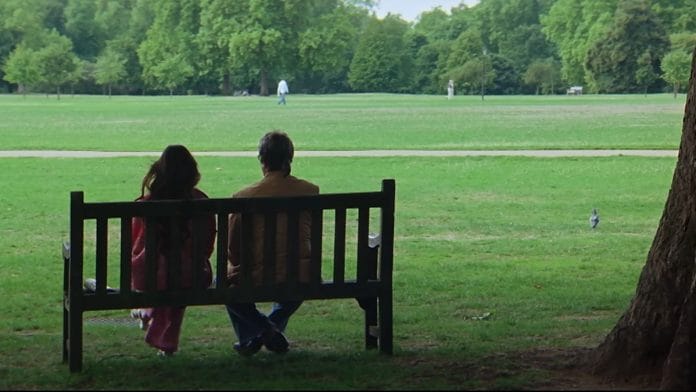



Let’s call her K. She is 34, single-child, and was ticking her Mr. Perfect checklist—has a larger goal or purpose, well-read, has to settle in her hometown, left-brained, must be a pothead, has high libido. And on top of it all, must be a neo-Buddhist.
Oh, and bonus points for body count being in double digits (like her). She wanted all of this, no compromises at all, especially on the neo-Buddhist part.
For educated Dalits, the harsh truth is: our dating pool is tiny. After decades of oppression, only a small fraction of Dalit youth have college degrees and job security like their Savarna peers. Even among Dalits, economic and educational uplift is uneven. My grandparents had arranged marriages within our extended clan, often prioritising family connections.
Today, we discuss compatibility, but our pool is still largely comprised of members from our own community, and even that community is fracturing. As one essayist, Aashika Shivangi Singh, has noted, even marriage within first and third and fourth generation Dalits can provoke rejection from one’s own kin. In other words, this difference has left its scars even among “oppressed” castes.
A shrinking dating pool
Dalits carry intergenerational trauma, which can be hard to shake off, and it comes as an unavoidable baggage when it comes to finding a partner. They say, “The child of a broken home often seeks a perfect one, and in doing so, breaks the home they build.” For K, this reflects the anxiety of “getting it right” to avoid her parents’ fate. Her Dad left when she was 18. But her pursuit of ‘the perfect’ can stifle the natural, messy growth of a healthy relationship. And then there’s her checklist, the burden of expectation placed on a partner to be the permanent anchor that the parents failed to be.
We often hear that modern love should transcend caste. After all, BR Ambedkar proclaimed, “the real remedy for breaking caste is inter-marriage. Nothing else will serve as the solvent of caste.” But in India, inter-caste unions remain rare; only about 5 per cent of marriages are between different castes. On dating apps, I see why. For every Dalit profile, there are dozens of profiles of young Savarna professionals.
In swiping, I matched almost exclusively with Sharmas, Kumars and Chatterjees—upper-caste names that told me their caste before I even saw a picture. In a sense, the upper-caste majority on these apps makes us depend on each other: finding a socially aware partner often means dating within the Dalit/Bahujan community, not out of caste.
This is not some romantic ideology of “dating within community” – it’s a quiet survival strategy. This isn’t about a lack of effort on apps. On the surface, dating technology promises openness, even anonymity. But caste filters itself in. As one Dalit writer wryly observed, even though apps don’t show your caste by default, “could it be that these apps are only casting a wider net to have access to people from different castes?” In practice, subtle markers, such as a surname, dialect, or even an English grammar test on a profile, serve as unofficial caste checks.
“Many Savarna women,” an analyst notes, will declare themselves “grammar nazis” or post obscure cultural cues to signal they share Savarna upbringing. In short, technology is no match for what generations of social conditioning have normalised. The same caste boundaries that governed hometowns and schools quietly govern our swipes and likes.
A big fault-line is generational. I’m a second-generation city dweller: my Dad earned a university degree and got a secure government job. For me, marriage is a choice about compatibility, love, and shared values. But for my parents’ generation (first-generation university-goers), marriage was often seen as proof that we’d escaped our caste past. They believe that if their daughter marries an Ambedkarite engineer, it will show their relatives that caste rules no longer bind us. In practice, this means they still mostly trust proposals within our sub-caste or those who look “respectable”. To them, each match is a statement: “See, our daughter is doing just fine.”
This difference shows up in funny ways. I want to discuss relationship compatibility over coffee, but my mother quietly brings up the family’s job background. It’s a tension: elders see marriage as security and social proof, younger Dalits see it as an adventure of choices.
Ideologies collide
Another tension runs along ideological lines. In my family, we follow Ambedkarite neo-Buddhism, which means equality, rational thought, and rejecting caste rituals. We see ourselves as Buddhists first and caste-freed Dalits second. But many Dalit relatives I know (even if they outwardly call themselves “Buddhist”) still observe certain Hindu traditions: perhaps a puja, or an unshorn thread, or reverence for fasting on Thursdays. These differing worldviews can clash.
For example, I’ve talked politics and social reform on dates, quoting Ambedkar or Buddha, only to find the match uncomfortable because I challenge even the smallest ritual they grew up with. Experiences like these remind us how deep caste memory runs, even in our own parents’ generation.
The truth is, caste rules both the oppressor and the oppressed. As Dalit writer Suraj Yengde notes, even “in radical or progressive spaces, caste hierarchies continue to persist” in personal relationships. One painting of a Buddhist shrine on my wall might mean hope to me, and hostility to someone else. This ideological gap means our dating choices are often more constrained.
I was assigned neo-Buddhist at birth, yet I can’t pretend all my kin left caste behind. In practice, many often screen potential Dalit partners by how seriously they take Ambedkar’s ideals versus caste heritage. And that difference matters: marrying outside one’s Dalit sub-caste can still upset even a Dalit community.
Memory and trauma
Intergenerational trauma casts a long shadow over Dalit dating. My parents lived through a lack of resources, an illiterate family, the barriers to education, and all that. They passed on a “stay alert” mentality. I find myself scanning every conversation for hints of casteism: a raised eyebrow when I mention “reservation”, a too-friendly pat that feels like pity. The more aware I become of these dating dynamics, the harder it is to trust – a love’s most vital ingredient. “The more aware [a Dalit woman] becomes of the dynamics, the tougher it becomes for her to trust,” Christina Dhanaraj has written in her book, Swipe Me Left, I’m Dalit.
This vigilance is exhausting. We bring unprocessed scars into new relationships. For instance, I wondered if mentioning Ambedkar’s birthday on social media would scare off a potential date. I wasn’t sure whether I could just relax and be myself. And real support is scarce: many Dalit singles lack a social network of peers to debrief with. As Dhanaraj writes, a Dalit woman often has “lack of social capital or support, in the form of friends or family”, which makes break-ups or taboo relationships hard to process. The same is true for Dalit men as well. We have no taboos about discussing heartbreak in Bollywood films, but not here. If a Dalit man defies his clan to date outside it, he may do so in secrecy. A Dalit woman who speaks up about online caste slurs is told she’s “too angry”.
Mental health intersects with this, too. As a neo-Buddhist, I believe in mind training, but even therapy in India can ignore caste. One Dalit woman reported that her therapist dismissed her talk of caste insults as “paranoia”.
There are fledgling groups like The Blue Dawn that train caste-aware counsellors, but they are rare. Ultimately, our collective trauma erodes confidence. It chips away at our self-worth to constantly navigate a world where many don’t see us as “deserving” partners. As Manisha Mondal, a Dalit journalist, observed, our survival sometimes hinges on playing down our identity – “being ‘too much’ for upper-caste men” or else “die single”.
It’s a bitter choice between dignity and loneliness.
Algorithms and ancestry
Dating apps promised to disrupt the casteist marriage market. Instead, they’ve merely translated social biases into digital language. Apps like Tinder or Bumble don’t ask for caste in sign-up, and profiles rarely flaunt it. But that doesn’t mean caste disappears. Profiles are still elite-coded, gendered spaces: English fluency, overseas travel photos, Spotify playlists. Such markers function as class-and-caste filters. If you write in slang or appear too “regional”, many will swipe left—often unconsciously filtering out non-Savarna backgrounds. Some Dalit friends joke that our only way to “pass” is to sprinkle liberal buzzwords or hide every trace of Dalit identity.
Sometimes I’ve wondered if an app filter might help. One writer suggested that dating apps should let us tag caste preferences, so we only see those “who have no problems with my caste”. But the bigger issue is that people treat dating as an extension of their existing social bubbles. People ask “where are you from?” on matrimonial sites, meaning “what is your caste?” The equivalent on dating apps is a sly cultural screen. We pretend to not notice it, but everyone does.
In fact, my own experience matches the data: I rarely saw Dalit profiles recommended. I was inundated with upper-caste suggestions instead. It wasn’t until I explicitly listed Ambedkarite Buddhism on my bio that I began to get more Bahujan replies. Technology without intent can replicate caste segregation. As one essayist wrote, an app cannot outwit a thousand generations of caste conditioning. But for now, the code of caste quietly marches on in our swipes.
Also read: Game theory in modern Indian relationships. First person to demand more loses
Reframing Dalit dating
None of this is to say Dalit dating is a “cultural anomaly” or a minor niche issue. It’s a microcosm of India’s unfinished revolution. When caste, class and memory collide in our love lives, we see how far society still has to go. We need to talk about this openly. What would it mean to say on a first date, “Listen, I come from a Dalit neo-Buddhist background—where do you stand on caste?” It sounds awkward, but maybe it should sound normal. Who we choose to have sex with is a political choice in India.
Social location—caste, class, even language plays a huge role in whom we find attractive. That’s not something to guilt-trip; it’s a fact of life that deserves conversation. Some Dalit activists have proposed exclusive matchmaking forums or even dating apps for Dalits and Bahujans. I agree we need our own spaces, but not just to exchange matrimonial biodatas. A Dalit-only dating community should also be a support space: a place to share experiences, build trust and talk about things like mental health and trauma. We’ve seen how silence around caste in “modern” dating only burdens us with confusion and self-blame. We need forums (online or offline) where young Bahujans can vent about microaggressions, or ask advice on handling family pressure, without fear of being labeled “obsessed with caste”.
Above all, our generation must demand that the national dating discourse shed its blindness to caste. We shouldn’t have to pretend personal preference is purely random. Allies must acknowledge that many “liberal” singles actually carry the privilege to dismiss caste. And Dalit daters like me must feel empowered to say “No, thanks” to anyone who can’t handle our identity.
In the end, casting off caste in love won’t happen overnight. But our stories prove why it matters: until caste oppression is truly acknowledged, we will date under its shadow. The solution isn’t shame, it’s solidarity. Ambedkar taught that “progress can best be achieved by challenging social foundations that promote inequality.” In modern terms, that means treating dating as a space to question caste bias, not escape it. If we can turn our dating apps and coffee dates into forums for hard questions, then maybe, just maybe—love can help dismantle at least a little bit of the old social order. And then perhaps for people like K, it won’t be a game of one-upmanship waiting for Mr. Perfect rather than Mr. Right.
Vaibhav Wankhede is a creative marketer and writer. Views are personal.
(Edited by Ratan Priya)
Very well written.
May I get the email address of the author?
Do You Want Sympathy Reservation in Dating Apps Also..
Losers
Support industrialization and farm reforms, to create jobs and uplift your community. And dating is hard for people of all castes. Nobody has job security these days. One has to make compromises all the time.
What a crap piece. If you mix your politics in your social life, who will want to talk to you except your own ecosystem. What a loser