






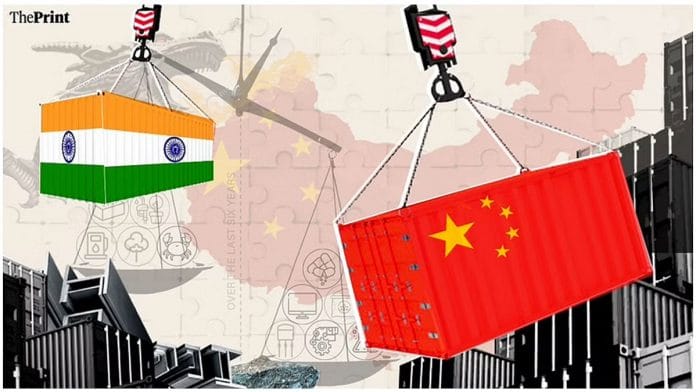



The global trade order is quietly being reshaped. Countries that once championed multilateralism are increasingly embracing unilateral tools. On the other hand, China, a traditionally protectionist regime, is experimenting with more calibrated openness, placing national security at its core, a move reminiscent of the United States’ Section 232 approach. China’s recently revised Foreign Trade Law—the first overhaul since 2004 following its accession to the World Trade Organization—captures this shift, echoing the logic that openness without security is reckless, but security without openness is futile.
This strategy—balancing openness with control—is not entirely new. Some of the most influential economic institutions in the world were not born from theory, but from crisis. During the Second World War, the US faced an acute shortage of labour, especially in the agricultural and railroad sectors. To keep food and freight moving, Washington launched the Bracero Program in 1942, under which Mexican labourers were legally brought to the US to fill the gap. Over the next two decades, 4.6 million Mexican labourers flocked to California, Arizona, New Mexico, Texas, Arkansas, and beyond.
By the early 1960s, however, the political mood had shifted. Domestic opposition grew, reports of worker exploitation mounted, and farm mechanisation reduced dependence on seasonal farmhands. Finally, in 1964, the programme was terminated.
Repatriation of these labourers brought large-scale unemployment, especially in the north of Mexico. A new business system evolved to cope with the problem, a concept far too common today: maquiladoras. Derived from maquila, a payment millers collected in colonial Mexico for processing grains, the programme allowed foreign companies to set up plants in Mexico, import raw materials and machinery duty-free, assemble or process goods, and re-export the finished products, typically to the US. American producers could thus get goods at lower production costs, and in Mexico, maquiladoras provided a stable source of income. A temporary labour arrangement evolved into a durable manufacturing strategy.
The rise of SEZs
About 8,047 kilometres to the east of Mexico, across the Atlantic Ocean, a parallel strategy was evolving. The Republic of Ireland had been a relatively poor country with few raw materials and, consequently, little industry. However, the tiny rural town of Shannon had an economic advantage. In the 1940s, Shannon was the refuelling station for most transatlantic flights. They would arrive in Europe, refuel at Shannon, and continue on to their final destinations.
With increasing passenger traffic at the airport, the Irish government in 1947 passed the Customs Free Airport Act, exempting transit passengers, goods, and aircraft from normal customs procedures. The world’s first duty-free shop—a concept that soon caught on—was the result of this Act.
Within a decade, technology advanced, and with the increasing usage of jet engines in civil aircraft, flights no longer needed to stop at Shannon. The town lost its geographical advantage and soon found itself on the verge of economic collapse. Brendan O’Regan, the same businessman who had envisioned the world’s first duty-free shop, proposed “pulling airplanes out of the sky”. O’Regan proposed the creation of a small zone just outside the airport where foreign investors could come, establish their units, import goods without taxes, and then export them. The zone also gave tax breaks and grants to support research and development. In 1959, Shannon became the world’s first modern special economic zone (SEZ). Over the years, the Shannon free zone has ‘pulled in’ companies such as DeBeers, GE, Intel, and Lufthansa.
A growing nation in the east was also feeling this necessity deeply. After the death of Mao Zedong in 1976 and in the aftermath of the Cultural Revolution, China was struggling to shed old ways and move forward. Chinese Premier Deng Xiaoping settled on the export-led model of development. The success stories of Asian tigers such as Japan, Taiwan, and South Korea demonstrated the power of the export-led model. Inspirations were sought. In 1980, Jiang Zemin, then Senior Vice Minister in charge of the State Import and Export Administration and later President of China, attended a three-week training programme in Shannon on how to establish an industrial zone. That same year, China established its first SEZs in Shenzhen, Xiamen, Zhuhai, and Shantou. Shenzhen, once a small fishing village, is now known as China’s ‘Silicon Valley’ and is one of the wealthiest cities in the world.
In 1988, the southernmost province of China, Hainan, was designated as an SEZ, making it the largest. An island roughly 46 times the size of Singapore, Hainan is separated from mainland China by the Qiongzhou Strait and sits in the highly contested South China Sea. This maritime corridor carries nearly one-third of global maritime trade and roughly 55 per cent of India’s trade. Yet, despite its size and strategic position, the largest SEZ failed to replicate Shenzhen’s success.
Like Mexico, China had earlier experimented with a maquiladora system of its own, known as sanlaiyibu. Before SEZ reforms, cities in Guangdong, including both Zhuhai and Shenzhen, signed agreements with foreign businesses to receive equipment, raw materials, and export services in exchange for manufacturing goods. Shenzhen specifically benefited from its geography.
Hong Kong, already a major manufacturing and trading base, was just across the Pearl River Delta. Investors in the city were already facing rising labour costs. When Shenzhen opened as an SEZ offering similar geographical advantages but lower production costs and policy incentives, investment quickly flowed across the border. Hainan, by contrast, was a tropical island out in the sea, far from the mainland’s industrial centres. It offered limited cost advantages, its maritime potential was constrained by relatively small port capacity, and a real estate bubble in the early 1990s further damaged investor confidence.
Also read: China is excluding India from its South Asia outreach. New Delhi’s being framed as volatile
Hainan’s second chance
On 18 December 2025, Hainan became the world’s largest free trade port (FTP). Most goods from around the world could now enter the island duty-free. This change was significant. The global luxury market is valued at approximately €1.5 trillion, and China accounts for one-quarter of that demand. With its FTP status, Hainan has now become the world’s largest duty-free zone, and the results are already visible. Duty-free sales between mid-December 2025 and mid-January 2026 soared by 47 per cent, reaching $697.9 million. Hainan is beginning to ‘pull the world’ inward, as Shannon did in 1959.
As a separate customs territory, Hainan allows companies to import goods duty free into the island and ship them to mainland China as long as at least 30 per cent of their value is added locally. This particularly benefits industries with high import tariffs, relatively low processing costs, and higher domestic Chinese prices, such as electronics, medical devices, energy equipment, cosmetics, speciality goods, and luxury goods finishing.
By lowering effective costs within China, this model could intensify competitive pressure on external suppliers. For India, this is especially significant. Many of the (sectors the new model benefits?) already feature prominently in Indian exports to China, even as the trade deficit for April 2025 – February 2026 has widened to over $102 billion. So, Hainan is not just a domestic reform; it has the potential to reshape regional trade balances. With early investments by firms such as Siemens Energy and Swire Coca Cola (bottling partner of Coca Cola), the island has all the ingredients to emerge as a major trading and processing hub in Asia.
The long-term plan to expand Hainan’s ports by 2035 could also improve operational efficiency for mainland Chinese producers. With cheaper domestic logistics, shipment consolidation, and lower inventory costs, companies may be able to reduce overall cost by 10-20 per cent, a meaningful advantage in trade.
Hainan, therefore, represents an emerging global model—an amalgamation of age-old commercial strategies forming a hybrid economic order while remaining protectionist at heart. Some analysts have even described the island as a “pressure valve of globalisation” for China—a space where the country can experiment with open market policies without exposing the entire mainland economy to external risks. The success of such zones, however, also raises a deeper worry. If export growth and foreign investment can be sustained within these enclaves—and over time, also spill over to the wider economy as they did in Shenzhen—is there an incentive for the government to liberalise the broader domestic economy?
Reforms in areas such as labour regulation, environmental standards, and data governance are often politically costly. When the gains from global integration can be captured within a limited geographic zone, governments may find it more efficient to confine liberalisation to these enclaves rather than extend it nationally. In that sense, enclave–led growth risks becoming a substitute for, rather than a pathway to, deeper structural reform by allowing states to benefit from openness at the margins while preserving control at the core. It thus seems that in its seemingly prosaic form, Hainan denotes the new norm of controlled globalisation.
Sneha Sanyal is a Delhi-based lawyer who works at the intersection of law, economics, and geopolitics. Views are personal.
(Edited by Prasanna Bachchhav)