






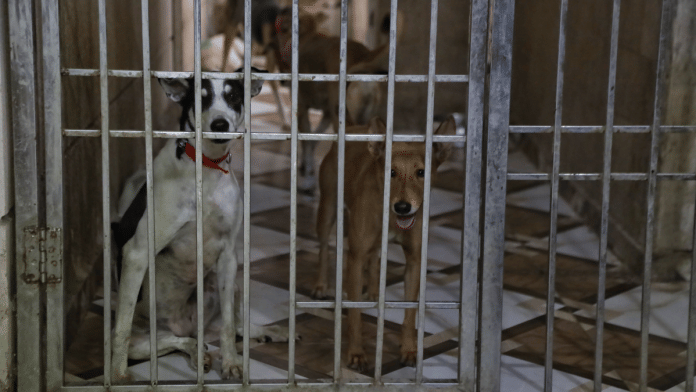



The recent approach adopted by the Supreme Court of India in its 13 November 2025 order dealing with the presence of street dogs mirrors colonial attitudes. The intention to get rid of these dogs without acknowledging their territoriality, relationality, and belongingness, and instead making their very existence an anomaly in their own space, is a typical colonial approach. The British exercised this not only in their own country but across the Empire. Even though the Court’s ruling is garbed in the vocabulary of public safety and welfare, it emanates from a deep-rooted colonial mentality of solving problems through forceful control and elimination with no accountability.
Street dogs were oppressed by imperial domination not only in India but across the globe. The most decisive blow was problematising their very existence by portraying them as the most prominent cause of rabies, a nuisance to public safety and hygiene. This process of problematisation was accompanied by the rise of the modern state, which took over many traditional roles of dogs, such as guarding, ensuring security, managing waste and so on. Historical research in Britain, France, Germany, the US, and even parts of the Ottoman Empire reveals a similar trend—marked with regional variations culminating into threatened existence and eventual elimination of dogs from the streets. This was not a sudden development, but a long-drawn process accompanied by equally lasting repercussions. The Supreme Court may not realise this, but its recent judgment qualifies as the latest episode in this colonial trend.
History of stray dogs in Britain
Unowned and leash-less dogs were portrayed as problematic in Britain only after the 18th century, with the emergence of industrial society and a distinct sense of urban spaces. These towns and spaces were to be appealing and convenient by getting rid of the unpleasant and the unruly. These ‘unruly’ and ‘waste’ elements included the vagrants, urban poor and associated companion and working animals such as dogs, cats, and poultry animals, among others. Relocation to the margins of the cities was the desired solution for ‘unwanted humans’. It ensured their invisibility, but allowed the continued use of their labour. Whereas regulation (through dog tax and muzzling) and elimination through ‘humane killing’ were prescribed for unowned, unwanted, dangerous, and nuisance-causing animals.
An added fear fuelling unwantedness was the portrayal of ‘stray’ dogs as the main source of rabies. Historical research has consistently revealed that the fear of rabies in Britain exceeded its actual impact. Even before the ‘lyssa virus’ was discovered to be the cause (transfer of saliva through bites as the reason for spread), its blame was projected onto the dogs—making the species one of the biggest threats to human safety.
Even though dogs were recognised as the most frequent source of rabies, its unproportionate blame was borne by ‘stray’ dogs. The reasons cited—they were uncontrollable, vicious, prone to ‘fury’, wild, unmanageable, ownerless and therefore a threat. As a result, a blanket approach was used—label any unowned or leashless dog as a ‘stray’.
This had a dual impact—it made ‘pet dogs’ the only template for dogs to survive, and any other leash-less dog a ‘problem’.
It was followed by concerted efforts to capture and eliminate these ‘strays’ through blatant culling, which included practices such as poisoning, lethal chambers, shooting, clubbing and drowning. In fact, the famous Battersea shelter home for dogs in London was the prime location for ‘destruction’ of these dogs through ‘humane’ methods such as lethal chambers. These methods were also adopted in other colonial metropoles in Europe (such as France and Germany), but also in the USA, leading to the deliberate killing of millions of stray dogs.
What happened in Britain between the 18th and 20th centuries was a painful recalibration of dog-human relationships where any dog, except for the owned and leashed pet dog, lost their right to exist. Britain’s dog-free streets exist at the expense and mass killing of millions of ‘stray’ animals.
For instance, even a single organisation such as ‘The Animal Rescue League’ in the UK advertised destroying 25,778 ‘stray’ animals (including cats and dogs) in 1915 and 47,919 in 1927.
This was done by a country which had a bulldog as its mascot and prides itself as a nation of dog lovers.
Also read: Supreme Court’s order on dogs goes against Modi’s decolonisation agenda
Bringing colonial dog policy to India
Simultaneous to these elimination efforts, two significant developments took place in the world of medicine. The anti-rabies vaccine was successfully tested by Louis Pasteur in 1885, and the subsequent opening of Pasteur Institutes across the world (including India) eventually led to the availability of vaccines to tackle the disease.
Despite these developments, Indian dogs were not left untouched by British hatred and prejudice. Colonial officers such as G. Strokes (Chief Secretary to the Government of Madras) in 1902 expressed his disdain towards street dogs, calling them pests and the lowest form of canine genus, justifying their killing. “…I am to point out that the stray pariah dog is one of the lowest type of canine genus. Most of them in the hot weather are smitten with mange, and scratch themselves raw till they are maddened by festering wounds, flies and maggots …They are continual war with the domesticated dogs, and constantly infect the latter with rabies, necessitating their destruction, and leading to dreadful cases of hydrophobia amongst human beings. In the opinion of this government the destruction of such pests is indispensable and no more merciful way of destroying them than by clubbing presents itself.”
The British aimed for street dog elimination, resorting to similar measures of control as they did in Britain, but failed. What was different in India? The abundance of street dogs and their distinct relationality with human groups across the country. Ownerless dogs were ubiquitous in our country (as they were in Britain and in Europe prior to the 19th century).
This was not because India was backward, but because India historically had (and continues to have) a very distinct and integrated approach to the presence of dogs in human societies. Dogs have been an integral part of urban and rural spaces and continue to feature as part of our secular and ‘godly’ world in various capacities. Dogs in India have existed through associations, relations and relatedness of various kinds, not necessarily defined through or based on ownership. This has been the historical reality of India and continues to be so.
This is not to say that conflict was not a part of the equation. But its resolution through mass elimination of the entire street dog population is a distinctly colonial approach. The British officials, motivated by their domestic notions about street dogs, adopted ruthless and brutal elimination measures—shooting, strychnine poison, lethal chamber with electricity, and clubbing. This rage led to the killing of almost 63,000 dogs between 1823 and 1832 in Bombay Town and Island alone. And almost 12,000 dogs were killed annually in Calcutta during the early 1900s.
Also read: ABC rules not implemented properly. Don’t blame the dog, blame the government
Why didn’t the British succeed?
Despite such efforts, did they succeed? No. Two reasons are particularly relevant. First, they focused on elimination—an approach which failed in India. The reasons varied across locations but essentially entailed objections by the people (e.g. well-documented Bombay riots in 1832, protests in 1916, and many objections raised to the capture and killing of dogs), by dogs themselves (resisting capture). The lives of dogs were entangled lives within the social milieu (as guards, herders, scavengers, companion animals, hunting partners and so on). There was also insufficient infrastructure to carry out killings.
Adoption of elimination reeks of colonial violence in intent and action. It entailed the forceful capture and killing of dogs. It arose out of a mental framework derived from blame, hate, and prejudiced notions. It blamed stray dogs for rabies but refused to see them as victims of the disease.
The second reason is one of Britain’s biggest limitations in handling street dogs in India—they had no intention (and consequently there was no effort) to incorporate social linkages and multi-faceted dog-human relations across India in their efforts to control rabies. This also made colonial efforts limited to urban spaces and cantonment areas, which had the strongest municipal and police presence to regulate spaces.
The relations and relevance of dogs to humans have varied historically in India. They fulfilled many roles, ranging from companion animals, guard dogs, shepherd dogs, dogs for defence, scavengers and so on. Their presence in India can be traced to prehistoric times. They feature in Bhimbetka rock art, Harappan artefacts, Sanskrit kavyas, Ramayan, Mahabharat, Mughal sources (as royal hunters, part of harem), royal households of princely rulers (Awadh, Junagarh, etc), Premchand’s stories, Nandalal Bose’s sketches, Faiz’s poetry, our movies, and our streets.
Dogs, like many other animals and humans, were victims of colonial oppression in India. India gained independence in 1947, but did our dogs become free from colonial domination? Have we treated them differently? We did seem to adopt a different approach in Independent India, and tailored our law according to the nature of the animal.
The Animal Birth Control Rules 2023, under the Prevention of Cruelty to Animals Act 1960, is a marked departure globally for recognising territoriality of dogs. The constant effort through ABC rules to return a dog to its original streets is the foremost recognition of a dog’s territoriality—an approach which is globally distinct in assuring a dog’s right to belong. Case studies from our own country reveal excellent results with coordinated efforts. For instance, Goa became the first Indian state to be declared a Rabies Controlled Area in 2021 through dog vaccinations, along with efforts at school education programmes about rabies, combined with excellent surveillance of dogs across the state.
The current Supreme Court order makes one wonder whether the colonial mentality of control, regulation, and elimination of animal bodies will ever fade, or if they will forever reappear in sophisticated forms.
History is supposed to teach us lessons. Lessons about what works and what fails, and what to do and what not to do. But most importantly, about understanding the context of relationships, relatedness, and suitability of action. The urge to replicate dog-free streets in India is a colonial hangover, motivated by adulation for Europe-like features, that ignores the living realities of dog-human relations in India. Ruthless actions devoid of integration, relatedness, care, and compassion are likely to remain ineffective and will entail physical, mental, and emotional violence on these dogs—similar to their colonial experience.
To be cognisant and mindful of the diversity and distinctness of street dog-human relations in India is to attest to the living realities of not only dogs but their associated human groups as well.
Animal welfare was a neglected domain in colonial India and continues to be a slow-paced, flawed, and compromised endeavour in Independent India. Government support and efforts, even when forthcoming, are frustrated due to multiple structural incapacities. Animal welfare organisations (most often non-government associations), private groups, feeders and individuals are often the backbone of the efforts which have sustained dogs’ welfare and vaccination. Given this reality, how can we move forward? And what do we make of people who are taking to the streets to protest this order? Who are these people?
They are not mere dog lovers or adversaries of the system. These are our people (across class, caste, regional, linguistic, religious, gender identities) located across the country who are connected to the dogs, who feed them, spending out of their pockets, who are ready to move out of their comfort zone to take to the streets consistently. They have more stake in keeping dogs alive, healthy and disease-free. Their interest and determination in getting rid of rabies and keeping the dogs healthy is (and will be) much stronger. By ignoring our people’s collective strength and, more importantly, the trust that dogs place in them, we are missing out on a ready-made workforce that is motivated enough to tackle the disease upfront and ensure welfare.
We are again making the same mistakes which our colonisers made—we are blaming the victims of the disease and missing the complexity of animal-human relatedness and connectedness. Our colonial past is telling us that the removal and elimination of street dogs from the street was never a solution and has historically failed in India. It is also telling us that rabies-free status can be achieved and maintained through concerted efforts at vaccination, education and surveillance. Our history attests to our dogs’ struggle for freedom, their experience of mass elimination and continued survival—certifying to their relatedness with humans and with our country for centuries. Our history is shouting and barking at us with these facts, but are we listening?
Heeral Chhabra is a historian specialising in the history of animal-human relationships and welfare in colonial India. She is currently an Honorary Associate at the University of Liverpool (UK). She tweets @heeral_heeral. Views are personal.
(Edited by Theres Sudeep)
Well summed up!👏🏼