








The Iran war has entered its fourth week. In many quarters, the expectation was that Iran would not be able to take on the combined military strength of the US and Israel, even if limited to air power. That has clearly not happened. Iran has not won the war, but it has not lost. And there is a real chance it may not.
What explains Iran’s resilience? I can think of four reasons. Two have been extensively discussed, and two are simply not part of the mainstream debate, despite their analytic significance.
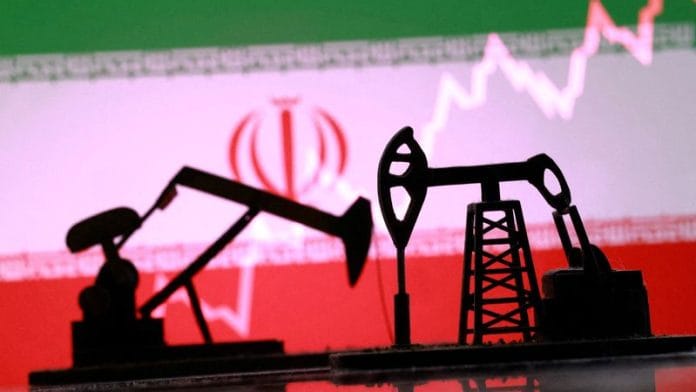
The hike in oil prices is the first reason to note. A spectre of $150 a barrel is beginning to haunt oil markets. Thus far, $147.50 a barrel was the highest price witnessed. That was in June 2008. A repetition would cause huge disruptions in the world economy.
The power to block commercial shipping in the Strait of Hormuz, the single most important cause of the price hike, thus gives Iran enormous leverage. Twenty per cent of the world’s oil trade and nearly half of India’s oil imports pass through the Strait of Hormuz. Nearly 20 per cent of the world’s natural gas exports also go through it. For India, the natural gas numbers are quite stark. Sixty per cent of India’s imports of liquefied natural gas (LNG) and as much as 85-90 per cent of its imports of liquified petroleum gas (LPG) come through the Strait of Hormuz.
Asia is not the only continent affected. Since Americans typically drive twice as long as drivers in Western Europe, oil prices seriously affect household budgets in the US. The mid-term elections are only a few months away. Astronomically high oil prices are not a risk any US government can take. That is why the US has temporarily lifted sanctions on Russian oil and, most paradoxically of all, also on Iranian oil.
Also read: Iran and Israel weren’t always enemies. In fact, they were allies
‘Weapons of the weak’
The second reason for Iran’s resilience comes from weaponry. As I wrote in my last column, drones have transformed the nature of modern warfare. The Russia-Ukraine war was the first evidence of this change. Relying heavily on drones, Ukraine could take on Russia’s mighty military, and four years later, it is still undefeated. Iran is beginning to demonstrate something similar.
Let me use a concept from the field of development and extend it to warfare. Drones are the ‘weapons of the weak’, a concept invented by James Scott, the deceased Yale professor famous for his work on agriculture. The concept aimed to capture how small peasants sometimes undermined the power of mighty landlords. They did so not by large-scale collective acts of defiance, such as attempts at a village-level revolution, but by multiple smaller acts of subversion. The former could be easily detected and crushed. As for the latter, the landlords often could not even figure out where the resistance came from.
Drones are estimated to cost anywhere between $15,000 to $30,000. In contrast, missiles that intercept and neutralise them cost $2-4 million. Because of its size and visibility, missile production can be easily degraded, if not eliminated, as is perhaps true for Iran by now. But drone production can proceed unobtrusively, as it were. Using drones, Iran has hit countries in the Gulf. More hits will further increase energy prices. Drones have the potential of denting the ‘Idea of Dubai’, which has blazed a new trail in the Arab world, cultivating migrants, social inclusion and peace, and becoming a magnet for investors and businessmen from all over the world.
The third reason Iran has not yet lost has to do with the organisational apparatus of a revolutionary regime. In the 1980s, Jeane Kirkpatrick, a political scientist who served as a close advisor to US President Ronald Reagan, came up with a seminal conceptual distinction between authoritarianism and totalitarianism. Authoritarian systems only sought to control political life; totalitarian systems controlled both the polity and society, crushing dissent in all domains of a citizen’s life. She called regimes in Egypt and Pakistan authoritarian, and juxtaposed them with the revolutionary regimes, like the ones in Cuba and the Soviet Union.
In 1979, Iran underwent a religious revolution, and since then, it has had a revolutionary system. To dominate society and crush dissent, it developed two kinds of organisations: Civil and military. Civil organisations penetrate universities, mosques and bazaars, generating pro-regime views. The military organisations include the widely talked about Revolutionary Guards Corps (IRGC), which reports directly to the Supreme Leader. Separated from the regular armed forces and numbering 1,50,000-1,90,000 troops, the IRGC’s basic task is to protect the revolution. Its armed wings cover the cities and towns of all provinces. Moreover, mobilising over half a million volunteers all the way down to neighbourhoods, the Basij is the IRGC’s paramilitary wing. It is known for its brutal quelling of dissent.
Attached to the religious establishment, this huge revolutionary organisational apparatus has sought to ensure two things. First, if the existing leadership were killed, new leaders would emerge and take over the reins of the theocratic establishment. Second, if anti-regime movements arose, they would be suppressed. The regime itself would not unravel. The regime-change project of this war appears to have faltered on the mammoth organisational bedrock of Iran’s revolutionary system.
Also read: A quick end to Iran war is in India’s interest. But Modi has no influence over US or Israel
A celebration of martyrdom
The fourth reason for Iran’s lack of defeat has to do with the specific character of Shi’ism, Iran’s official religion. Among religious scholars and observers, it is well known that martyrdom (shahadat) is a foundational idea in Shi’ism. Ali, the founder of Shi’ism and the son-in-law of Prophet Mohammed, and Hussain, his younger son, were both martyrs.
The Battle of Karbala is the most iconic event in the history of Shi’ism, one that is enshrined in the collective memory of the community. In 680 AD, Husain, who was surrounded and attacked by the large army of Yazid, the second Umayyad caliph, embraced martyrdom in Karbala, along with tens of his followers, including his brothers and children, but they refused to pledge allegiance to an unjust ruler.
In the month of Muharram, mass processions and marsiyas (elegiac poems recited in mass gatherings and millions of private homes) celebrate the spirit of martyrdom. In Lucknow, an important city for Shias, I have personally watched the recitation of marsiyas in mass gatherings. The core of Muharram is the ten-day public commemoration of Husain’s death. Year after year, the Battle of Karbala is recreated with popular participation, making it part of a living tradition. As a result, a martyrdom ethos, or “a romanticised view of defiant death”, as a Shia friend puts it, has become deeply ingrained in the minds of millions of Shias.
This is true even of those who cease to be religious but find it hard to abandon Shi’ism as a source of spiritual culture. For instance, in the film Haqeeqat (1964), Kaifi Azmi, who was born and raised as a Shia but who switched later to Marxism and became a leading poet in Indian cinema, chose an image, straight from Shia history, for the secular act of soldiers dying in the India-China war: “zinda rahne ke mausam bahut hain magar, jaan dene ki rut roz aati nahin” (“We live life every single day, but the chance to be a martyr comes so rarely”). In Azmi’s poetry, Shia images repeatedly appear, serving secular causes. Azmi is an example of how deeply anchored Shia culture becomes, even after the faith goes.
The valorisation of martyrdom in Shi’ism has clear implications for this war. The tolerance thresholds for pain and suffering in a Shia society tend to be very high. The decapitation of leaders and heavy bombing, however widespread, may not be able to generate defeat and surrender. A long, crushing war may have to be waged for that, but it will lead to huge spikes in energy prices, worldwide economic shocks, and perhaps a medium-run end to the Gulf model of prosperity, especially in Dubai and the UAE. A long war, therefore, is unlikely.
Rightly or wrongly, Iran is not a Venezuela.
Ashutosh Varshney is Sol Goldman Professor of International Studies and the Social Sciences and Professor of Political Science at Brown University. Views are personal.
(Edited by Theres Sudeep)