





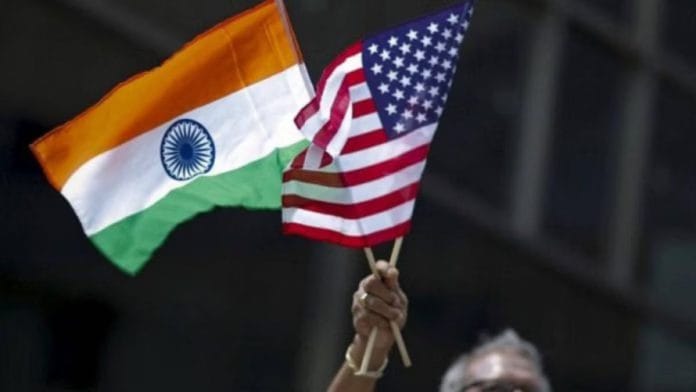



Is the India-US trade deal beneficial to India, or is it an act of coercion on the part of the US, which India has humiliatingly accepted? The critics argue that the US has received overwhelming benefits, whereas India procured very little in return. Still, afraid of Trump’s power, India signed the deal.
Even though a trade deal is supposed to be about economic benefits, it is not strictly an economic matter, especially in light of the emerging world order. A trade deal generates political economy questions, not just economic questions. Political analysis must be factored in.
The most significant political factor to note is that the world order built after 1945 appears to be on the verge of disintegration. Fundamentally, the post-1945 world order had two dimensions — security and economics.
Security was the foundation of the world order. After two utterly destructive World Wars in a mere three decades, prevention of war was viewed as the most important task of the international system. This essentially meant prevention of wars among the “great powers”. Smaller powers — India, Pakistan, China, Cambodia, Vietnam, Malaysia, Indonesia, North and South Korea — could fight military battles, sometimes even as proxies of bigger powers, but there were to be no direct wars in Europe, or between the Soviet Union and the US, or between Japan and the US. The key vehicles for maintaining this order were the UN Security Council, the North Atlantic Treaty Organization (NATO), and America’s strategic commitments in East Asia.
An economic order also emerged, but it was secondary to the security-based order. Its principal planks were: freer trade via the General Agreement on Tariffs and Trade (GATT), which later evolved into the World Trade Organization (WTO); dollar as the international reserve currency; and the management of macroeconomic balances primarily via the International Monetary Fund (IMF). Between 1914 and 1945, economies were heavily tariff-based and the idea of free trade was generally shunned. There was no international reserve currency.
Balance of power
Why is this brief historical background necessary for analysing the India-US trade deal? Isn’t it too far removed from India?
It is not. The US was the most important part of the security as well as the economic order, and the changing commitments of its current government explain what the US is trying to do. They also suggest what India’s options realistically are. India is embroiled in a larger international push.
By attacking NATO, the US under Donald Trump wants to undermine the post-1945 security order. And committing itself to tariffs worldwide, it seeks to overturn the economic order. Indeed, tariffs are not only being used as a tool of economic policy, but also as a geopolitical weapon. Trump says that whatever benefits they brought to the US after the Second World War, both orders — strategic and economic — undermine American interests now. But why should America pay for the world order, if it is hurt by it? His MAGA base agrees.
The issue is not whether this is right or wrong. One can, in fact, make a cogent argument about why this shift in American policy is flawed. But so long as Trump is in power, one can ignore the new geopolitical and economic realities only at one’s peril.
Moreover, once the alliances-based security order is reversed, the logic of “balance of power” takes over as the overarching principle of statecraft. That is how the powerful nations used to run world affairs before 1945. The implications of this shift are best summed up in the famous words of Thucydides, the ancient Greek historian: “The strong do what they have the power to do and the weak accept what they have to accept.” America under Trump believes in this dictum.
Also read: How Russian oil, China and Trump tariffs reshaped the India-US trade deal
Future opportunities for India
Of course, India is not as weak as Africa, but how does it compare with the US? America’s GDP has crossed $30 trillion; India’s has barely gone above $4 trillion. America’s per capita income is about $85,000; India is yet to hit $3,000. India, to use Canadian PM Mark Carney’s phrase, is at best a middle power.
That India may soon be the third largest economy of the world, while worth noting, can also be misleading. The US, the largest economy, is nearly eight times bigger in size and 28 times bigger in per capita income. No one can be a “Vishwaguru” with a per capita of $3000. That is where India and China significantly diverge. The much greater international bargaining power of China, which was as poor as India till the early 1990s, is in part rooted in the fact that it is now five times as large as India, both in terms of GDP and per capita income. To put it bluntly, India’s bargaining power is not as great as Delhi’s official narrative tends to suggest. India does not have too many cards.
Unless India is ready to break off engagement with the US, this grave imbalance of power will continue to define the parameters within which India has to make choices. India can’t just pull away from America, at least in the short run, for the US is India’s largest trade partner. Nearly 20 per cent of its merchandise exports go to the US. And the US market has also been the greatest source of India’s software revolution. India did come close to breaking off in the period 1966-1971 under Indira Gandhi — but that was in part, if not wholly, because India’s economy was heavily inward-looking and not so dependent on trade. Trade creates benefits as well as vulnerabilities.
Another vital consideration is often lost in debate. It has to do with the basic logic of the so-called “China Plus One” strategy. Given the geopolitical tensions between China and the US, which will not easily disappear, many leading companies of the world have been looking at diverting their investments from China. But they can’t easily come to India in a big way, if exports to the US are heavily tariffed, which can only make US markets difficult to penetrate with “Made/Assembled in India” products.
In short, given the realities of the new world, the trade deal was bound to be more favorable to the US than to India. To expect equal benefits is to be entirely unmindful of power realities. India’s best options were: how to get Russia-related 25 per cent tariff off its back; how to protect key farm interests; and how to achieve a tariff rate lower than that of competitors in different sectors (China, Bangladesh, Vietnam, Thailand, and, to some extent, Pakistan). The trade deal is a reflection of the great power differentials between India and the US.
But an imaginative question can still be posed. Can constraints now be turned into future opportunities? The GDPs of the US and EU (and Britain, not part of the EU) add up to nearly 43-44 per cent of the world’s GDP. Trade deals have been struck with all three. A deal with Canada may also not be far off. An opportunity for economic re-invigoration can potentially emerge. With several labour-intensive sectors getting favorable treatment, can India use this opportunity to engineer an employment-based manufacturing push?
All of this assumes that Trump will not change his current position vis-à-vis India. Of course, that may not happen. India should pursue economic diversification even as it commercially leverages access to American markets provided by the trade deal.
Ashutosh Varshney is Sol Goldman Professor of International Studies and the Social Sciences and Professor of Political Science at Brown University. Views are personal.
(Edited by Aamaan Alam Khan)
Brilliant and pragmatic analysis