






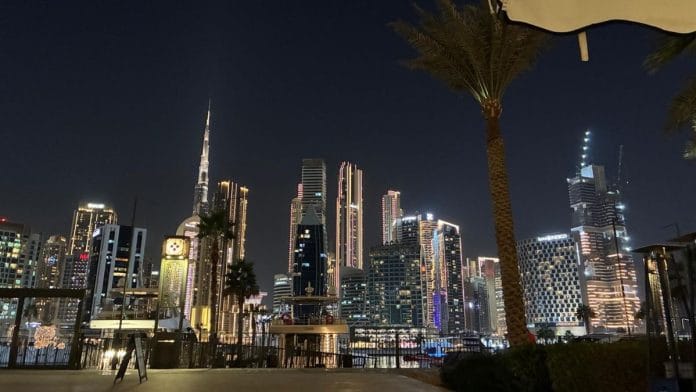



I visited Dubai for the first time this month. While I was struck by its flawless cityscape, it was the quality of urban governance that left me genuinely unsettled—and more than a little envious. Dubai’s perfection is not merely architectural; it is managerial. It delivers the basics of city life with a consistency that Indian cities, for all their democratic vitality, have quietly abandoned.
Dubai benefited for decades from offshore oil reserves that are now nearly exhausted. But oil alone does not explain its success. Long before oil, Dubai prospered through pearling and trade across the Arabian Sea. Indian merchants played a central role in shaping Gulf commerce; Indian Banias and Bombay brokers taught Dubai’s trading families the intricacies of finance and credit. The Indian rupee remained in common use until the 1960s. The relationship between western India and the Gulf was once organic, transactional, and mutually instructive.
Today, oil contributes barely one per cent to Dubai’s GDP. The economy has reinvented itself around trade, tourism, finance and technology. The Dubai 2040 Urban Master Plan aims to make the city the world’s most liveable and healthy city. An ambitious goal for a metropolis built on a desert!
Luxury is visible everywhere, but what impressed me more was order. Roads and sidewalks were smooth, clean and spacious. There were no hoardings screaming for attention, no encroachments colonising public space. Shaded benches made walking comfortable even in warm weather. Parks, pathways and crossings seemed designed for actual use, not symbolic display. Expatriate workers from India, Pakistan and Bangladesh ran most services, making conversation in Hindi effortless and reassuring.
The city’s architecture was predictably spectacular—building after building showcasing imagination and flawless execution. But it was the how that interested me more than the what. As we drove through different neighbourhoods, we saw older buildings being razed without noise, dust or debris. Structures that had been at plinth level yesterday appeared to shoot up overnight like Jack’s beanstalk—taller, cleaner, almost magically complete. Construction did not feel like an assault on daily life, as it does in Indian cities.
Also read: Corporations are privileged citizens now. IndiGo crisis shows boards must answer to society
Old Dubai and a fish market
We stayed in Business Bay, in newer Dubai, and did not use public transport. Even so, driving across the city was revealing. Dubai certainly has heavy traffic at peak hours, but it does not have traffic anarchy. Merging was anticipated, lanes were respected, and the road seemed governed by rules rather than one-up-manships. Just the absence of honking felt civilised.

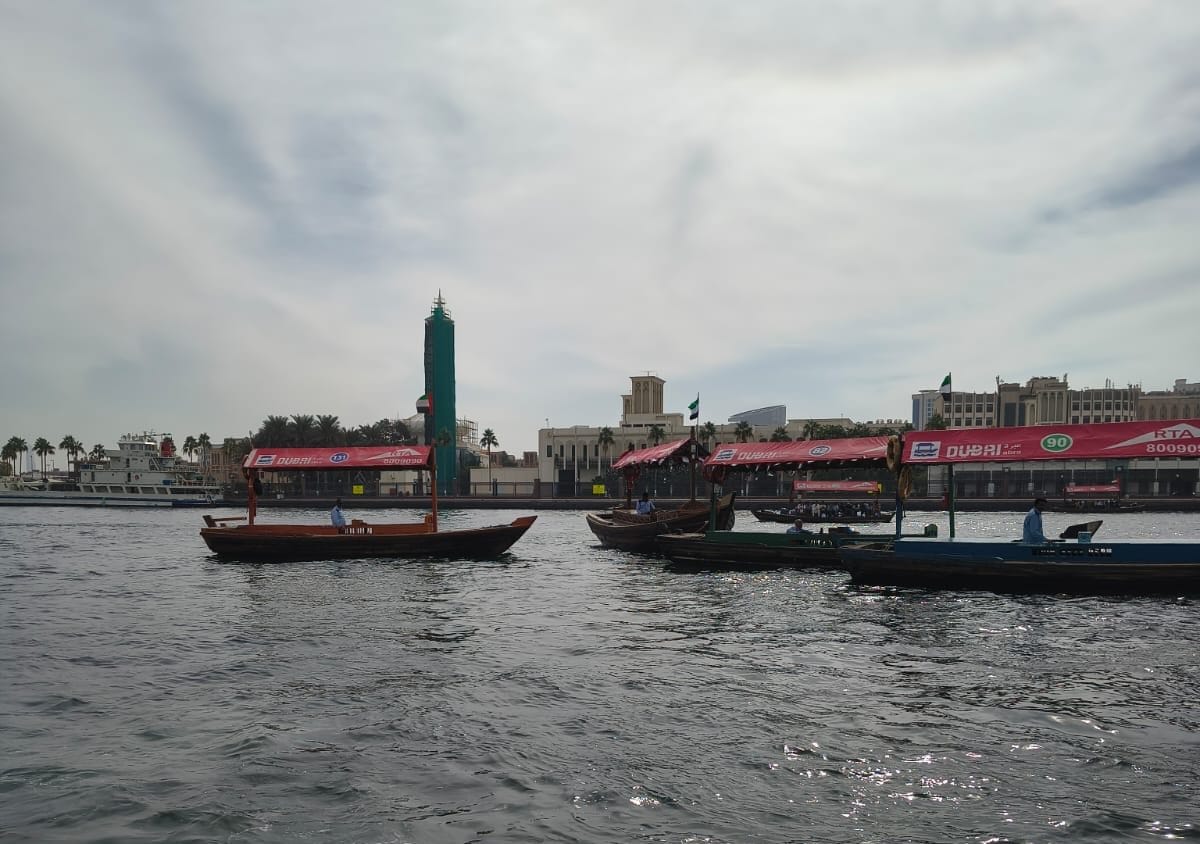
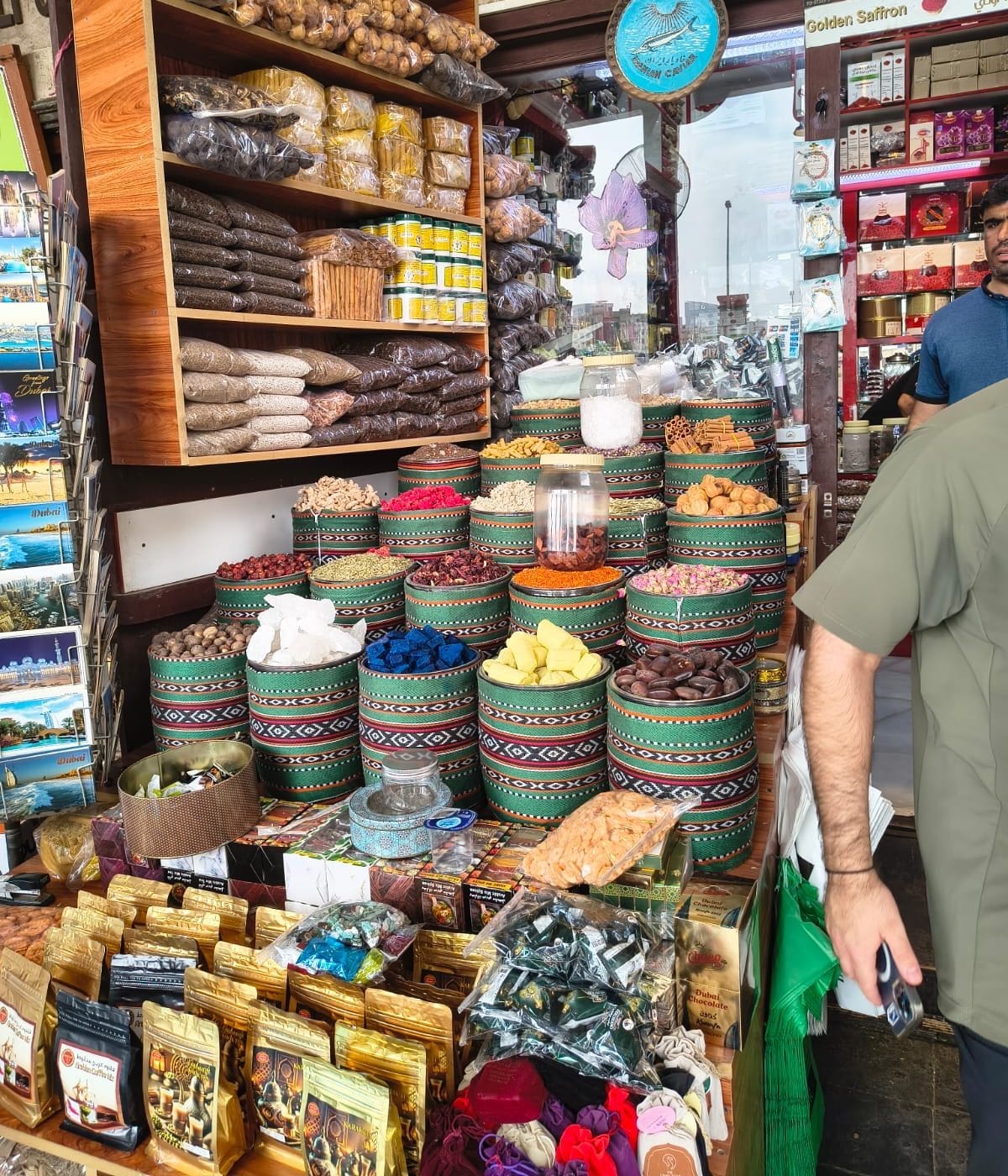
Spectacular as the skyline was, I wanted something more grounded. Deira in old Dubai provided that. The Gold Souk, with hundreds of retailers displaying dazzling ornaments, and the Spice Souk next door offered the colour, smell and bustle one associates with traditional markets. What surprised me was the unforced courtesy. Shopkeepers smiled even when it was clear we were not buyers. Perhaps it is because Dubai has few grandparents lingering in marketplaces. Or perhaps the Ministry of Happiness and Wellbeing, created in 2016, has had some effect.
Public toilets are the litmus test of civic care. Dubai passed with distinction. Beetle-shaped, unattended public toilets were clean, compact and odour-free. Users queued, inserted coins and entered a pristine 4-by-4-foot cabin. At the airport, the same porta-cabin design functioned as police booths—different interiors, identical logic. Compact, efficient solutions with no wasted space.
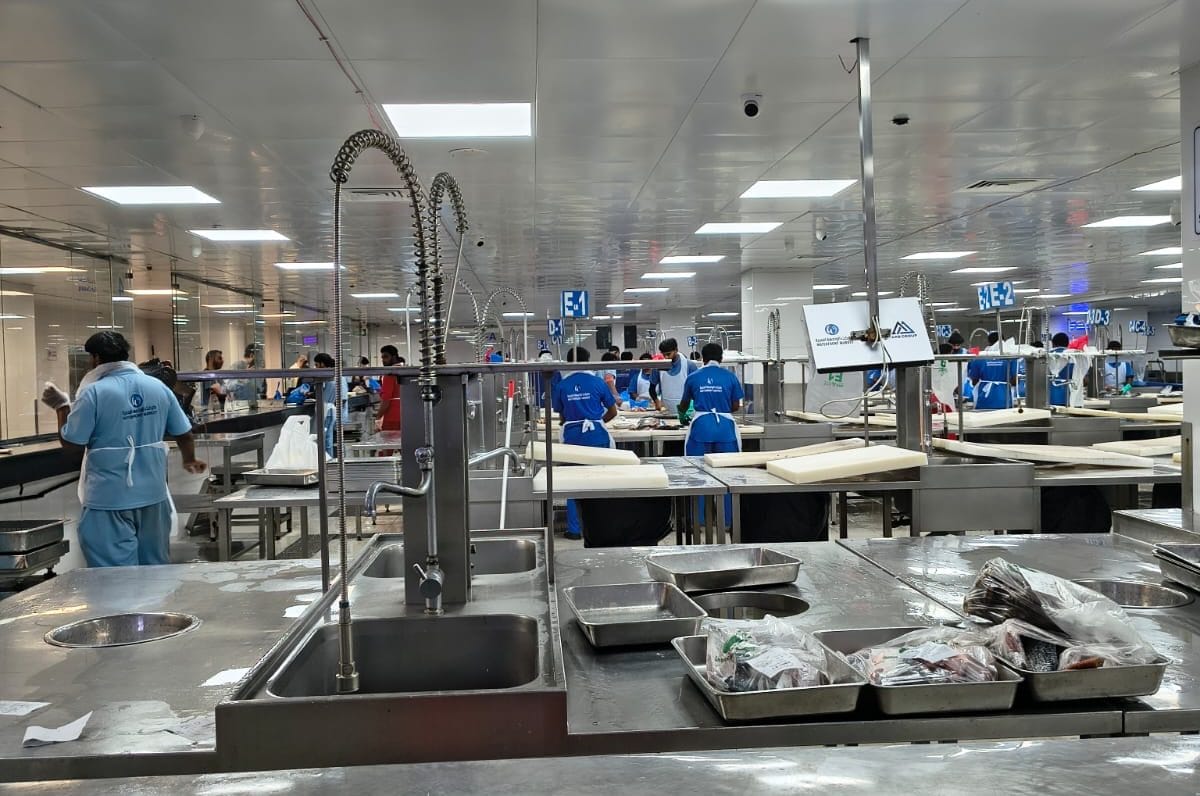
The Dubai Mall—the largest in the world—is recommended to visitors not for shopping but for gawking. It held little interest for me. Instead, the Waterfront Market in Deira, which houses a fish, meat, vegetable and fruit market, was my preference. The fish market was like an airport terminal, complete with zonal markings, wide alleys and uniformed fishmongers. Vast bays displayed cascades of fresh fish. Once a purchase was made, the fish were whisked away for cleaning and slicing according to preference. Considering the scale of transactions, the efficiency was jaw-dropping.
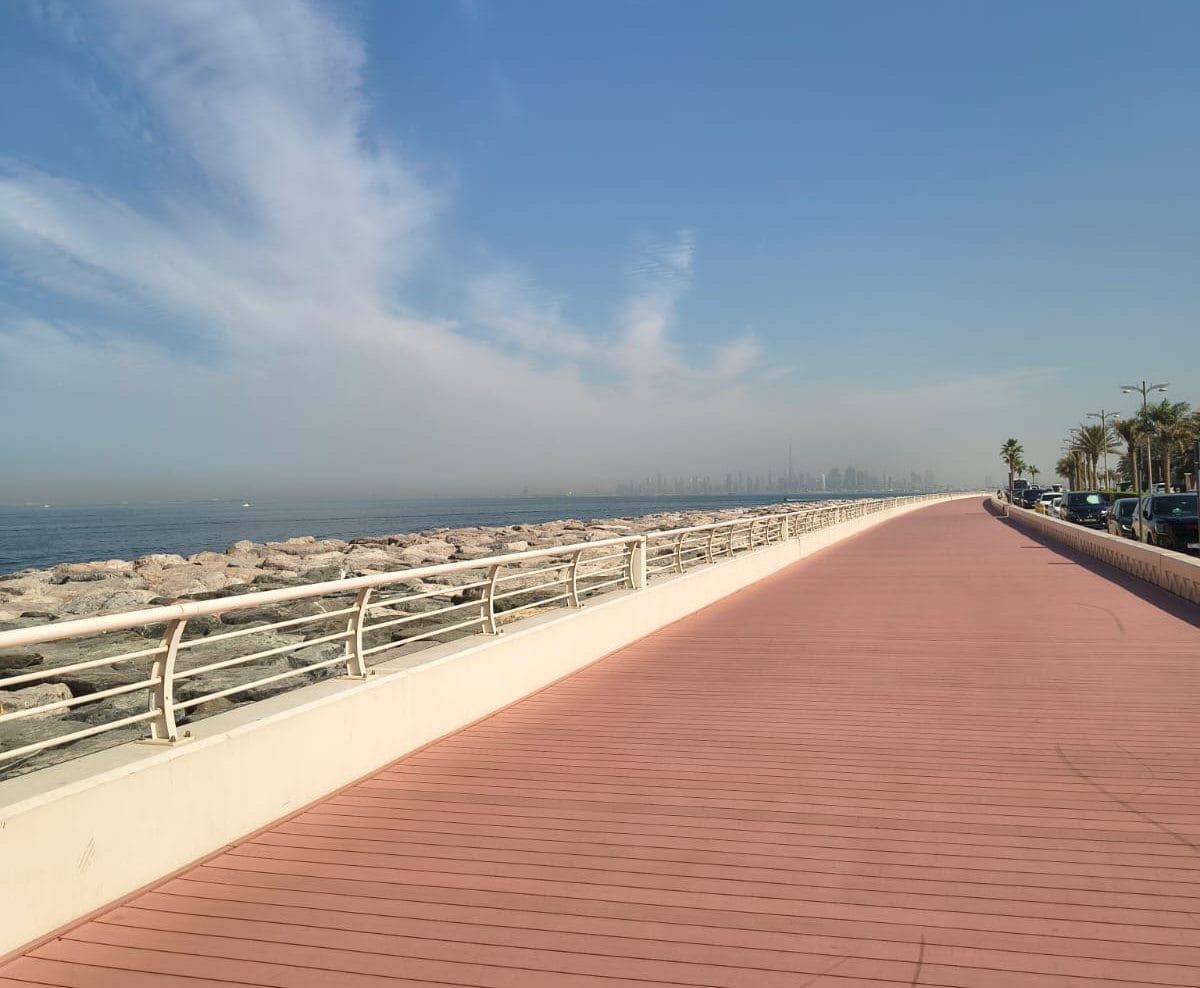
Every city has its exclusive enclaves. Palm Jumeirah is Dubai’s man-made riviera, home to global celebrities and billionaires. Yet, what stood out was the 11-kilometre public boardwalk running along the coast—ensuring that tranquillity, sea air and open space remain accessible and free for all.
Tourist advisories warn women to dress modestly. In practice, women wore everything from long gowns to tight shorts and tops. What was striking was the total absence of unwanted touching, catcalling or photography without consent. These are criminal offences in Dubai, punishable by fines or imprisonment. The deterrence is real.
Also read: UAE is changing. Its leaders attended an iftar event at the BAPS temple in Abu Dhabi
Managerial efficiency
Dubai runs on predictable consequences. Sensors replace inspectors; digital systems substitute paper records. Fines are swift and non-negotiable. There is no room for persuasion or adjustment. By removing discretion, delay and corruption disappear. Compliance becomes routine, not heroic.
Nearly 90 per cent of the UAE’s population is expatriate; Emiratis form barely 11 per cent of the country. Residents enjoy safety, consistency and prompt services—but at the cost of civic participation. There are no elected city governments, no trade unions, no ward committees, no RWAs, no public consultations. Protest and appeal, as we understand them in India, do not exist. Stories of labour exploitation circulate quietly, but the public posture is to keep heads down. Employers manage labour; the state does not arbitrate. Managerial efficiency rests on the absence of political voice.
Most low-wage expatriates come alone; only the better-paid can afford family life and schooling. Children learn early that misbehaviour is not trivial — school incidents are formally escalated, and parents know that jobs and residency depend on staying out of trouble.
Bengaluru and Hyderabad share many of Dubai’s characteristics. They are technology hubs, global gateways and magnets for migrants across income levels. Yet without effective governance, both struggle with congestion, flooding, broken pavements and civic neglect. Enforcement is discretionary, compliance negotiable. Poor governance, not poverty, is what is ruining Indian cities.
My first visit to Dubai unsettled a long-held assumption. The choice is not between efficiency and democracy. It is between civic order and civic neglect. Disorder may be tolerated in democracies—but disorder, by itself, is not democracy.
Shailaja Chandra is a retired civil servant and former secretary in the health ministry. Views are personal.
(Edited by Theres Sudeep)