






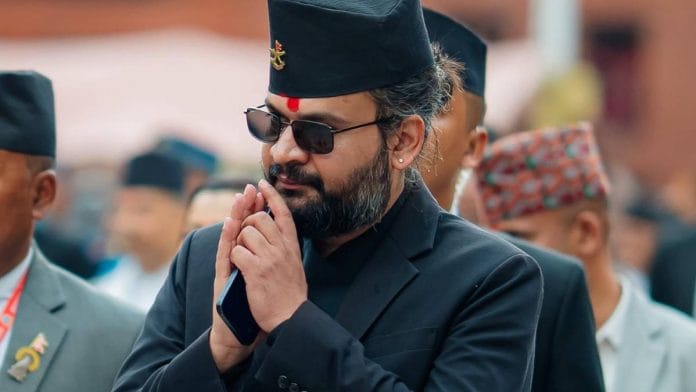



As Nepal’s general election results continue to come in, it is becoming increasingly clear that the political strategy centred around Balendra Shah and the Rastriya Swatantra Party has gained strong traction among voters. Only six months after the Gen Z protests forced the collapse of the coalition government, the RSP has emerged as the most powerful political force in the country.
The debates in the run up of the elections centred around whether old political elites could be dislodged, considering their deep organisational penetration across the country and institutional experience, or would young politicians give competition in the post “Gen Z protest” environment.
The growing momentum behind the Rastriya Swatantra Party (RSP) had been evident well before the general elections. Much of this energy was linked to the rising public profile of Balendra Shah, popularly known as Balen, who first captured national attention after winning the Kathmandu mayoral election in 2022 as an independent outsider candidate.
New generation of leadership
The rapper-turned-Kathmandu mayor later joined the RSP led by Rabi Lamichhane after the two sides agreed on a seven-point understanding outlining a shared political agenda. His entry into the party was widely viewed as an effort to capitalise on his popularity among younger voters and expand the RSP’s reach beyond its existing support base.
The agreement emphasised commitment—from tackling corruption to improving governance as well as addressing the expectations of Nepal’s Gen Z Lamichhane, the founder of the RSP and a former television presenter who later entered politics, had previously won a parliamentary seat from Chitwan and had served as Deputy Prime Minister and Home Minister in a coalition government led by Pushpa Kamal Dahal. Balen’s decision to join the RSP therefore carried considerable political significance as it combined the party’s organisational structure with the influence that Balen carried himself as someone who had built his reputation outside traditional party politics.
In a significant development, Shah has defeated former Prime Minister KP Oli in his own parliamentary constituency, bringing him a step closer to becoming Nepal’s next prime minister. The 35-year-old candidate secured 68,348 votes while Oli received 18,734 votes, marking a decisive electoral victory. With Shah positioned as the RSP’s prime ministerial candidate, the party now appears on course to secure a two-thirds majority in Parliament. The outcome signals a major transformation in Nepal’s political landscape, reflecting widespread public support for a new generation of leadership and a clear shift away from a dominant political establishment.
However, the new mandate marks a new beginning for Nepal. Holding a full majority in the Parliament has its own set of expectations. The road ahead is not entirely easy for RSP. The first major decision that the party’s leadership will have to deal with is the release of the Gauri Bahadur Karki Commission report that investigated the use of force against the Gen Z protesters. The voters who rallied behind Balen Shah and the RSP have also called for greater transparency and swift accountability for those responsible.
If the findings of the investigative report implicate senior political figures, the new government will face a critical decision on whether to initiate legal proceedings. Should it choose to pursue action, the administration will also need to carefully manage the process to ensure that the pursuit of justice does not undermine political stability or public order in the country. Additionally, both RSP and Balen have positioned themselves as models of governance reform. However, institutional and administrative reform may not be easy, deeper changes will require the new government to bring all stakeholders together.
Also read: Iran could be a ‘forever war’ if the Kurds join the fight
Political conversation shifts inwards
For India, this election stands out because the campaign has largely unfolded without the anti-India rhetoric that has often surfaced in past political contests in some countries, including Nepal. Despite the deep and enduring people-to-people ties between the two countries, rooted in shared culture, open borders, and extensive social and economic links, political parties have sometimes invoked nationalist narratives that portray India’s size and regional influence as a convenient political foil. Such messaging has frequently been used to mobilise voters or deflect attention from domestic governance issues. The relative absence of this rhetoric suggests that the political conversation has shifted inward, with voters and parties focusing more on corruption and governance reform rather than framing political debates around external relationships.
It is also notable that Balendra Shah omitted the China-backed industrial park linked to the Belt and Road Initiative from his election manifesto. Originally conceived as the multi-billion-rupee Damak Industrial Park, the project was later renamed the Nepal-China Friendship Industrial Park. Its location has attracted particular strategic attention because it lies in Jhapa district, which is close to India’s highly sensitive Siliguri Corridor, signally cautious recalibration of economic and regional sensitivities.
Finally, India, for decades, has had an established relationship with political elites in Nepal. Now, New Delhi needs to build new strong relationships with the new generation of leaders. Prime Minister Narendra Modi’s congratulatory message reinstated India’s commitment to working closely with the new government and the people of Nepal. The message is a first step in historical alliances being reshaped by new friendships.
Rami Niranjan Desai is a scholar of Northeast region of India and the neighbourhood. She is a columnist and author and presently Distinguished Fellow at India Foundation, New Delhi. Views are personal.
(Edited by Ratan Priya)
Perhaps India should move away from what our Nepali friends call Micro management. Having governments of our choice and preference in South Asia. Not reflected in very good relationships with any of them. Engaging professionally, respectfully with whichever government is chosen by the people. Trusting that the benefits of friendship and cooperation with India will far outweigh the gains from seeking to antagonise it. 2. Supplemented by cordial people to people ties. For India to be viewed in a positive light by people in these countries.