









Recall the visceral frustration of Inspector Vijay Khanna in Zanjeer or Samar Pratap Singh in Shool. These iconic figures were fearless, determined to dismantle the local mafia through an indiscriminate use of righteous violence. It was a powerful fist of fury that the audience admired as it was meant to dislodge the corrupt-criminal authority of the villain.
In both Amitabh Bachchan’s Zanjeer (1973) and Manoj Bajpayee’s Shool (1999), India’s semi-urban sites were presented as caste-neutral. At the very least, they relegated the socially vulnerable castes to a poor, helpless mass devoid of agency. To contest such depressing terrain, the macho heroic figures would overtly demonstrate their social elite identity, and often perform to retain the hegemonic domination of the ruling elites over cultural and political spheres. Ironically, very few filmmakers have explored the possibility of presenting a similar hero marching from a Dalit-Bahujan social background.
Historically, Dalit characters in Indian cinema fall into one of three tropes: the helpless victim of feudal atrocity (Damul, 1985), the violated body (Bandit Queen, 1994), or the individual incapable of achieving justice without a savarna saviour (Article 15, 2019).
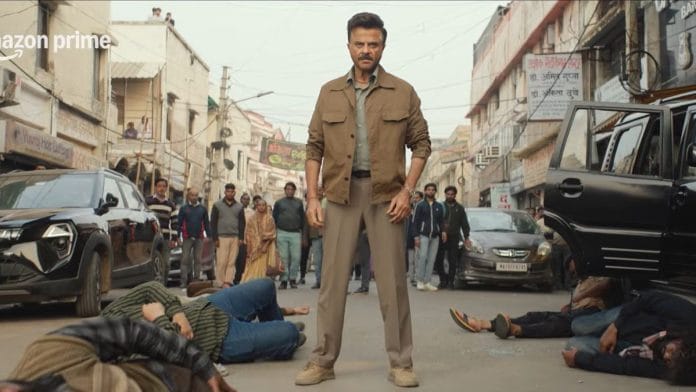
While films such as Manjhi (2015) and Newton (2017) have introduced more nuanced Dalit protagonists, they often lack the heroic agency or the mainstream charisma of a traditional Bollywood action star. Anil Kapoor’s recent film, Subedaar, in this context, is a significant alteration. It elevated the idea of social subalternity by imagining that a downtrodden character can perform like a mainstream hero and emerge victorious.
Director Suresh Triveni’s film is thus a robust act of resistance against the conventional norms associated with popular cinema’s macho hero. While it retains the grit and tension of the classic action genre, it distinguishes itself creatively through a lens of dense social realism, capturing the entrenched caste and communal entanglements.
Subedaar offers a subtle subaltern protagonist, embedded in the caste-driven oppressive structure, but ready to dismantle it through his gutsy style and heroic anger. Caste identities in the film are coded in cultural symbols, tonalities, and expressions that the audience has to dissect. Distinct from earlier films that portrayed Dalit characters with stereotypical notions, this film invites the audience to apply its intelligence.
In the landscape of feudal oppression
Set against the rugged ravines of Chambal, the narrative unfolds in a mofussil town gripped by a sand mafia led by Babli Didi (Mona Singh) and her psychopathic brother Prince (Aditya Rawal). Their characters personify rabid feudal-caste arrogance, exploiting the marginalised poor with impunity. While this trope is a staple of popular masala genre (from Sholay to China Gate) as well as parallel cinema (Damul, Paar, Mirch Masala), Subedaar revisits the formula with nuanced cultural symbolism, offering a refreshing socio-political twist.
Kapoor portrays the titular Subedar Arjun Maurya, a restrained but angry retired soldier who joins his daughter after the death of his wife. Maurya and his daughter Shyama (Radhika Madan) are harassed and humiliated by two distinct sets of villains, showcasing how the criminal mafia and feudal order of the town make the life of poor inhabitants precarious. Maurya faces overt abuses, harassment, and mocking by mafia leader Prince, while his daughter faces sexual violence for asserting her individuality. Such brutal context legitimises the emergence of an angry hero. The father-daughter duo refuses to play a submissive role, fearlessly challenges the goons, and after a bloody struggle, defeats the feudal lords.
At the outset, the film appears to be a regular action flick. But its portrayal of feudal arrogance, subtle anecdotes about caste-based inequalities, and veiled reference to the practice of untouchability, suggest that the director is critically reflecting upon the social demography of the region. He is making a political statement.
For example, a pivotal subplot involves a second-hand Jeep that is severely damaged by the goons. The vehicle is a gift from Maruya’s deceased wife, intended to provide him a dignified presence in the city. In the context of the self-respect movement, the ownership of a vehicle by a Dalit man is a potent symbol of mobility and the reclamation of public space, often disliked by the conservative social elites. In scattered episodes, the audience sees the mocking and damage done to the Jeep by the villains, because they see Maurya as unworthy of owning one.
Also read: Punjabi Dalit fiction is reaching an English audience at last. The book is called Gangrene
The Dalit-Bahujan subplot
The choice of the surname “Maurya” is crucial. In the political milieu of North India, Maurya is a popular Dalit-Bahujan identity often associated with a burgeoning defiance of Dalits against elite domination. In the web series Mirzapur (2018), Inspector RS Maurya (Amit Sial) is a complex Dalit character who cunningly hobnobs with powerful elites while facing caste-based discrimination. In Subedaar, while the protagonist’s social identity is never explicitly mentioned, it is etched into the film using silent symbols and anecdotes to suggest his secluded caste location and powerlessness.
A telling scene involves Prince beating a vulnerable woman and then washing his hands. It represents a ritualistic performance of “purity” versus “pollution” by Brahmanical elites. Furthermore, Prince’s act of urinating on Maurya’s Jeep mirrors real-world caste atrocities. In another sequence, we see an abandoned and depleted Dalit village that gives shelter to the fugitive protagonists, endorsing the director’s intent to portray social realities.
A mainstream Dalit hero
Subedaar investigates caste and gender as intersecting axes of oppression. By defying the conventional portrayal of marginalised groups as powerless victims, the film grants them the agency to defeat their oppressors through their angry power and physical strength. The father-daughter duo performs like popular heroes as they are pushed to the brink by systemic corruption and harassment. Maurya, like any other mainstream hero, eventually embraces a transformative violence to end the brutal feudal-Brahmanical realm.
In few films has a Dalit-Bahujan character utilised their angry grit and valour to fight their battle. Remember the threatening climax of Ankur (1974) or the scene in Fandry (2014), where the young protagonist hurls a stone to show his anger. Subedaar uses this anger and presents a competent action flick. Where earlier films depicted the Dalit bodies as passive and wretched, Subedaar shows them as angry, violent, victorious.
In Bollywood’s long history, filmmakers have often amplified social elite identities, represented their interests, and relegated Dalit-Bahujan characters to the periphery. Subedaar ruptures the convention and allows the subaltern being to play the mainstream heroic character. It supplements a nascent but impressive trend within Hindi cinema that foregrounds the arrival of a Dalit protagonist.
In recent films such as Bheed (2023), Dhadak 2 (2025) and Homebound (2025), the Dalit characters are shown as educated, aspirational, and ready to fight their own battles with guts and grit. However, the possibility to elevate these characters with the conventional tropes of masala action cinema has not been explored much. Subedaar somehow fills this gap and fulfills the desire to witness an angry Dalit hero on screen.
The growing possibility of offering a Dalit-Bahujan character the mantle of heroism showcases that the Hindi film industry is steadily democratising its narrative style. It will help Bollywood reckon with India’s social actualities and produce more authentic, nuanced Dalit-Bahujan characters. Hollywood has introduced powerful non-White heroic characters (Black Panther, 2018); Subedaar can supplement the trend in Bollywood.
Critics and scholars must amplify these emerging shifts, advancing the call for a more representative and pluralistic cinematic imagination. A powerful genre of cinema showcasing Dalit-Bahujan characters as equal, free, and courageous would radicalise popular cinematic culture, making the industry more inclusive and responsible toward the ideals of social justice.
Harish S Wankhede teaches at the Centre for Political Studies in JNU, New Delhi. His X handle is @KyaHarish. Views are personal.
(Edited by Prasanna Bachchhav)