





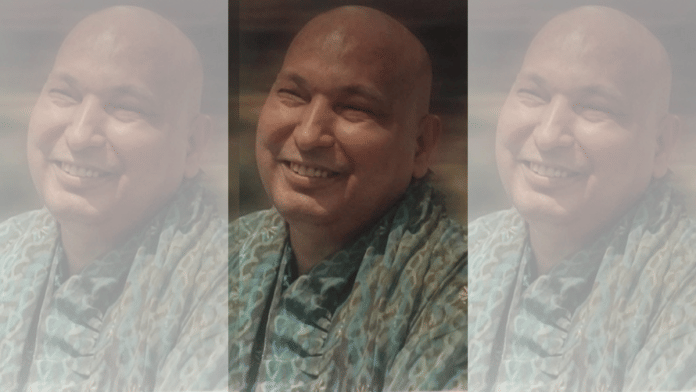



New Delhi: A Delhi court Saturday granted relief to a Trust by restraining a YouTube channel from posting content about late spiritual leader Nirmal Singh Maharaj, popularly known as Chhatarpur Wale Guruji.
District judge of Saket Courts Sachin Mittal on 24 January issued an ad interim ex-parte injunction, an urgent order without hearing the other side, saying: “The law of defamation protects reputation. A person’s reputation, which is a precious possession, cannot always be measured in terms of money.”
The order was in response to a plea by Guruji Ashram Trust, which alleged that a video uploaded by YouTube channel ‘Molitics’ in January, titled “Jai Guruji’ — Fraud Baba by Neeraj Jha” was defamatory. The Trust had sought an injunction, which essentially refers to a court order requiring a person/entity to do or cease doing a specific action.
The video, the Trust alleged, used terms such as “loot”, “thugi” and “fraud” while its thumbnail featured another derogatory word.
After viewing the video, the court directed the channel to take it down and restrained them from re-uploading or disseminating it further during the pendency of the suit. The order also prohibited anyone else from posting, publishing or circulating the video.
“As the unknown persons who have been sharing or republishing the impugned video are yet to be identified, the danger of harm to a plaintiff’s reputation is so imminent that the very purpose of injunction might be defeated, therefore all such persons are also restrained from sharing or republishing the impugned video,” the court said.
The Trust’s lawyers argued that the video used scurrilous expressions designed to malign the reputation of Guruji and his global following. They said the content was being repeatedly uploaded by various entities across digital platforms, and by the time remedial action was taken, it would have circulated rapidly and garnered lakhs of views, causing irreparable harm.
The lawyers sought a ‘John Doe injunction’—a court order that restrains unidentified entities from continuing acts of defamation—to curb rapid and unchecked dissemination of such content.
The Trust, which described itself as a public charitable trust set up with philanthropic objectives, told the court it had amassed enormous goodwill and reputation. The 15 January video, it argued, was causing grave harm by attacking the reputation and goodwill of both the Trust and its late founder in the eyes of the public.
After assessing the videos and other material on record, the court observed that the imputations made were defamatory and required immediate judicial intervention.
“Defamation is an injury to a person’s reputation,” the court said, adding that every person has a right to maintain and preserve one’s reputation. The court noted that the video was prima facie defamatory and could be accessed by thousands of persons worldwide with just a click.
“The injury to reputation being not measurable in terms of money would be irreversible,” the court said.
The court issued summons to the defendants and directed the Trust to file a compliance affidavit within seven days from the order’s passage, detailing steps taken by the defendants, their associates and agents to stop the circulation of such material.
The next hearing is scheduled for 26 February.
(Edited by Prerna Madan)
Also Read: Why Delhi court acquitted Medha Patkar in 2006 defamation case, filed by VK Saxena, now L-G