








New Delhi: The Allahabad High Court has ruled that although an unrecognised madrasa will not be entitled to claim any government grant till its recognition, there is no provision in law allowing the authorities to stop its functioning because it is not recognised by the Madrasa Education Board.
In doing so, the bench of Justice Subhash Vidyarthi set aside an order passed by the District Minority Welfare Officer of Uttar Pradesh’s Shrawasti last May, directing the closure of Madrasa Ahle Sunnat Imam Ahmad Raza on account of it not being recognised by the state board.
The madrasa in question had approached the court challenging the district officer’s order.
“There is no provision in the regulation enabling the authorities to stop the functioning of the madrasa on the ground that it is not recognised,” the court said in its ruling.
It also made it clear that the Madrasa Education Board will not be obligated to allow the students of the petitioner madrasa to sit in the examinations conducted by it.
“The students will not be entitled to claim the benefit of their qualification acquired from the madrasa for any purposes relating to the state government,” the court said.
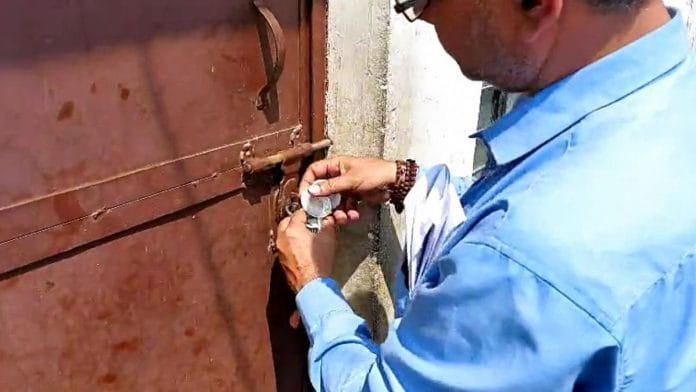
Finally, the court ordered that the seal affixed on the madrasa’s entrance be opened within 24 hours of the production of the order copy.
The petitioners had argued that while rule 13 of the Uttar Pradesh Non-Governmental Arabic and Persian Madrasa Recognition, Administration and Services Regulations, 2016, provides that an unrecognised madrasa will not be entitled to any state grant, it does not say that an unrecognised madrasa will be closed. They were not seeking any grant from the government either, they said.
The Supreme Court had earlier classified minority education institutions into three categories, in its 2025 ruling in Anjum Kadari vs Union of India.
The first category, which is protected under Article 30(1) of the Constitution, relates to those madrasas which do not seek any aid or recognition from the state, while the second category relates to those madrasas which want aid. The third category of madrasas is that which only wants recognition but not aid.
Article 30(1), which protects madrasas that do not require aid or recognition, grants all minorities, whether religious or linguistic, the fundamental right to establish and administer educational institutions of their choice, ensuring they can preserve their distinct culture, script and language. The petitioner madrasa argued that it fell under the first category as it sought neither recognition nor aid and was protected under the Constitution.
The state government had opposed the plea, arguing that an unrecognised madrasa may create unwarranted complications as students will not be entitled to claim any benefit on the basis of qualifications acquired from it.
Putting these contentions to rest, the court said there was no rule barring the functioning of a madrasa on account of its non-recognition.
(Edited by Nida Fatima Siddiqui)
Also Read: Bihar’s burnt Madrasa Azizia was built by one woman’s charity, produced freedom fighters