





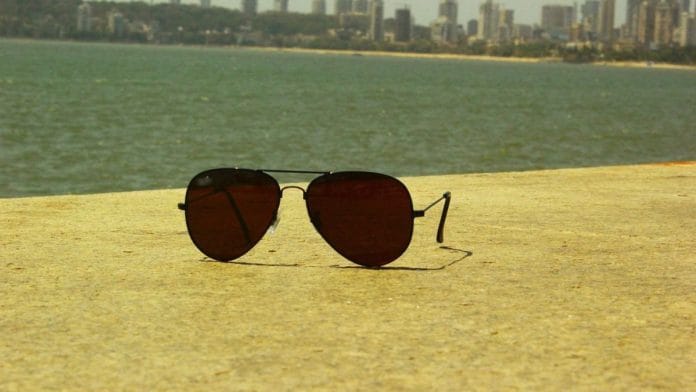



Gurugram: In a judgment that may impact the optical retail industry, the Punjab and Haryana High Court has held that sunglasses cannot be clubbed with spectacles for tax purposes and must be treated as a separate commodity liable to higher Value Added Tax (VAT).
A division bench of the Punjab and Haryana High Court comprising Justices Lisa Gill and Meenakshi I. Mehta delivered the judgment while disposing of multiple VAT appeals that had been pending since 2013, finally putting to rest a contentious question that has divided tax authorities and optical traders for over a decade.
The judgment, reserved on 10 September, was pronounced in court on 8 December, but the order has been uploaded to the website only now.
At the centre of the dispute was the question of whether sunglasses should be treated the same as prescription spectacles, or whether they are fundamentally different products that deserve separate tax treatment.
Taxation authorities have refused to buy arguments of optical dealers for a common rate of taxation for both items, arguing that sunglasses are fashion accessories or are used for general-purpose eye protection, and hence they cannot be equated with spectacles, which are corrective eyewear prescribed for medical reasons.
Optical traders and dealers, on the other hand, contended that both items serve the purpose of protecting eyes and should fall under the same concessional tax bracket.
In its judgment, the high court agreed with the tax department’s interpretation.
Justice Lisa Gill, who wrote the judgment for the Bench, observed that spectacles were defined in Entry 110 of Schedule B of the Punjab VAT Act or Entry 100-E of Schedule C of the Haryana VAT Act, while sunglasses don’t find a mention there.
Entry 110 of Schedule B of the Punjab VAT Act or Entry 100-E of Schedule C of the Haryana VAT Act refer to the classification of spectacles (and related optical items like lenses, frames and parts), primarily designed for vision correction, under the respective state Value Added Tax (VAT) Acts.
Justice Gill observed that the fact the sunglasses don’t find any explicit mention under any concessional or specified schedule in either state’s VAT legislation, they will automatically fall into the residuary category.
Under the residuary provisions of both Punjab and Haryana VAT Acts, goods not otherwise specified attract the standard rate of 12.50 percent, as against 5 percent on the corrective spectacles.
The Bench made it clear that the legislative intent behind granting concessional tax rates to spectacles was to provide relief on medical devices meant for correcting vision defects.
On the other hand, sunglasses, which primarily serve aesthetic purposes or provide protection to the eyes from the ultraviolet rays without correcting refractive errors, do not qualify for such relief.
Also read: GST reform is pointless if it doesn’t simplify tax slabs. 40% rate is counterproductive
Decade-long dispute settled
The case stems from multiple assessments by taxation authorities in Haryana and Punjab during the value-added tax (VAT) regime, with multiple optical dealers challenging tax demands raised by the excise and taxation department.
Optical dealers had been treating sunglasses at par with spectacles and paying lower tax rates, arguing that both items are sold in optical stores and serve eye-related needs.
The taxation authorities, however, conducted audits and raised demands for the differential tax, along with penalties and interest on the delay in the payments of the differential amounts.
Several dealers from both states approached the high court through VAT appeals, leading to the consolidation of multiple matters that have now been decided together.
The judgment, spanning 20 pages, methodically examines the statutory definitions, legislative history, and the distinct characteristics of sunglasses versus corrective spectacles. The court refused to accept the argument that both items are interchangeable or serve identical purposes.
(Edited by Viny Mishra)
Also read: Govt must bring pending GST reforms too